





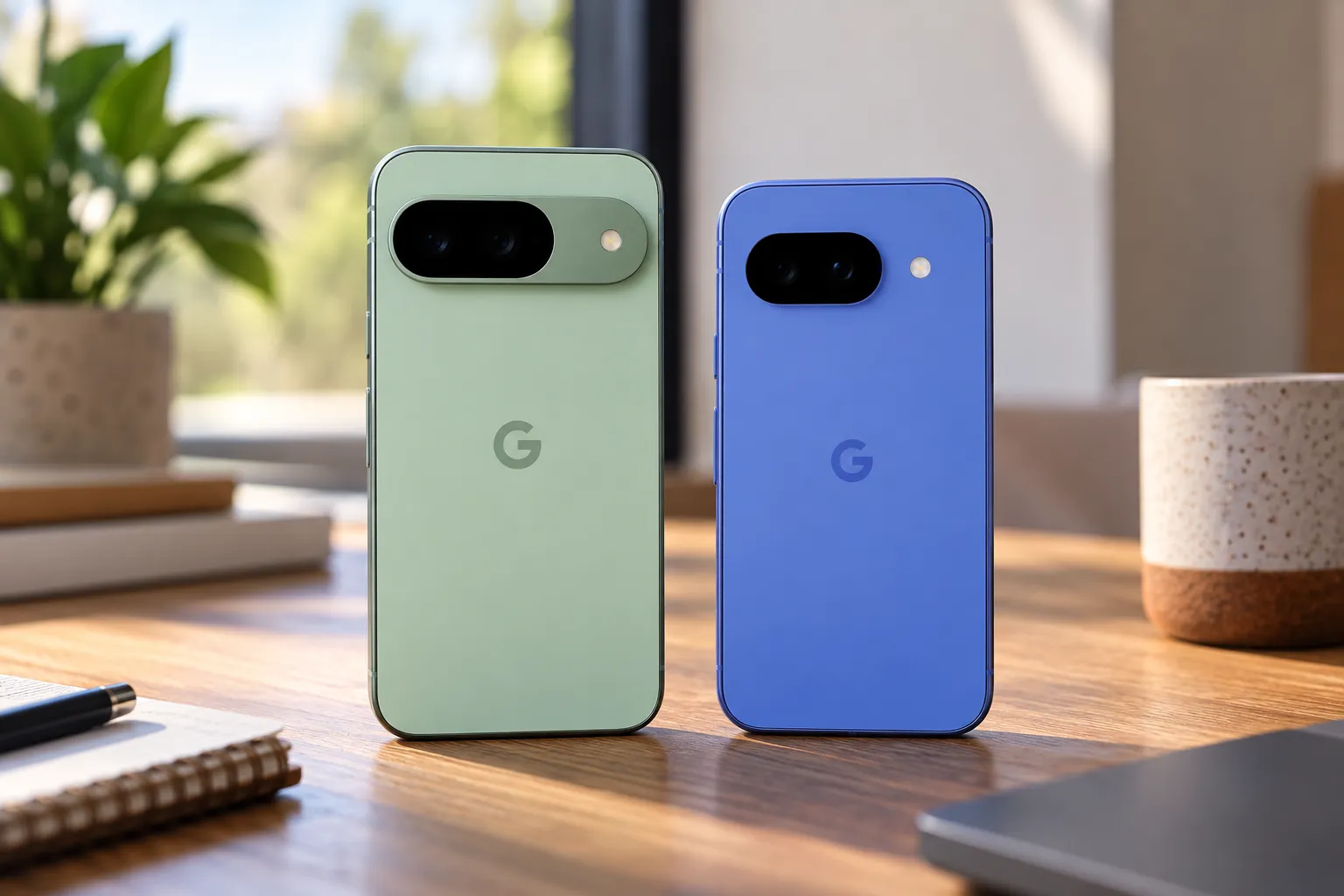
Google's Certified Refurbished storefront lists the Pixel 9 for $499, $100 less than the Pixel 10a, the newer midrange phone currently sitting in Google's lineup. On paper, that refurbished Pixel 9 price undercuts a newer device while matching its chipset and beating its RAM. Whether that actually makes it a smart purchase depends on two things no spec sheet shows: what's in stock when you order and what Google's refurbishment terms cover.
Google added the Pixel 9 series, including the Pixel 9, Pixel 9 Pro, and Pixel 9 Pro XL, to its Certified Refurbished program this month. Units undergo inspection, testing, and restoration with genuine replacement parts when needed, and they carry the same one-year limited warranty as a brand-new Pixel. The Pixel 9 Pro Fold wasn't included in the announced lineup.
The question is straightforward: if a buyer is choosing between a refurbished Pixel 9 or Pixel 9 Pro and a new Pixel 10a, which one makes more sense? On price, RAM, and chipset parity, plus Pro-tier camera hardware, the refurbished phones have a strong case. But the Pixel 10a offers a larger battery, a brighter display than the base Pixel 9, and a longer remaining software-support period. Stock and battery condition also matter at checkout.
What Google's Certified Refurbished program actually confirms
Google lists the refurbished Pixel 9 at $499, Pixel 9 Pro at $649, and Pixel 9 Pro XL at $699, with those starting prices applying to 128GB configurations. That's a substantial discount from their original retail prices, although availability varies.
Google confirmed the Pixel 9 series expansion in October 2026 as part of its broader effort to keep older hardware in use.
"Certified" here means something specific. Google's Certified Refurbished program states that devices undergo multipoint quality testing, receive genuine Google parts when repairs are needed, and come with the latest applicable software.
Google also evaluates battery condition and replaces batteries that don't meet its standards. That doesn't mean every refurbished phone receives a new battery, but it does establish a documented inspection and replacement process.
The company says refurbished phones should be free of visible cosmetic imperfections and include a compatible charging cable. They also receive the same one-year limited warranty and customer support as new Pixel phones.
The AI subscription perk is more specific than some reports suggest. Google's storefront advertises six months of Google AI Plus with 2TB of storage for eligible refurbished Pixel 9 Pro, Pixel 9 Pro XL, and Pixel 8 Pro purchases. The offer is for new subscribers, with a stated redemption deadline of April 4, 2027.
The base Pixel 9 isn't included in that advertised promotion. Check the offer terms attached to the exact configuration before assuming any subscription benefit applies.
Check stock before you buy
An earlier October stock check found the base $499 Pixel 9 unavailable. The Pixel 9 Pro was listed only in Hazel with 128GB, while the Pro XL also offered an Obsidian option. Neither Pro model showed a 256GB configuration in that snapshot.
That inventory report is already dated, and refurbished stock can change quickly. None of those details should be treated as a guarantee of current availability.
Pull up Google's live Certified Refurbished storefront before acting on any price mentioned here. Select the exact model, color, and storage capacity, then confirm that checkout is available.
A listed price only becomes a deal once the phone can actually be purchased. Inventory should be the first thing a buyer checks, not an afterthought.
Refurbished Pixel 9 vs. Pixel 10a: the documented case
Start with the chipset. The Pixel 10a now starts at $599 in the US, up from its original $499 launch price, and runs the same Tensor G4 processor as the Pixel 9. That extra $100 doesn't buy a newer chipset.
RAM tells a similar story. The Pixel 9 ships with 12GB versus 8GB on the Pixel 10a, giving the older flagship more memory for multitasking and supported on-device AI features.
The Pro tier widens the gap. At $649, just $50 more than the 10a, the refurbished Pixel 9 Pro adds a dedicated 48MP telephoto camera with 5x optical zoom, along with 16GB of RAM. The Pixel 10a has no dedicated telephoto lens.
However, the Pixel 10a has advantages of its own. Google's official specifications confirm a 5,100mAh battery, compared with 4,700mAh in the Pixel 9 and Pixel 9 Pro.
Battery capacity alone doesn't establish real-world endurance, particularly when comparing a new phone with a refurbished one. Still, the 10a's larger battery is a meaningful consideration.
Display brightness also favors the newer midrange phone over the base Pixel 9. The 10a reaches up to 3,000 nits peak brightness, compared with 2,700 nits on the Pixel 9. Both have 6.3-inch OLED displays with refresh rates up to 120Hz.
The Pixel 9 Pro matches the 10a's 3,000-nit peak rating while adding a higher-resolution LTPO display capable of scaling down to 1Hz.
Camera hardware is another distinction. The base Pixel 9 has a 50MP main camera and 48MP ultrawide, compared with the Pixel 10a's 48MP main camera and 13MP ultrawide. Both lack a dedicated telephoto camera, although sensor specifications alone don't establish which produces better photos in every situation.
Charging is less clear-cut. Google rates the Pixel 9 and Pixel 9 Pro for up to 55% charge in about 30 minutes using a compatible 45W charger. The Pixel 10a is rated for up to 50% in about 30 minutes under its specified charging conditions. Those figures aren't directly comparable measures of charging efficiency because the phones have different battery capacities.
The Pixel 9 also supports Battery Share, allowing compatible devices to charge wirelessly from the phone. The Pixel 10a supports Qi wireless charging but doesn't offer the same reverse wireless charging feature.
Software support is another important difference. Google promises seven years of OS, security, and Pixel Drop updates for both generations, but the clock starts at each device's original availability.
The Pixel 9 series launched in August 2024, putting its guaranteed support period through August 2031. The Pixel 10a launched in 2026, giving it roughly two additional years of support.
That doesn't make the Pixel 9 obsolete. It still has nearly five years of guaranteed updates remaining, but the newer phone offers a longer runway for buyers planning to keep their device as long as possible.
What to check before buying a Google Certified Refurbished Pixel 9
Google publishes more refurbishment information than the original reporting suggested, including its battery-testing process, cosmetic standards, warranty coverage, and included accessories.
However, buyers should still verify the terms for the exact phone being ordered. Before checkout, check:
Live stock: Confirm the model, color, and storage capacity are available.
Battery condition: Google tests batteries and replaces those that fail its standards, but it doesn't publish an individual battery-health percentage for every unit.
Cosmetic condition: Google's program aims for devices free of visible imperfections. Check the applicable product terms and inspect the phone when it arrives.
Return window: Google advertises free returns for its refurbished devices. Confirm the applicable return period and conditions at checkout.
Warranty: Certified Refurbished phones bought directly from Google receive a one-year limited warranty comparable to that of new devices.
AI subscription eligibility: The advertised Google AI Plus promotion applies to eligible Pro models, not the entire Pixel 9 lineup.
Carrier compatibility: Google describes its Certified Refurbished phones as unlocked and compatible with carriers, but buyers should still confirm support for their carrier and region.
These checks matter because a refurbished phone's value depends on more than its original specifications. A lower purchase price is less attractive if the available configuration doesn't meet your storage needs or the battery condition falls short of your expectations.
The verdict: who should buy which phone
The base Pixel 9 against the 10a is the strongest value case on paper: the same chip, more RAM, stronger ultrawide camera hardware, and a $100 lower listed price. That recommendation depends on the refurbished model actually being available at $499.
The Pixel 9 Pro against the 10a is a different calculation. It's a $50 premium for a dedicated telephoto camera, a higher-resolution LTPO display, and double the RAM. It's worth considering if camera flexibility and multitasking headroom matter more than the lowest purchase price.
The Pixel 10a still wins for buyers who want a brand-new device, a larger battery, a longer remaining software-support period, or a specific color and storage combination that refurbished stock doesn't offer. Its brighter display also gives it an advantage over the base Pixel 9.
Those are legitimate reasons to pay more for new, not consolation prizes.
Pull up Google's live Certified Refurbished listing for the exact model and configuration you want before making a decision. Review the battery policy, return terms, warranty, and any AI offer tied to that purchase.
If the refurbished Pixel 9 is available at $499 and its condition and storage meet your needs, it's the stronger value for many buyers. If stock is missing or you prioritize battery capacity and long-term support, the Pixel 10a is the safer choice without waiting indefinitely for a refurbished unit to return.









Comments
Be the first, drop a comment!