





Fitbit Edge vs Google Pixel Watch: Health features compared
Google calls the $179.99 Fitbit Edge its "smartest fitness tracker ever" (Google, two weeks ago). But according to Android Authority's reporting, which draws on direct correspondence with Google, anyone chasing the fullest set of AI health features should skip the Edge and "buy a Pixel Watch 5 and a Pixel phone" instead. That's the core tension behind any Fitbit Edge vs Google Pixel Watch comparison right now: two products from the same company, running the same health platform, with meaningfully different access to it.
The question that actually matters before spending $179.99 on Edge, or putting that money toward a Pixel Watch instead: if you want Google's newest AI health features, does it make a difference which wearable you pick? The evidence says yes, and the gap is wide enough that Edge and Pixel Watch end up competing for the same buyer rather than serving two obviously separate ones. This isn't a full spec-for-spec rundown, either. Current reporting doesn't establish Pixel Watch 4 or 5 pricing, battery life, or payment support in the kind of detail that's known about Edge, so the focus here stays on the one area where the two devices demonstrably diverge: access to Google's Health Guardian features.
Who the Fitbit Edge is built for
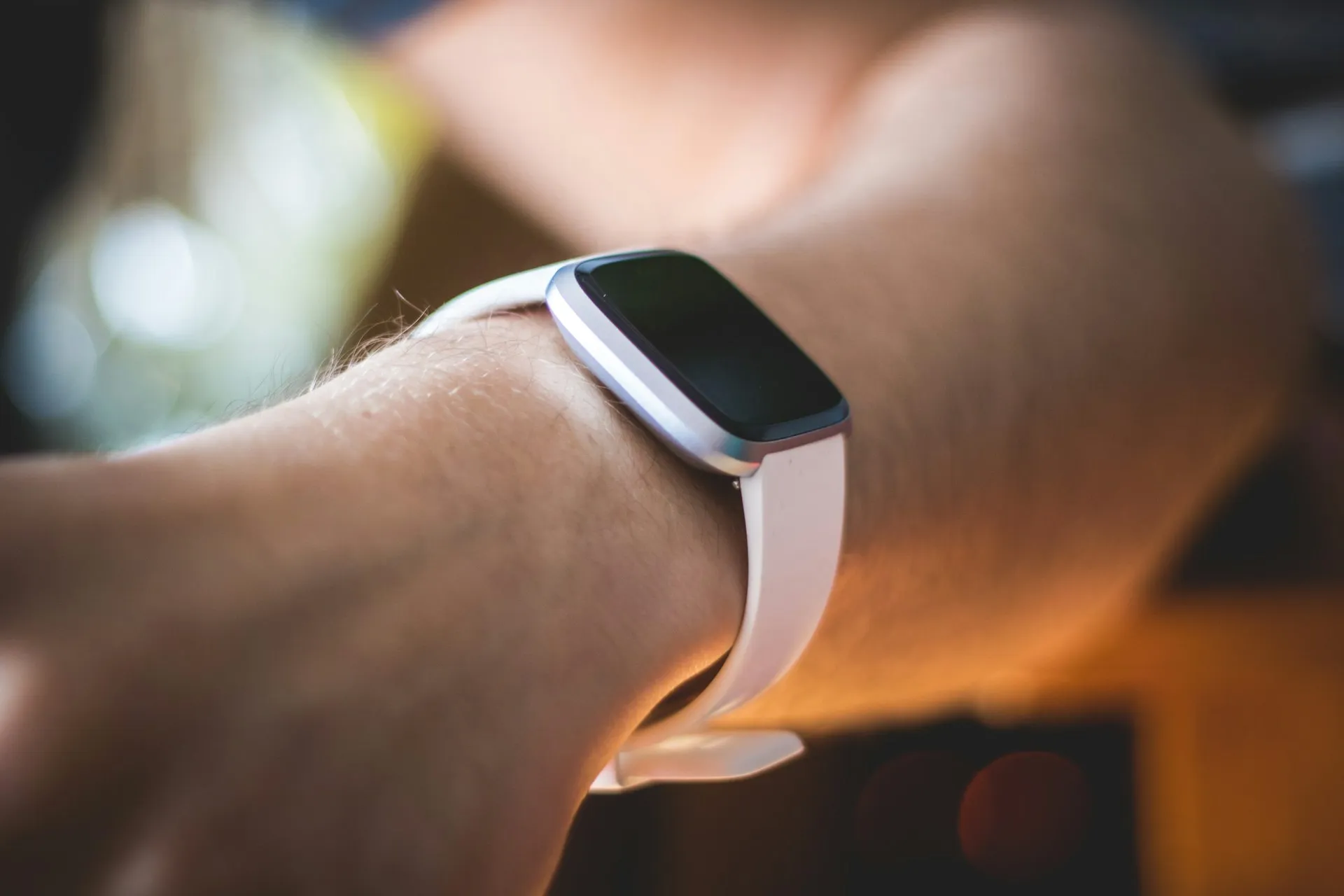
Edge isn't trying to be a smartwatch. It revives the 2014-to-2020 fitness-band formula: slim, tracker-first, built around a bright Hybrid OLED display and a tactile side button for quick actions during workouts (The Verge, three days ago; Google, two days ago). Google's spec sheet backs that narrower focus up: up to seven days of battery life, built-in GPS, automatic activity recognition, and a 5 ATM/IP68 water and dust resistance rating (Google, two weeks ago).
Edge is also Google's first repairable tracker, built with modular internals and a replaceable battery (Google, two weeks ago). That's a genuine point of differentiation, and it matters for anyone who's watched a previous wearable die the moment its battery degraded.
One trade-off is confirmed and deliberate: no contactless payments. Google's head of product for Health told The Verge that fewer than 1% of Charge 6 owners used that feature, so the company prioritized a slimmer design and weeklong battery life instead (The Verge, three days ago).
On hardware terms alone, Edge is a coherent, narrower product than Pixel Watch, built for people who'd rather have multi-day battery life than smartwatch breadth. That distinction starts to blur the moment software access enters the picture.
Why Pixel Watch becomes the real competitor, not just a different product
Google currently sells three wearables: Pixel Watch 5, Fitbit Air, and Fitbit Edge. Each one gets different access to the same four AI-backed Health Guardian features, rather than a consistent tier tied to price or release date (Android Authority, one week ago).
That turns the purchase decision into a trade-off instead of a simple category choice. A buyer who wants Edge's battery life and repairability has to accept a narrower health feature set than a Pixel Watch owner gets for some of the same AI tools, running through the same Google Health platform.
Google's own messaging hasn't helped clarify things. Its Health Guardian announcement and Help Center initially listed only Pixel Watch as compatible, and an overview from August mentioned Fitbit Air but left the newer Edge out entirely (Android Authority, one week ago).
Because both devices run through the same health platform, choosing Edge isn't just picking a different form factor. It's implicitly choosing against the broader feature access a Pixel Watch owner gets.
Health Guardian access by device: what's confirmed vs reported
Health Guardian is the umbrella name for four AI-backed features: Blood Pressure Trends, Insulin Resistance Trends, Sleep Breathing Quality Trends, and Breathing Emergency Detection (Android Authority, one week ago). Access to each one varies by device, and in a couple of cases, by Google's own shifting documentation.
| Feature | Fitbit Edge | Fitbit Air | Pixel Watch | Confidence level |
|---|---|---|---|---|
| Blood Pressure Trends | Supported; requires consistent wear over part of a month plus $10/month Google Health Premium | Same terms as Edge | Not addressed in current reporting for any specific model | Confirmed for Edge/Air only |
| Insulin Resistance Trends | Same terms as above | Same terms | Not addressed in current reporting | Confirmed for Edge/Air only |
| Sleep Breathing Quality Trends | Unconfirmed; Google hasn't stated whether or when Edge gets it | Google confirmed to Android Authority it's "coming soon," no date given | Reported in Google materials as available, though rollout messaging has been inconsistent | Edge: unclear; Pixel Watch: reported, not independently verified per model |
| Breathing Emergency Detection | Not supported | Not supported | Supported on Pixel Watch 4 and 5; Pixel Watch 3 explicitly excluded | Confirmed gap on Edge/Air; Pixel Watch support is model-specific |
Table compiled from Android Authority's reporting, one week ago, cross-referenced against Google's own product pages.
Android Authority also notes that Pixel Watch owners reportedly don't need a Google Health Premium subscription for Breathing Emergency Detection, though that reporting doesn't confirm the same exemption applies to every Health Guardian feature.
Before anyone reads too much into the clinical-sounding names: Google states that Blood Pressure Trends and Insulin Resistance Trends aren't intended for medical purposes on any device (Google, two days ago).
This table is the core evidence for treating Edge and Pixel Watch as competitors rather than complementary products. Edge is confirmed to lack one Health Guardian feature outright and unresolved on a second, while Pixel Watch's advantage, reported rather than fully documented model by model, shows up consistently across Android Authority's findings.
Compatibility and setup requirements before you buy either device
Accessing any Health Guardian feature at all requires specific hardware up front, not just a Google account. Only five devices currently qualify: Pixel Watch 3, Pixel Watch 4, Pixel Watch 5, Fitbit Air, or Fitbit Edge (Android Authority, one week ago). Owning an older Fitbit or a non-Pixel Wear OS watch doesn't get a buyer into this ecosystem at all.
Edge itself pairs broadly. Google lists compatibility with most phones running Android 11 or higher and iOS 16.4 or higher, alongside a Google Account, the Google Health app, and an internet connection (Google, two days ago). That's a wide net on the phone side. The watch side is where access narrows, since Pixel Watch 3 owners are explicitly excluded from Breathing Emergency Detection even though they're otherwise inside the Health Guardian device list (Android Authority, one week ago).
It's worth separating three different kinds of claims running through this comparison. Google's specs, like seven-day battery life and repairable design, are company claims made in marketing material. Android Authority's device-by-device breakdown comes from direct correspondence with Google, stronger than a blog post but still relayed through the company. The Verge's battery findings, by contrast, come from independent hands-on testing, and that's the only real-world data point here that didn't originate with Google itself (The Verge, three days ago).
The phone and region caveats that narrow "buy a Pixel Watch 5"
Android Authority frames the "gold standard" setup as a Pixel Watch 5 paired specifically with a Pixel phone, with the Pixel Watch 4 also qualifying. The reason comes down to plumbing: Breathing Emergency Detection runs through Google's Personal Safety app, and its fullest functionality ties to Pixel phones. Samsung, for comparison, uses its own separate safety suite rather than Google's (Android Authority, one week ago).
Even with a Pixel Watch 4 or 5 paired to a Pixel phone, the feature itself is currently limited to 14 countries that don't include the United States, and Google hasn't announced a date for U.S. availability (Android Authority, one week ago).
So the Pixel Watch advantage isn't universal. It depends on the specific model (4 or 5, not 3), owning a Pixel phone, and living in the right country, and this reporting doesn't establish that Pixel Watch wins on battery life, comfort, or price. Its documented advantage here is feature breadth and platform integration, not an across-the-board win over Edge.
Google's 2025 preview of a Gemini-powered personal health coach, rolled out through Fitbit Premium, is a separate program from Health Guardian and shouldn't be folded into this comparison. That preview was restricted to eligible adult U.S. users, rolling out incrementally, with eligibility and features explicitly subject to change (Google, last year). It predates the Edge launch by more than a year, so it says nothing about Edge's current feature set one way or the other.
Before you buy: a decision checklist
A handful of practical checks will tell you more than any marketing page before choosing between Fitbit Edge and a Pixel Watch.
- Phone check: confirm whether you already own a Pixel phone. Breathing Emergency Detection's fullest functionality is tied to it, not to Android generally (Android Authority, one week ago).
- Watch model check: if buying a Pixel Watch specifically for Breathing Emergency Detection, confirm it's a Pixel Watch 4 or 5. Pixel Watch 3 is explicitly excluded from that feature (Android Authority, one week ago).
- Country check: in the U.S., Breathing Emergency Detection isn't available yet regardless of which device gets bought (Android Authority, one week ago).
- Subscription math: Edge includes three months of Google Health Premium at purchase (Google, two weeks ago). That's enough time to qualify for an initial Blood Pressure or Insulin Resistance Trends report, provided the wear requirement over part of a month gets met, though the reporting doesn't say how often new reports generate after that (Android Authority, one week ago). After the trial window, ongoing access runs $10 a month.
- Battery expectations: The Verge measured roughly a week of use on Edge in normal conditions, but only about a day and a half with always-on display enabled (The Verge, three days ago). Google's own fine print confirms its seven-day figure comes from pre-production hardware tested under default Battery Saver settings, not real-world always-on use (Google, two days ago).
- Privacy setting to review at setup: using health data to train Google's AI is opt-in and off by default on Edge (The Verge, three days ago). Check this during setup rather than clicking through the agreements without reading them.
- Documentation check: verify Edge's current feature list on Google's support pages at the time of purchase, not the launch blog post. Android Authority found the announcement, Help Center, and device-specific documentation have already conflicted once on which devices support which features.
Fitbit Edge or Pixel Watch: the decision that matters
What's confirmed is a split picture. Edge is a repairable, GPS-equipped tracker with real multi-day battery potential for $179.99, an advantage that narrows sharply once always-on display gets switched on. Set against that, Edge lacks Breathing Emergency Detection entirely, and Google hasn't confirmed whether or when Sleep Breathing Quality Trends arrives on the device at all; both already work in some form on Pixel Watch 4 and 5 (Android Authority, one week ago).
That leaves three reasonable paths, depending on what actually matters to the buyer:
- Choose Edge for a slim, repairable tracker with strong multi-day battery life (always-on display off), skipping Breathing Emergency Detection or Sleep Breathing Quality Trends for now.
- Choose a Pixel Watch 4 or 5 if broad AI health and safety feature access matters most, a Pixel phone is already in hand, and Pixel Watch's own battery life, price, and comfort get evaluated separately, since none of that is confirmed here as superior to Edge. Pixel Watch 3 doesn't qualify for this path.
- Wait for Sleep Breathing Quality Trends or Breathing Emergency Detection on a tracker-style device specifically, since neither is confirmed for Edge, or if living outside the 14 countries where Breathing Emergency Detection currently works.
What would actually resolve the remaining uncertainty: updated Edge support documentation confirming Sleep Breathing Quality Trends status, an announced U.S. release date for Breathing Emergency Detection, and clearer per-model Pixel Watch subscription terms. None of that exists yet. Check Google's support pages directly before buying based on launch-week marketing copy, since the company's own posts and Help Center have already disagreed once on which devices get which features.









Comments
Be the first, drop a comment!