



Google Android XR Glasses Camera Restrictions Explained
Google's new Android XR glasses can't livestream video to social apps, but they can stream a live camera feed straight to a human assistant. That distinction sits inside the Google Android XR glasses camera restrictions Google published last week, and it matters more than the flat "no livestreaming" headline suggests.
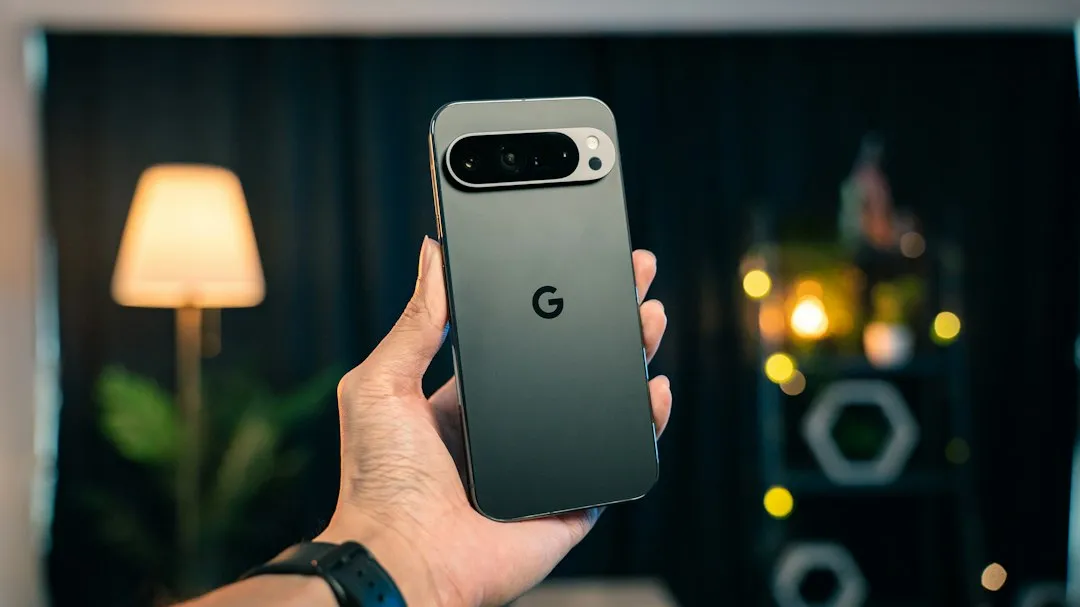
Google's published policies prohibit apps distributed through Google Play from using the camera for social livestreaming or real-time facial identification, and they bar those apps from altering how the outward indicator light behaves (Google). The glasses, built with Warby Parker, Gentle Monster, and Samsung, are open for preorder now and reach retail stores on Dec. 10 in the U.S. and South Korea (Google).
Conventional video recording is capped at 90 seconds per clip, a limit Metaverse Watcher reported citing Google's own statements (Metaverse Watcher). That limit applies to conventional recording; Google hasn't said whether it also governs Aira sessions. Gemini's visual queries and the Aira accessibility stream run on separate rules Google hasn't fully spelled out.
Price, compatibility, and who can buy the glasses
Warby Parker's lineup starts at $395 and Gentle Monster's starts at $449, both going on sale Dec. 10 in the U.S. and South Korea (Google). Setup requires a compatible 18+ Google account tied to one of those two regions, so this isn't a global launch regardless of where the frames eventually ship.
Phone compatibility is narrower than it looks at a glance: Pixel 7 and later running Android 17's September 2026 update, Galaxy S, Galaxy S FE, and Galaxy Z Fold/Flip/Fold Ultra on One UI 9.0 or higher, or an iPhone 13 Pro and later (Google). Anyone preordering on an older phone should check that list before the glasses arrive.
Each pair has a physical power switch, and Google presents it as a way to disable the glasses completely rather than relying on software settings alone (Google). Camera and microphone access are also controlled per app, and those permissions can be changed at any time.
Can Google AI glasses livestream? The Aira exception explained
Google's app policy prohibits social livestreaming for anything distributed through Google Play (Google). That ban doesn't cover everything the camera can stream, though.
Say "Hey Gemini, open Aira Explorer," and the glasses stream the camera feed live to a professionally trained human visual interpreter for real-time support, a feature built through Google's partnership with Aira (Google).
That amounts to a livestream in function, even if it isn't routed through a social platform. Google's blog posts don't specify whether the outward LED activates during an Aira session, whether bystanders' faces get redacted the way they do for Gemini's visual queries, or how long Aira retains what it sees.
So can Google AI glasses livestream? Not to Instagram or Twitch through a Google Play app, but yes, to a person on the other end of an accessibility service Google built into the glasses from day one.
Three camera modes, three different rule sets
The glasses carry a 12-megapixel ultra-wide camera with HDR, image stabilization, and spatial audio capture. Photos and video can be triggered with a button press or a voice command (Google). What happens to that footage afterward depends on which of three paths it travels down.
Gallery capture is the familiar one: photo or video saved locally, with video capped at 90 seconds. Google has said most recordings already fall inside that window anyway (Metaverse Watcher, citing Google). Meta's Ray-Ban glasses allow clips up to five minutes by comparison, per 9to5Google reporting cited in that same Metaverse Watcher piece.
Gemini visual queries work differently. Asking Gemini about something in view triggers an analysis pipeline rather than a gallery save, and Google reportedly told 9to5Google the image is deleted immediately after processing, a setting users can't change (Metaverse Watcher, citing 9to5Google).
Aira sessions are the odd one out. They stream live rather than capturing a still frame or short clip, and Google's cited posts don't specify retention, redaction, or LED behavior for that mode at all. Anyone treating "90 seconds" or "deleted immediately" as blanket camera rules is overlooking a third mode with none of those details confirmed.
Android XR glasses camera privacy rules: what the indicator light covers
The outward LED lights up when the wearer captures a photo or video bound for the gallery (Google). That part is documented clearly.
What's also documented is what the light skips. The same LED does not activate when Gemini uses the camera to answer a contextual question, a behavior reported by 9to5Google and corroborated by Biometric Update and Metaverse Watcher. Whether it lights during an Aira stream isn't addressed anywhere in Google's published material.
Google says bystander faces are automatically redacted locally on the paired phone before Gemini processes any image, and the glasses are designed to stop recording if the light is covered or tampered with (Google). That redaction step applies specifically to the Gemini visual-query path.
Regulators have flagged the gap between recording and AI processing as a separate problem. In a statement published last month, the European Data Protection Board called for indicators that make AI-assisted camera processing noticeable to people nearby, not just conventional recording (Biometric Update, citing the EDPB). That recommendation covers AI processing as well as recording, while Google's published LED description covers gallery capture only.
Google's policy vs Meta's: a narrower comparison than it looks
Google says Gemini camera visuals aren't saved in Gemini History and aren't used to train AI models or target ads (Google). Meta's own disclosures, by contrast, acknowledge that AI-processed images may be retained "in protected form" to improve its products (Metaverse Watcher, citing Meta disclosures).
The voice-data gap follows a similar pattern. Meta stores voice recordings and transcripts for up to a year by default, with no opt-out since Meta removed it in April 2025, while Google keeps Gemini chat text in Gemini History, where users can review or delete it (Metaverse Watcher).
That's a real difference in stated policy, but Biometric Update's reporting adds an important caveat: Google's documentation doesn't describe a platform-level technical control that automatically stops an authorized app from analyzing camera imagery to identify someone, and it doesn't confirm that Gemini's face-redaction step applies to third-party apps rather than just Google's own pipeline (Biometric Update).
How Google would enforce its camera restrictions against apps distributed outside Google Play is similarly undocumented. Google has said it plans to extend its Private AI Compute technology to these devices, according to the same reporting, but that's a stated plan rather than a control anyone can test yet (Biometric Update). The available evidence directly describes Google's own Gemini pipeline; the cited documentation does not show how third-party apps would implement or enforce these protections.
What's confirmed before Dec. 10
Google's bans on social livestreaming and real-time facial identification apply to apps distributed through Google Play. The 90-second gallery cap and the immediate deletion of Gemini visuals trace back to Google's statements to 9to5Google rather than the privacy policy post itself, and the Aira accessibility stream sits outside both of those documented limits.
None of Google's camera or redaction claims have been independently tested yet, since the glasses haven't reached outside reviewers. Anyone preordering shouldn't treat the indicator light as covering every camera-driven AI feature: it's confirmed for gallery capture and confirmed absent for Gemini's contextual queries, with Aira's behavior still unaddressed.
Checking camera and microphone permissions app by app, rather than trusting a single toggle, is one way to manage exposure before independent hands-on testing after Dec. 10 shows how redaction and the LED actually hold up once reviewers get a pair in hand.


Comments
Be the first, drop a comment!