





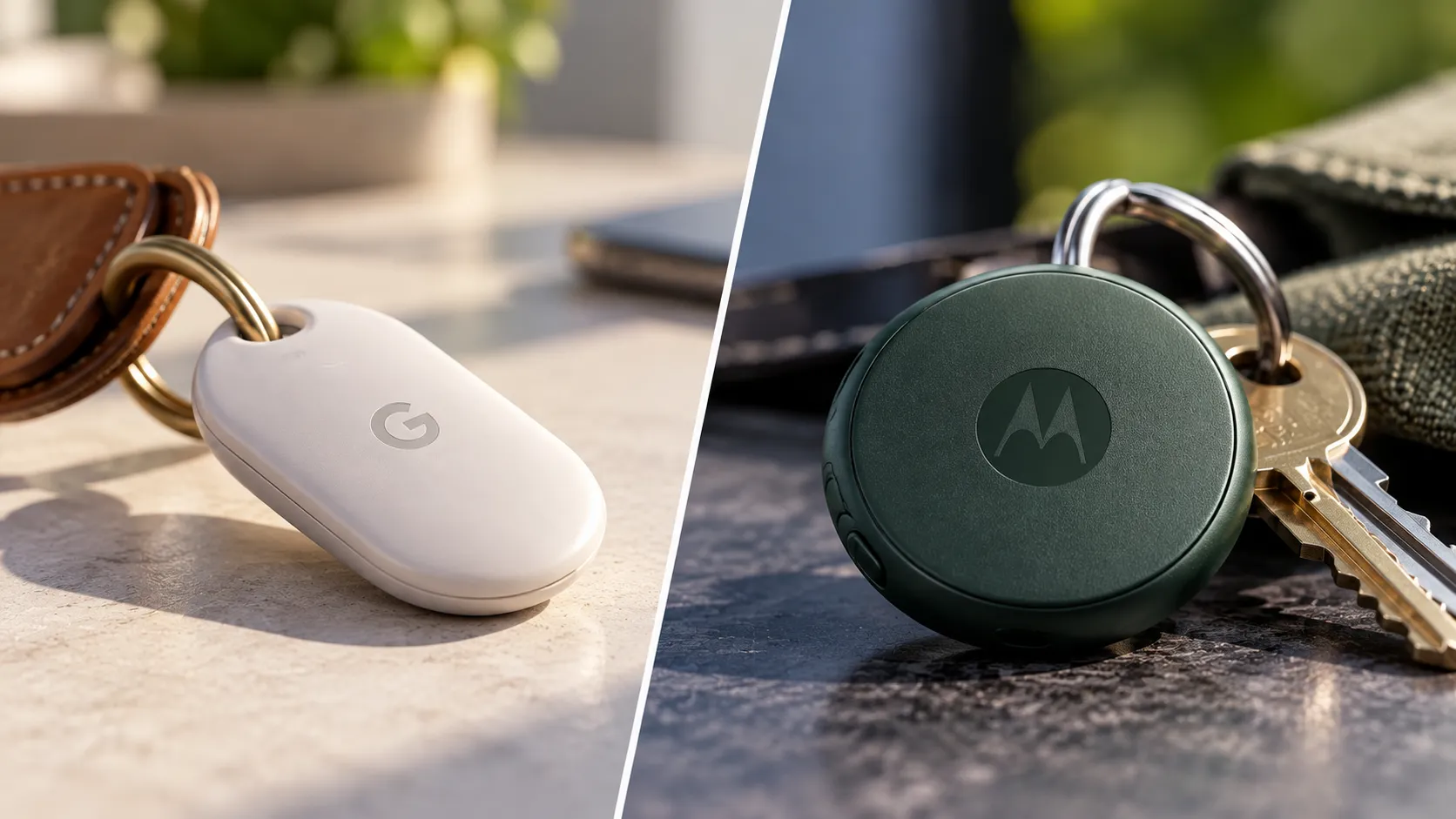
Moto Tag 2 is available to buy from Motorola's US store now, while Google says its own tracker won't go on sale until Nov. 11, 2026. That's the should-you-wait-for-Pixel-Tag question at the center of this comparison: buy the Moto Tag 2 now, or hold out a few weeks for Google's hardware.
Both trackers use Google's Find Hub network, which taps more than a billion Android devices to help locate lost items, according to Google. Sharing a network doesn't mean the two tags cost the same today. Pixel Tag will cost $29 for one and $99 for four when sales begin Nov. 11.
Moto Tag 2 is also currently discounted. Motorola's US store lists a four-pack for $69.99, down from $99.99, although promotional pricing can change without notice.
That makes Moto Tag 2 the easier immediate buy if you need multiple trackers. Pixel Tag remains the wait-and-compare option for buyers who want Google's own hardware or a slimmer design.
Pixel Tag vs Moto Tag 2 price and availability
Google's Pixel Tag launch announcement gives a clear US price and release date: $29 for one, $99 for four, with sales beginning Nov. 11.
Google's Store page is already live ahead of the sale date and lists the tracker and its specifications. That removes the need to rely on an older discrepancy between Google's announcement and an earlier version of the Store page.
Moto Tag 2 is already listed with a Buy Now option on Motorola's US site. Motorola currently advertises the four-pack at $69.99 instead of its $99.99 regular price.
That changes the immediate value calculation. Four Pixel Tags will cost $99 at launch, while Motorola's current promotion puts four Moto Tag 2 trackers about $29 cheaper. Check the live price before ordering, however, because Motorola's promotional pricing can change.
What your phone needs for precision finding
Both trackers support ordinary Find Hub tracking, Ultra Wideband, and Bluetooth Channel Sounding, but those technologies do different jobs and require compatible hardware.
Google lists Android 9 or later as the baseline compatibility requirement for Pixel Tag. Motorola also requires Android 9 or later for Moto Tag 2 and Find Hub.
That doesn't mean every Android 9 phone gets precision finding.
UWB provides accurate direction and distance when both the phone and tracker support it. Motorola specifically requires a supported UWB-equipped Android phone with UWB enabled for Moto Tag 2's UWB precision finding. Pixel Tag likewise uses UWB for Precision Finding on compatible devices.
Bluetooth Channel Sounding is separate. It can provide precise distance information without the directional arrow supplied by UWB, but it requires supported Bluetooth 6.0 hardware.
Motorola specifies a Bluetooth 6.0 Android phone running Android 16 or later with Channel Sounding support enabled. Pixel Tag also supports Bluetooth Channel Sounding, with compatibility depending on the host device's hardware and software.
That makes checking the actual phone model more important than simply checking the Android version.
For Pixel phones, UWB and Channel Sounding support don't line up perfectly across generations. Recent Pro models can support UWB while Channel Sounding requires newer Bluetooth hardware. The base Pixel 11 doesn't add UWB simply because it's a current-generation Pixel.
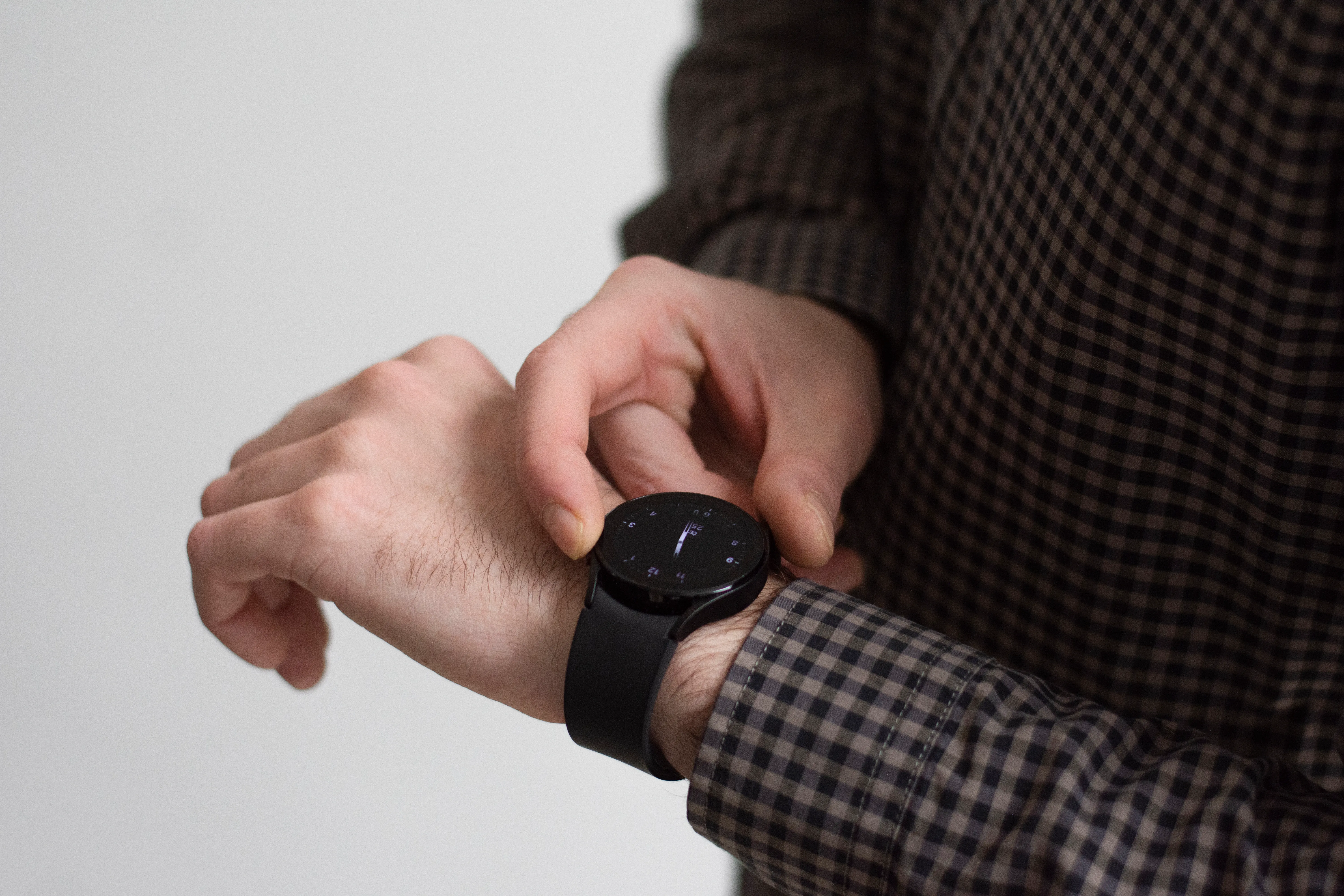
Pixel Tag also integrates with Pixel Watch through Find Hub, letting users locate and ring the tag from the watch. Don't confuse that Find Hub integration with the watch itself necessarily providing UWB precision finding.
Before buying either tag, check three things on your phone: its Android version, whether it supports UWB, and whether its Bluetooth hardware supports Channel Sounding. Without the latter two, the tracker can still use Find Hub and ordinary nearby finding, but you won't necessarily get the most precise close-range experience.
Durability, battery, design, and sharing features compared
On paper, Moto Tag 2 has the tougher durability and battery specifications.
Motorola rates Moto Tag 2 IP68 and says its replaceable CR2032 battery can last more than 600 days under its test conditions. Its IP68 testing covers immersion in up to 1.5 meters of fresh water for up to 30 minutes.
Google rates Pixel Tag IP67, covering immersion in up to 1 meter of water for up to 30 minutes under controlled laboratory conditions. Its replaceable CR2032 battery is rated to last more than one year.
Neither rating makes the trackers waterproof, and resistance can decline with normal wear.
The designs are also substantially different. Pixel Tag is a thin, elongated tracker measuring 1.1 by 1.8 inches and 0.2 inches thick. Google lists its weight at 0.4 ounces, or about 11.8g, with the battery installed.
Moto Tag 2 retains a more conventional circular tracker shape.
Pixel Tag doesn't have an integrated keyring hole, so keys and some bags will require an accessory. Its thin profile, however, is specifically designed to fit into places such as wallets without as much bulk.
Moto Tag 2 adds several conveniences of its own. Motorola says pressing its button can ring a paired phone, and the tag can also function as a remote camera shutter. The Moto Tag app lets users change ringtones, adjust volume, and check battery status.
Sharing isn't exclusive to Pixel Tag. Find Hub lets users share a compatible tracker with up to 10 other people so multiple people can locate shared belongings. Motorola also explicitly advertises secure location sharing with trusted contacts for Moto Tag 2.
Pixel Tag's advantage is deeper integration with Google's Pixel ecosystem. Google says users can locate and ring a Pixel Tag from a Pixel Watch through Find Hub, while Pixel Buds users can ask Gemini to ring the tag.
Don't treat pre-launch Pixel Tag tests as retail benchmarks
Pixel Tag doesn't go on sale until Nov. 11, so any supposed performance test published before then needs context.
A pre-launch comparison can provide an early impression if the reviewer genuinely received advance hardware, but it isn't equivalent to broad independent testing of retail units. Unless the publication clearly explains how it obtained the tracker, what firmware it used, and how it conducted the test, treat claims about long-term tracking performance or direct parity with Moto Tag 2 cautiously.
That's particularly important for claims that the two trackers deliver "identical" network performance. Both use Find Hub, but network access alone doesn't establish identical real-world behavior. Antenna design, firmware, nearby-device density, phone compatibility, UWB, Channel Sounding, and testing conditions can all affect the experience.
Android's anti-stalking protections are broader than either tracker. Google has improved unknown-tracker alerts for compatible tags with more frequent warnings, a Find Nearby tool for locating an unfamiliar tracker, and a Temporarily Pause Location option that can prevent a phone's location from contributing to the detected tracker's location for up to 24 hours.
Motorola also says Moto Tag 2 supports unknown-tracker alerts when an unfamiliar tracker is detected moving with an Android user.
What the current evidence means for buyers
Buyers who need a Find Hub tracker before Nov. 11 don't need to rely on an August stock check. Moto Tag 2 is currently listed for purchase on Motorola's US site, and its four-pack is discounted to $69.99 at the time of writing.
That makes the decision relatively simple for anyone buying four trackers today. Motorola's current promotional price is considerably below the $99 Google plans to charge for four Pixel Tags.
Pixel Tag becomes more interesting if you can wait until Nov. 11 and prefer its slimmer shape or Pixel ecosystem integration. It also makes sense to wait if you want independent comparisons of both trackers using the same phones and test conditions before choosing.
Either way, verify your phone's hardware before buying.
Android 9 is enough for baseline Find Hub compatibility, but it isn't enough to guarantee UWB Precision Finding or Bluetooth Channel Sounding. Those capabilities depend on specific hardware in both the tracker and the phone.
If you need a tracker now, Moto Tag 2 is already the known option. If you don't need one for the next few weeks, waiting until Nov. 11 gives you a more useful comparison: two retail trackers, on the same Find Hub network, tested side by side instead of one available product against another that hasn't shipped yet.



Comments
Be the first, drop a comment!