





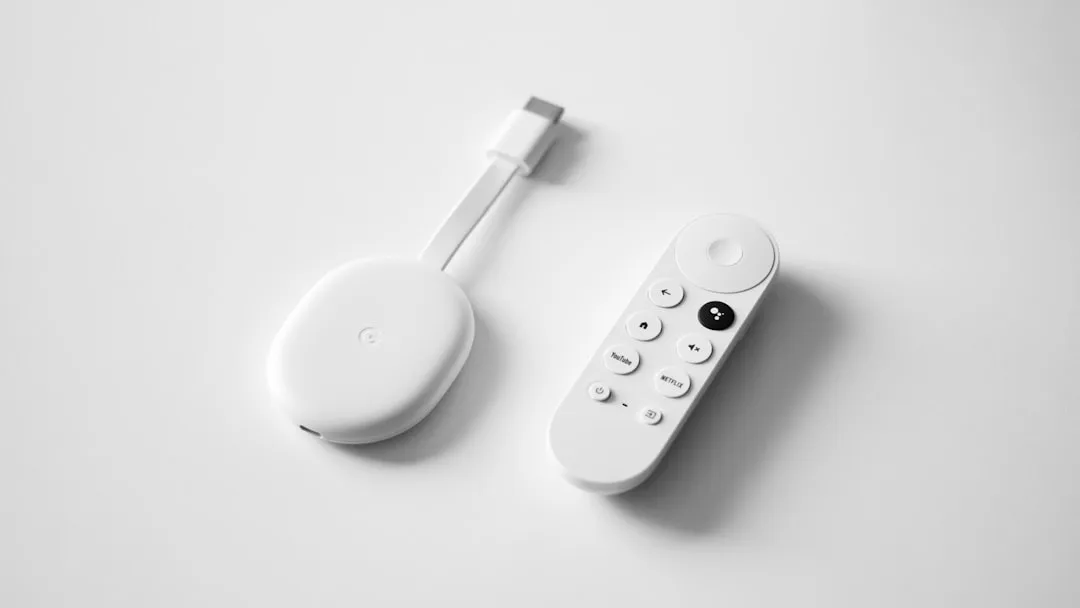
New Chromecast vs Google TV Streamer: Why They're Not the Same
If you're searching for a new Chromecast, Google has an answer: the Google TV Streamer, priced at $99.99. That's roughly double what the Chromecast with Google TV cost. The price gap is not incidental it reflects a genuine product category shift, one worth understanding before handing over your money.
Google's own announcement called the Streamer a "faster, more premium version" that "replaces Chromecast" (Google product blog, in 2024). That framing deserves scrutiny. A faster, more premium version of something implies continuity the same job, done better. The Streamer does handle streaming better. But it was also designed to do a second job entirely, one the Chromecast never attempted, and that second job is what actually drives the price.
The thesis here is simple: Google didn't iterate on the Chromecast; it discontinued it in favor of a premium smart-home hub that happens to stream video. That's a legitimate product decision. It also leaves a gap in the first-party lineup that matters for a large, specific class of buyers people with a TV, a phone, and a need for a $35 to $50 device that plugs in, connects to Wi-Fi, and casts reliably without committing them to an ecosystem.
What the Google TV Streamer actually is
Google's 2024 announcement described the Streamer as offering "an AI-powered, next-generation, personalized streaming and smart home experience" and specified that it was built to "double as a smart home hub for Google Home and Matter devices" (Google product blog, in 2024). "Smart home hub" appears in Google's own headline copy. This is not streaming hardware dressed up in marketing language; it is a hub that also streams.
The hardware confirms the positioning. The Streamer includes a built-in Thread border router and full Matter support, the same infrastructure that powers Nest Hubs, enabling direct control of locks, lights, and thermostats from the TV's home panel (Google product blog, in 2024). It also ships with a faster processor, double the memory, 32GB of storage, an Ethernet port, and Dolby Vision and Atmos support. These are genuine improvements over the Chromecast. None of them address what the Chromecast's actual job was: plug in, connect to Wi-Fi, cast reliably.
The Verge named the Streamer "the only Google Home hub that supports Matter, Thread, Ethernet, Google Assistant voice control, and smart display functions all in one package" and recommended it as the best Google Home hub outright. That's a strong endorsement. It's also the tell. When an independent reviewer's most compelling argument for a streaming device is that it makes excellent home automation infrastructure, the product's identity has landed somewhere specific and it isn't "Chromecast, but better."
Google TV Streamer vs Chromecast: why the replacement framing doesn't hold
The obvious counterargument: more capability at a higher price is just product maturation. Categories move upmarket. That's how technology works.
The problem is that The Verge was explicit that the Streamer's smart home capabilities are specifically what justify its price premium over the $50 Chromecast with Google TV. If you don't own Matter or Thread devices, you're paying $50 extra for features you'll never use. That's not a faster version of the same product. That's a different product built for a different buyer, marketed under the same general category.
The Chromecast served a specific kind of user: someone with a TV, a phone, and a need for a cheap device that connects, casts, and stays out of the way. No ecosystem commitment required. Google's platform now reaches 270 million monthly active Google TV and Android TV OS devices, per Google's own figures from late 2024. Google is not losing the living room. The question is whether any first-party product still serves that buyer at the affordable end. Right now, the answer is no.
Why Google made this call
Google's strategic direction isn't subtle. Gemini for Home, which replaced Google Assistant across speakers and displays and extended AI-powered intelligence throughout the connected home network, launched in late 2025 (Google Developers Blog). From that vantage point, the TV is one screen in an AI-managed home rather than the endpoint of a casting session. Over 800 million devices connect through Works with Google Home and Matter, per the same announcement. Google is building hardware to serve that network. A $35 HDMI dongle with a single job doesn't fit that architecture.
The budget tier is being handed off rather than abandoned outright. Partner devices, including Walmart's onn lineup, operate under the Google TV platform and offer affordable streaming without Google having to manufacture low-margin hardware. That's a coherent strategy.
But the tension is worth naming: if partner devices adequately cover the budget tier, why did Google keep manufacturing Chromecasts at all for the past decade? Because first-party hardware carries something a shelf tag can't an implicit guarantee of update priority, clean software integration, and a brand promise that the thing will simply work. Anyone who has confidently told a family member to "just get a Chromecast" knows the difference between that recommendation and "get this Walmart device running Google TV." Partner products extend Google's platform reach, but they don't carry Google's name in the same way. For a certain class of buyer, that distinction is the entire decision.
Google's calculation, clearly, is that the smart home hub market justifies more investment than the simple casting market. That's probably correct. It doesn't mean the simple casting market disappears.
The software picture for existing hardware
The Android 14 update for the Chromecast with Google TV 4K left some users reporting broken USB drive support, non-functional Bluetooth keyboards, and a virtual keyboard that failed to appear during search. A follow-up patch resolved some issues while others remained open, according to threads in the Google Nest Community. This is user-reported, not a formal Google advisory.
What those same threads note: support for the Chromecast with Google TV 4K is scheduled to end in September 2025, four months from now. That timeline, alongside unresolved user-reported bugs, suggests the device is not a current maintenance priority. That's not a conspiracy. It's where the resources are.
Should you buy the Streamer if you want a new Chromecast?
It depends entirely on what you're actually trying to do.
If you run a Google Home setup with Matter or Thread devices and want unified hub management from your TV, the Streamer is genuinely excellent. The hardware is strong, the ecosystem integration is the best Google has built into a streaming device, and $99.99 is priced correctly for what it is.
If you want cheap, reliable casting and nothing else, the Streamer is overbuilt for the job. The smart home capabilities that justify the price premium are features you won't touch. For that use case, remaining stock of the Chromecast with Google TV or the Walmart onn 4K Pro which The Verge named as the Streamer's direct budget comparison is more appropriately scoped to the task.
As for whether Google plans to build a true budget Chromecast successor: nothing in the available evidence suggests it does. No announcement, no roadmap signal, no leaked hardware. The Streamer is positioned as the successor, and that positioning appears intentional.
The gap worth naming
The missing product is not complicated to describe: a $35 to $50 HDMI dongle, first-party, running Google TV cleanly, with reliable casting and regular software support, no smart home feature tax. That product no longer exists in Google's lineup.
Google should build it again not out of nostalgia, but because budget streaming devices are where many users first enter a platform ecosystem. Roku and Amazon have not abandoned that entry point. Ceding it entirely carries real long-term risk to the pipeline that feeds everything upstream.
The Streamer is a good product. It is not the new Chromecast that most people searching for one are actually looking for. Google calling it a replacement is accurate in the narrow sense that one product succeeded the other on the shelf. Whether it replaces what the Chromecast did for most of the people who bought one is a different question, and the answer is no.






Comments
Be the first, drop a comment!