



EU Google Antitrust Fine Explained: Search and Play Store Impact
The European Commission issued a €890 million EU Google antitrust fine last Wednesday, but the payment is the least of Google's problems. The twin rulings under the Digital Markets Act demand something far harder to write a check for: a structural redesign of how Google decides which results appear at the top of its search pages, and how Android's app economy distributes money between Google and the developers who build on it.
The Commission split the penalty into two separate non-compliance decisions €460 million for favoring Google's own services in Search, and €430 million for blocking app developers from steering users toward cheaper alternatives totaling roughly $1 billion, per the official ruling. Google now has 60 days, until late September, to demonstrate compliance. Miss that deadline, and the Commission can impose daily penalties of up to 5% of Alphabet's average worldwide daily turnover, a mechanism calibrated to make continued non-compliance more expensive than fixing the problem.
The investigation opened in March 2024. Preliminary findings came in early 2025. Two months ago, the Commission rejected Google's compliance proposal as "simply not strong enough" before proceeding to final rulings, The Verge reported. That timeline, more than two years of investigation, negotiation, and rejection, undercuts any argument that the decision was rushed or politically motivated.
The 60-day clock is now the story.
Why the Google DMA fine is about product design, not just money
The Digital Markets Act operates differently from traditional antitrust enforcement. Rather than waiting for harm to be proven and then punishing it, the DMA sets specific conduct rules that large "gatekeeper" platforms must follow in advance. Google is designated as a gatekeeper for both Search and the Play Store, which means these obligations are not negotiable compliance is required regardless of whether Google believes its practices benefit users, the Commission has stated.
The two rulings address distinct problems with very different practical implications.
In Search, Article 6(5) of the DMA requires Google to rank third-party services under the same transparent, fair, and non-discriminatory conditions it applies to its own. Google's shopping results, hotel listings, flight tools, transport information, and sports panels cannot receive placement advantages simply because Google owns them. In Play, Article 5(4) requires Google to allow developers to freely inform users about better deals available elsewhere, including outside the Play Store entirely, without facing fees or technical barriers that make the detour economically pointless.
For ordinary users, the Search question is about whether Google's result pages genuinely surface the best options for a hotel search or a flight comparison, or systematically present Google's own versions first. For app developers, the Play question is about whether they can tell their own users, inside an app they built themselves, that a subscription costs less if purchased directly on the developer's website. Both involve Google using its gateway position to shape choices that users and developers believe they are making freely.
Two cases, two different problems with the same root cause
Search: the ranking logic, not just the layout
The Commission found that Google promotes its own vertical services, spanning shopping, hotels, transport, sports, and flights, across multiple search modules in ways that competitors cannot replicate regardless of the quality of their results, per the official ruling.
Google has made some visible changes. It removed the dedicated Flights unit from search result pages and is testing new display formats that reduce how prominently its own modules appear. The Commission acknowledged this as "substantial progress," per POLITICO. It still issued a €460 million fine.
The gap between "substantial progress" and "compliance" reveals the core dispute. The Commission's objection is not about box design or page layout. It is about whether the underlying machine-learning ranking system itself still advantages Google's own services, a much harder thing to fix with a formatting update.
Google's own compliance materials acknowledge that its ranking has not fundamentally changed. It still relies on machine learning trained on human feedback, combined with contextual signals like user location and factors like page experience, according to Tech Policy Press. The company argues that approach is neutral by design. Regulators disagree.
Play Store: fees that make the exit door too expensive to use
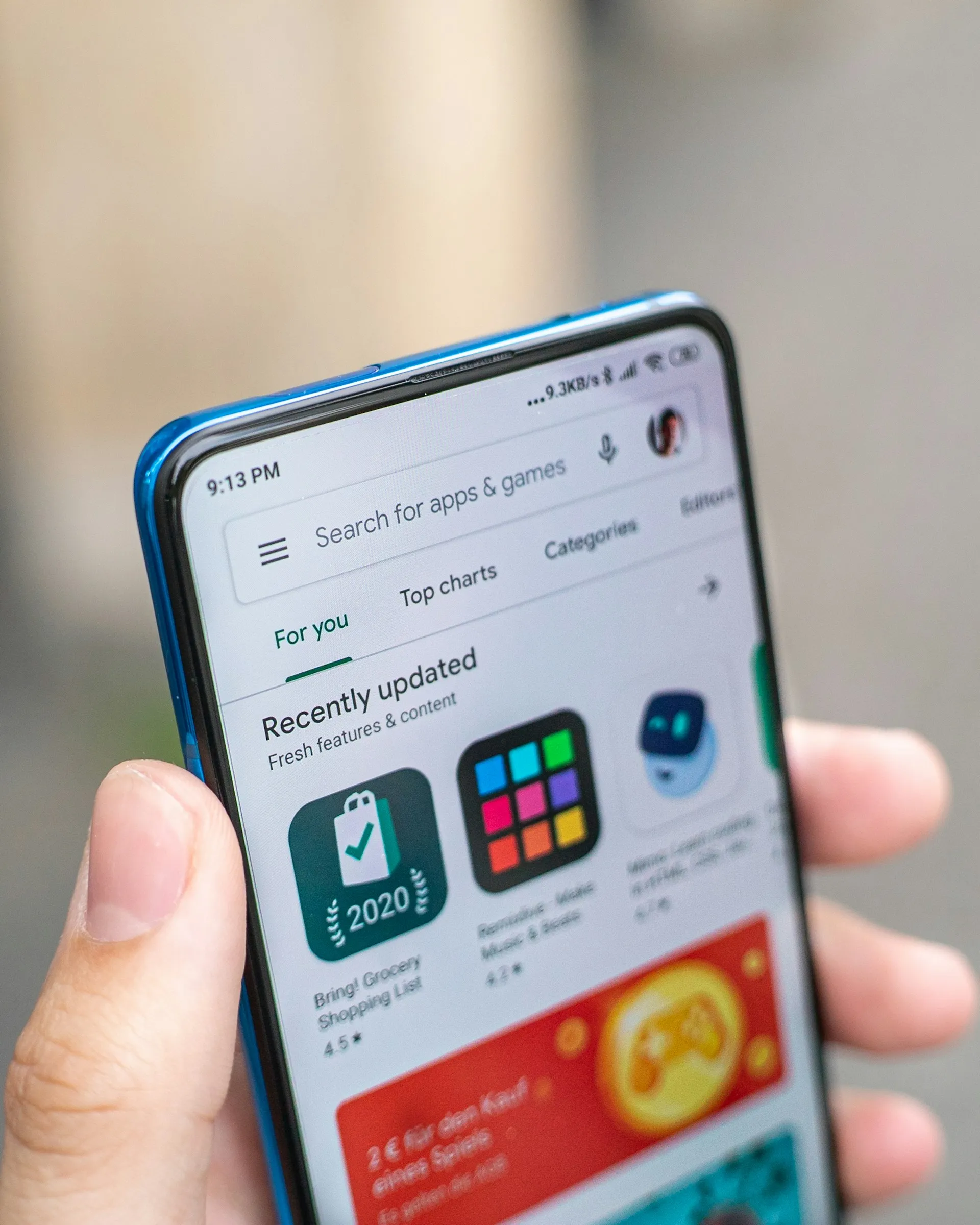
The Play case is less about visibility and more about money. From 2022, Google required all developers selling digital goods to route payments through Google Play's billing system, which carries a 30% commission on transactions, and warned that developers not compliant with the change would be removed from the store, a restriction that also drew legal challenge in the Epic Games v. Google case, Tech Policy Press noted.
The Commission's ruling draws a careful line. Google is permitted to charge a fee for connecting a developer with a new customer through the Play Store. What it cannot do is set fees so high, or extend the charging period so long, that steering users to an alternative becomes economically irrational for developers, per the official ruling. The distinction sounds clean on paper; the fight over where exactly that line sits is ongoing.
Google introduced new global Play Store terms that took effect June 30, formally permitting developer steering and alternative distribution. Those terms still impose a 10% fee on recurring subscriptions for steered transactions, and 15% under the Play Games Level Up program. The Commission said it will evaluate whether those residual charges satisfy the DMA, a question that remains open, per Tech Policy Press.
Google's response and the compliance clock
Kent Walker, Alphabet's president of global affairs, framed the ruling as counterproductive, arguing the Commission's demands would force Google to strip Search of real-time features live hotel pricing and flight availability that European users actively rely on, and would weaken safety protections on the Play Store. He characterized the enforcement as "product degradation driven by a small group of self-serving complainants," according to POLITICO. The company is evaluating its options, including a formal appeal.
Executive Vice-President Teresa Ribera was explicit that the fine is designed to generate compliance, not punish the past. "The best products should succeed because they're better, not because they're owned by the company running the search engine," she said, and separately told reporters the sanctions are intended to push Google toward "a serious proposal in terms of compliance," per POLITICO. On the purpose of the regulation itself: "The intention of our regulation is to ensure well-functioning markets, not to punish anyone."
The ruling landed one day before a deadline on temporary U.S. tariffs, with the Trump administration having cast EU tech enforcement as a trade barrier, POLITICO reported. Ribera rejected that framing directly: "We are bound by the law." The two-year investigation with multiple rounds of rejected proposals makes a charge of opportunistic timing difficult to sustain.
What happens in the next 60 days
The compliance window runs until late September. Within that period, Google must submit revised remedies for both cases. For Search, the Commission will assess whether changes to Google's ranking system, not just its display formats, satisfy the non-discrimination requirement under Article 6(5). For Play, regulators will evaluate whether the residual steering fees introduced in June, 10% on recurring subscriptions and 15% under the Level Up program, fall within what the law permits.
If Google's proposals are rejected, or no credible solution is reached, the Commission can open a further infringement procedure triggering those daily penalty payments of up to 5% of Alphabet's worldwide daily turnover, per POLITICO. Ribera told reporters that the prospect of escalating penalties is specifically designed to force Google back to the table. An appeal, if filed, would not automatically pause the compliance obligation.
The two cases will be assessed separately. Progress on Play Store fees does not offset outstanding issues in Search ranking, and vice versa.
The fine is set. The harder question isn't.
The €890 million confirms the DMA can produce enforceable penalties. What it cannot yet confirm is whether the Commission can specify, and Google can implement, what a genuinely compliant Search ranking and a genuinely permissive Play Store billing structure look like in operational terms. That definition is still being worked out, per the Commission's own ruling.
Google's new Play terms, permitting steering while retaining fees of 10-15% on steered transactions, will serve as the first practical test of whether the DMA can change platform fee economics or simply relocate the use. The Commission's verdict on those terms will set a precedent that extends well beyond Google, Tech Policy Press observed.
Google is the third company to face significant DMA fines, after parallel Apple and Meta cases were closed with fines in April 2025, POLITICO reported. But the Google search self-preferencing fine sits in different territory from anything the Commission has resolved so far, because it requires regulators to draw the line between an algorithm that ranks well and one that ranks self-servingly. That distinction is what the DMA exists to enforce. Whether it can be made to stick in practice is the story that runs from here.




Comments
Be the first, drop a comment!