



Google Messages Scam Detection Supported Phones: Full List
Google rolled out a new, Gemini-powered tier of scam protection for Google Messages yesterday, and it isn't landing on every Android phone at once. The list of Google Messages scam detection supported phones for this upgraded tier is much shorter than the list of devices that already run the feature's standard version, according to Google's security blog.
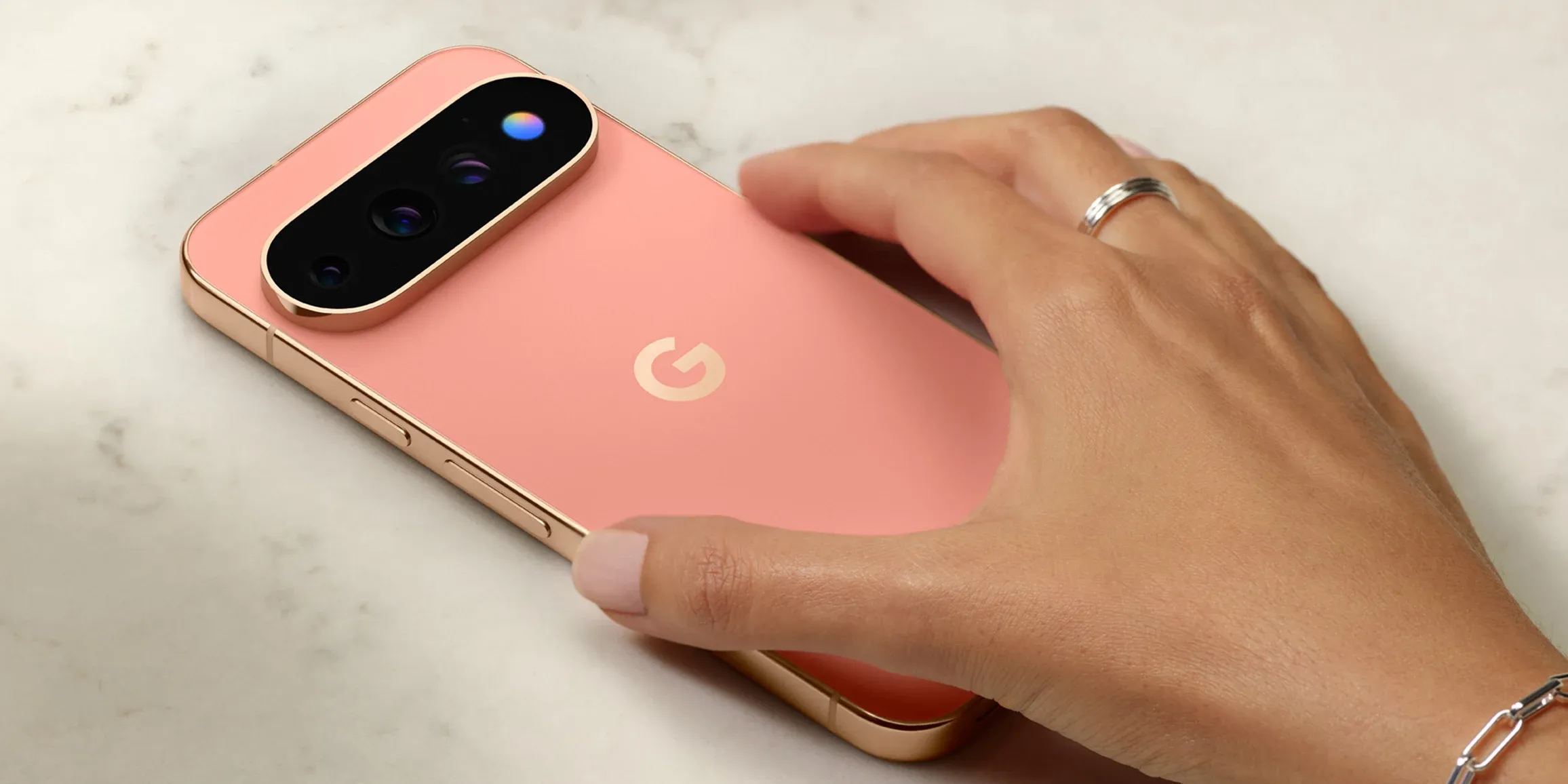
Google names Pixel 10 and newer, the Galaxy S26 series, and the Galaxy Z Flip and Z Fold8 as devices that will get what it calls Enhanced protection. The announcement also mentions unnamed "other select devices" and doesn't say which countries can access the feature yet (Google). Enhanced protection layers cloud Gemini analysis of conversation context and on-device Gemini Nano link checks on top of Messages' existing on-device Scam Detection, and Google describes the rollout as happening "in the coming weeks," not everywhere today. The company doesn't describe this as a universal Android update either.
Naming three device families doesn't mean those phones have the feature switched on right now. Here's how Google Messages enhanced protection supported devices break down against the standard tier that's been around for over a year, based on what Google has actually published.
Google Messages scam detection supported phones: eligibility vs. activation
| Protection tier | Named devices | Status |
|---|---|---|
| Enhanced protection (cloud Gemini + on-device link checks) | Pixel 10 and newer, Galaxy S26 series, Galaxy Z Flip and Z Fold8, plus unnamed "other select devices" | Google says these devices will receive Enhanced protection. Rollout is described as "coming weeks," so access isn't necessarily active on every eligible phone yet, and country availability hasn't been specified (Google) |
| Standard Google Messages Scam Detection (on-device only) | Pixel 6 and newer | Launched in the U.S., Canada, and U.K. in 2025, later expanded to more than 20 countries and several languages earlier this year; Google hasn't published a full current device-by-market matrix |
| Not named for Enhanced protection | Pixel 6-9, Galaxy S24/S25, Galaxy Z Flip6/Fold6/Flip7/Fold7 | Appear only in a separate footnote about the optional "report a text to Google" feature, not the Enhanced-tier list (Google) |
That third row is worth slowing down on. Google's October footnote about reporting a text lists "Pixel 6 (and up), Galaxy S24 series (and up), and Z Flip and Z Fold6 (and up)." The "and up" phrasing could be read as reaching the S25 or the Z Flip7/Fold7, but that's a possible reading of a footnote covering only the optional reporting tool, not a compatibility finding, and it proves nothing about Enhanced protection specifically.
Based on the published list, eligibility for those unnamed models remains unconfirmed, not ruled out. Google simply hasn't released a full feature-by-device map.
What enhanced protection actually changes
Standard Scam Detection flags suspicious conversational patterns in SMS, MMS, and RCS messages using on-device processing, then offers an option to dismiss the warning or report and block the sender (Google). It sits inside Messages' Spam Protection setting and runs on by default for conversations with people who aren't in your contacts, per the same source.
This differs from the standard tier in where the processing happens. Enhanced protection sends relevant conversation analysis to Google's cloud-based Private AI Compute environment, where Google says the data is encrypted and processed in a way that keeps it inaccessible to anyone else, including Google itself (Google).
Day to day, the change shows up around link taps. Redesigned warnings give users more time and context before tapping a link sent from a number not saved in contacts, and on-device Gemini Nano evaluates whether an unfamiliar link is trustworthy before you tap, using real-time web signals (Google).
Google's headline number here, more than 5 million combined suspected scam calls and texts flagged every month across Phone by Google and Google Messages (Google), measures aggregate detection activity across both tools. It doesn't measure whether any individual Messages user's link-tap risk has specifically changed.
Google also points to a Google-commissioned evaluation by Leviathan Security Group, a third-party cybersecurity firm, which found Android's built-in protections outperformed iOS across proactive call screening, fake-call detection, and Circle to Search threat warnings (Google). That comparison speaks to Android's standing against a rival platform; based on the published material, it says nothing about which specific phone qualifies for the new Enhanced tier.
Why owning an eligible phone doesn't guarantee access
Google's February rollout of advanced Messages protections was described as reaching "the latest Android flagship devices in the US, Canada, and the UK" (Google). That was the scope Google described earlier this year, and October's announcement doesn't clearly extend or update it.
October's post also says Enhanced protection is "rolling out in the coming weeks." That wording indicates access won't arrive for every eligible device at once, rather than guaranteeing it's already live (Google).
Compare that with how Google talks about standard Scam Detection, where the expansion is spelled out in detail: more than 20 countries, with support including English, Arabic, French, German, Portuguese, and Spanish (Google). Google hasn't said whether Enhanced protection will extend past the U.S., Canada, and U.K. footprint it named earlier. Until it does, owning a Pixel 10, Galaxy S26, or Z Flip and Z Fold8 doesn't confirm the feature is switched on in your region.
How to check what protection you actually have
Scam Detection lives inside Messages' Spam Protection setting, on by default for conversations with people who aren't in your contacts (Google). That toggle controls the standard, on-device version. Google's published material doesn't describe a separate label inside Messages confirming Enhanced protection specifically is active on a given phone.
The "report a text to Google" option, available on Pixel 6 and up, Galaxy S24 series and up, Z Flip and Z Fold6 and up, and other Android AICore devices, is a separate, optional reporting function. It isn't evidence that cloud Gemini context analysis or real-time link vetting is running on your device (Google).
Google's published announcement doesn't provide a dedicated way to verify Enhanced protection status inside Messages. That means a standard Scam Detection toggle in your settings doesn't prove you've received the upgrade. Watch official Google support pages for an update rather than assuming activation based on existing menus.
What to do next
Enhanced protection remains tied to a short list of named phones, and Google hasn't confirmed when it reaches regions beyond the U.S., Canada, and U.K. footprint it described earlier this year.
Google says it's working with Android device makers, including Motorola, OnePlus, and Xiaomi among others, to bring on-device scam protection to "hundreds of millions" more users later this year, Google's current timeline, without naming specific models or a firm date (Google).
If you own a Pixel 10, Galaxy S26, or Galaxy Z Flip and Z Fold8, check Messages' Spam Protection settings and Google's support documentation as the staged rollout continues, rather than assuming Enhanced protection is already active just because your phone qualifies on paper. If your phone offers the Spam Protection setting at all, make sure it's enabled; Google says Scam Detection is on by default for conversations with non-contacts. If that setting isn't present on your device, Google's published material hasn't identified your model as supported yet.




Comments
Be the first, drop a comment!