



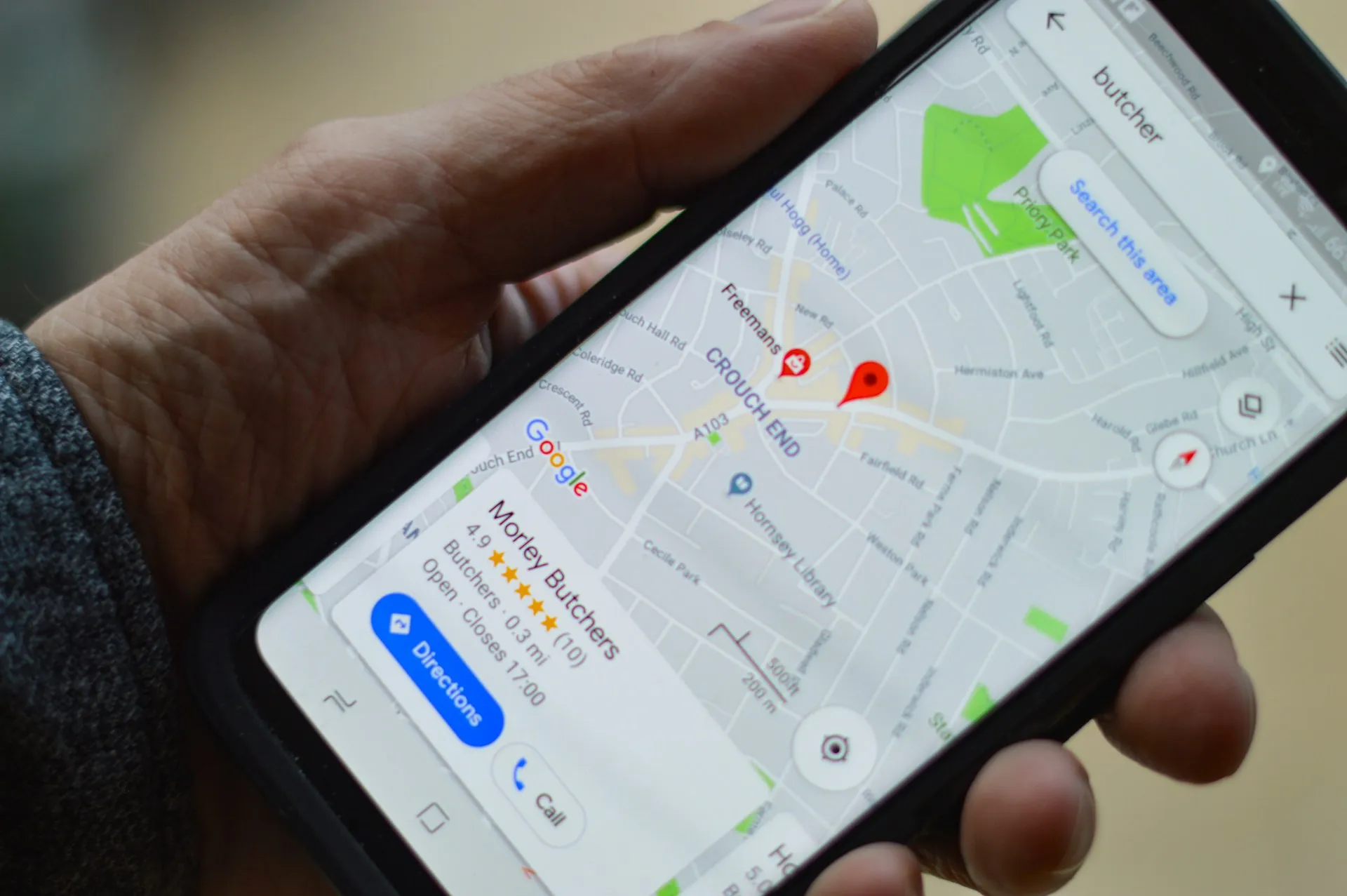
Millions of drivers glance at the price under a gas station pin in Google Maps before deciding where to fill up.
So how does Google Maps know gas prices?
Google's current documentation gives a clearer answer than its older Maps explainers did: if a gas price shown in Maps is wrong, Google tells users to contact OPIS, the Oil Price Information Service.
OPIS, a Dow Jones company, separately says Google Maps uses its retail fuel-pricing data.
That makes OPIS the strongest documented source behind the prices Maps displays, although Google still doesn't publish a simple per-station refresh schedule or promise that every number is current to the minute.
Where Google Maps Gets Gas Prices
Google's current Maps Help documentation says gas stations can show current gasoline prices in their Business Profiles on Google Maps and Search.
For incorrect fuel-price data, Google directs users to OPIS rather than to the normal Maps editing flow.
Google Maps Help on incorrect gas prices
OPIS provides the other half of the answer.
The company describes itself as an aggregator of real-time retail fuel-pricing data and says navigation apps including Google Maps and Waze use OPIS data to populate fuel information.
OPIS on fuel-price data used by navigation apps
Google's broader documentation on local listings also says Maps information can come from several sources, including:
Publicly available web information.
Licensed third-party data.
User contributions.
Business owners.
Google's own interactions with businesses and places.
Google's explanation of local-listing data sources
For gas prices specifically, the OPIS connection is the documented piece that matters.
What OPIS Actually Tracks
OPIS says it monitors more than 5 million gasoline and diesel prices each day.
Its current retail-pricing documentation says that coverage includes nearly:
150,000 outlets in North America.
250,000 stations across 70 countries in Europe, South America, Asia, and Australia.
OPIS also says it receives retail prices from multiple sources for many stations and cross-checks those feeds as part of its quality-control process.
In North America, it reports daily coverage of nearly 90% of fuel stations and coverage above 95% within 48 hours.
OPIS retail fuel-price coverage and methodology overview
That gives Google access to a much larger pricing pipeline than individual drivers manually typing numbers into Maps.
It does not mean every price visible in Google Maps was updated seconds ago.
OPIS describes its own products as real-time or near-real-time, but Google doesn't publish a Maps-specific promise saying exactly how quickly each OPIS change reaches a station listing.
Why Google's 2022 Maps Explainer Doesn't Answer the Gas-Price Question
Google's widely cited 2022 explanation of how Maps stays current focuses on different kinds of data.
For business hours, Google described machine-learning models that can detect likely outdated listings and compare information from business websites, nearby businesses, Street View imagery, Local Guides, business owners, and, in some markets, Duplex calls.
For speed limits, Google described a separate system using street-level imagery, artificial intelligence, and human review.
Those systems are useful examples of how Maps handles changing information.
They aren't Google's explanation for fuel prices.
Gas prices use a separate data source, with Google now explicitly pointing users to OPIS when the displayed price is wrong.
That makes the older hours-and-speed-limit pipeline interesting background, not the best evidence for how fuel pricing works.
How Fresh Are Google Maps Gas Prices?
This is where the documentation becomes less specific.
Google calls the figures shown for gas stations current gasoline prices, while OPIS markets its retail data as real-time and continuously monitored.
Neither company publishes a universal guarantee that a particular Maps listing will be updated within a fixed number of minutes or hours after a station changes its sign.
That distinction matters because fuel prices can move much faster than normal business information such as opening hours or phone numbers.
OPIS's own coverage figures also show why "current" shouldn't automatically be read as "instant."
The company says nearly 90% of North American stations are covered daily and more than 95% within 48 hours.
That's broad coverage, but it still leaves room for an individual station's displayed price to lag behind a real-world change.
Why the Number on the Pin May Not Tell the Whole Story
Fuel pricing is more complicated than one number.
Stations can sell several grades, along with diesel, and some locations use different pricing structures depending on membership or payment method.
Google doesn't publish a detailed support page explaining exactly which grade or pricing condition gets priority on every map pin.
So before making a detour, open the full station listing and check what pricing information is actually shown instead of assuming the first number applies to the fuel you need.
A price can also be accurate for one grade while being irrelevant to someone buying another.
That's different from the listing simply being stale.
Can Gas Station Owners Update the Price Directly in Google Maps?
Google's public help documentation does not tell station owners to edit fuel prices through the ordinary Business Profile controls.
Instead, Google's Maps Help page tells users with incorrect gas-price data to contact OPIS.
That is a useful distinction from ordinary listing details such as hours, phone numbers, addresses, and photos, which business owners can generally manage through Google Business Profile.
OPIS says its retail pricing comes from multiple data sources, including information supplied directly from fuel stations.
The company says nearly one in four US stations sends retail gasoline prices directly into the OPIS database each day.
OPIS retail pricing and data-quality details
So a station may contribute to the underlying pricing ecosystem without its manager manually editing the number inside Google Maps.
How Accurate Are Google Maps Gas Prices?
Neither Google nor OPIS publishes a Google-Maps-specific accuracy percentage.
OPIS does describe a fairly extensive quality-control system.
It says more than 15 data-quality analysts monitor its retail fuel data, and that multiple feeds for the same station can be cross-checked to identify bad prices.
That's evidence of a verification process, not proof that every listing is correct at every moment.
The useful conclusion is narrower:
Google Maps has a documented external fuel-price source.
OPIS maintains a large, frequently updated retail-price database.
Individual listings can still lag or contain an incorrect value.
Google doesn't provide a fixed Maps refresh interval.
That makes Maps useful for comparing nearby stations, but not a guarantee of the exact price you'll see when you pull in.
When to Verify a Price Before Making a Detour
A manual check makes the most sense when the Maps price would materially change your route.
Pause before detouring if:
One station is much cheaper than everything nearby. A dramatic outlier is worth confirming.
The station requires a meaningful detour. Saving a few cents per gallon may disappear once extra mileage and time are factored in.
You need a specific grade or diesel. Check that you're comparing the correct fuel.
The tank is nearly empty. A questionable bargain is less useful when you have little room to change plans again.
If the station's roadside sign is visible before you turn in, compare it with the Maps listing.
Remember that the sign itself may emphasize only certain grades or pricing conditions, so check what the displayed number represents.
The pump remains the final confirmation of the amount actually charged.
What to Do if the Price Is Wrong
Google's instructions are unusually direct here.
If the gasoline price shown in Google Maps is wrong, its Help page says to contact OPIS.
That means the normal "Suggest an edit" workflow used for many Maps listing problems isn't the documented escalation path for incorrect fuel prices.
Google doesn't publish a Maps-specific service level for how quickly a corrected OPIS price will appear afterward.
So reporting an error doesn't guarantee an immediate change inside the app.
What to Do Before You Trust the Price
Google Maps isn't guessing at fuel prices based on nearby stations or running the same AI system it uses to predict business hours.
The strongest documented explanation is simpler: Google points incorrect fuel-price reports to OPIS, and OPIS says Google Maps uses its retail pricing data.
OPIS monitors millions of gasoline and diesel prices each day and cross-checks multiple data sources, but Google doesn't promise that every station listing updates instantly.
Use Maps to compare nearby stations.
Then check the full listing for the fuel you need, and verify a price that looks unusually low before driving out of your way for it.
Google Maps can tell you where the cheaper fuel appears to be.
The station sign and pump still get the last word.





Comments
Be the first, drop a comment!