




Google Home Automations May Warning Explained: Who's Affected
Google Home devices are delivering an unsolicited mid-interaction message to users: "just so you know, phone actions and automations will no longer be available starting in the first week of May." The Google Home automations May warning names a specific feature class, sets a hard deadline, and Google has publicly shared no notice of any change to how automations work, according to Android Authority.
Posts surfaced today on Reddit and the Nest Community from users who received the identical message after completing routine device interactions. Android Authority contacted Google directly and had received no response as of publication. The identical wording across multiple independent reports rules out a one-off glitch, though it does not confirm what the change actually covers.
What the warning means is not confirmed. The most plausible reading, given the terminology and timing, is that it refers to a specific class of legacy Google Assistant features rather than the automations most Google Home users rely on today. That reading is inference, not fact, and the distinction matters: the practical impact on any given user depends entirely on which system their routines were built in.
What "phone actions" may refer to and why the phrasing matters
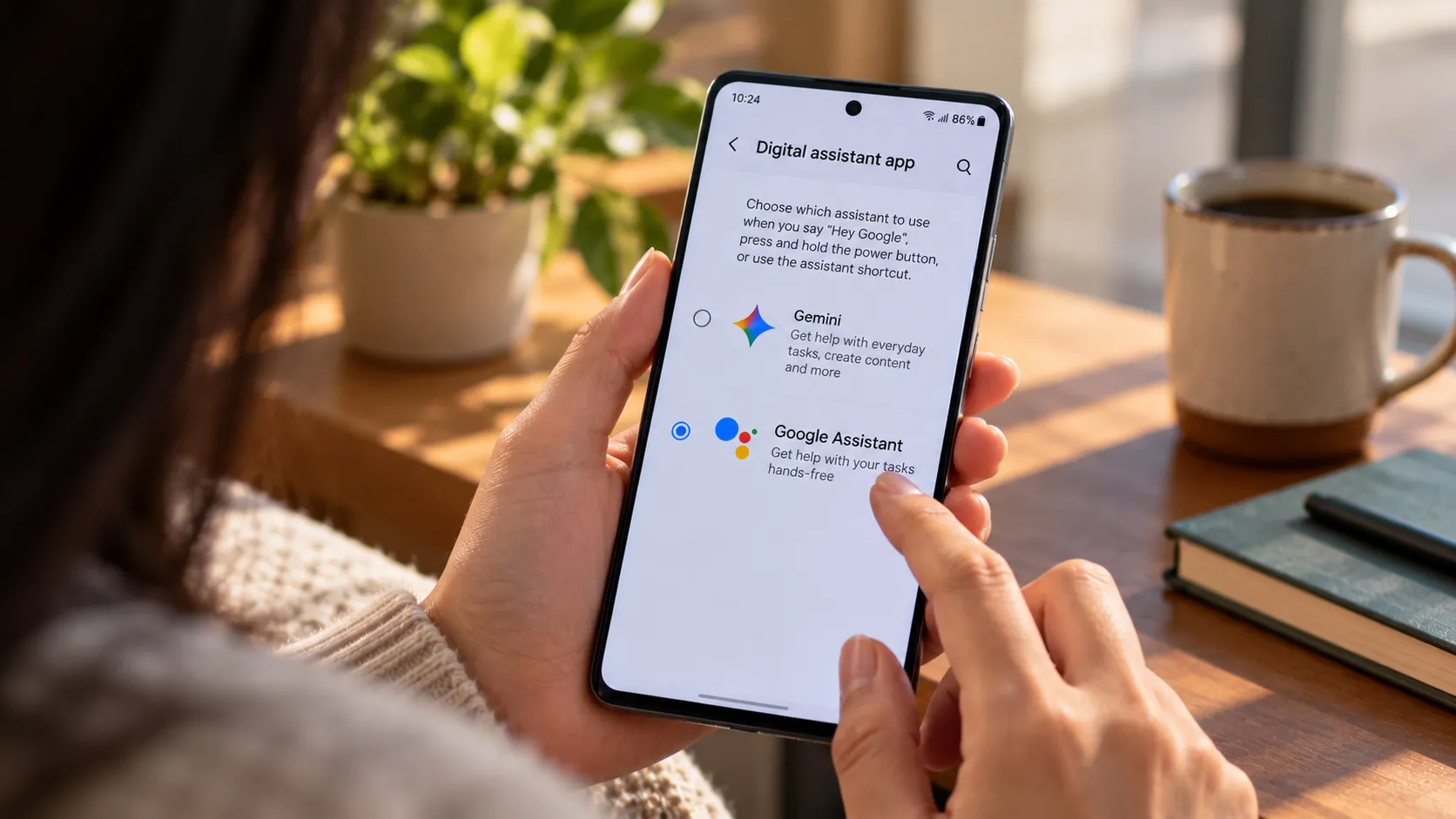
The terminology in the warning is doing significant work, and it is not standard current Google Home language. "Phone actions" does not appear prominently in Google Home's current documentation or automation editor. One reasonable interpretation is that the phrase refers to routines built through the Google Assistant app on an Android phone, a separate and older system that predates the Google Home app becoming Google's primary smart home hub. These are distinct platforms with different interfaces, and the warning may be naming the older one, per Android Authority.
That interpretation is not confirmed by Google. It is a working assumption based on the terminology used.
What the warning does not clarify is whether these features are being removed outright, absorbed into the new platform, or migrated automatically. A deprecation notice and a migration notice look identical to a user reading them cold. The difference is substantial: one means features are gone and may need to be manually rebuilt, the other means they should carry over with little or no user action. Google has not said which this is.
There is one contextual signal. Google posted separately to the Nest Community this week announcing a "unified vision for Google Home & Nest" launching in May, framing the change as a deliberate platform transition rather than a routine update. That timing makes it plausible the warning is a migration notice rather than a pure deprecation. It does not make it certain, according to Android Authority.
Which Google Home users the warning may affect
The practical question is where a user built their automations. Not all Google Home automation pathways share the same infrastructure, and changes to one layer do not necessarily cascade to others.
When Google Home's scripted automations broke in late January, only YAML-based routines created through the script editor stopped firing. Automations built through the Google Home app's standard interface, and those created through Gemini, were unaffected throughout that outage, as Android Authority reported three months ago. The stack has distinct layers, and they can behave independently when something changes beneath them.
That history is relevant context here, not a direct parallel. If "phone actions" does refer to a legacy Assistant-side feature class, users who configured routines through the Google Assistant app on their phone, particularly any automation that predates Google Home becoming the primary hub, are the most plausible candidates for disruption. That is a working assumption based on what the terminology suggests, not a confirmed reading.
Users who built automations through the Google Home app's standard editor, or who adopted Gemini-based automation, sit on different infrastructure. Whether that makes them safe from this particular change is something Google has not addressed. The warning's language implies deliberate, pre-configured routines rather than ad hoc voice requests, which suggests casual users who rely on basic commands without configured automations are likely not the target audience for this message.
The concrete check, if you are uncertain: open both the Google Assistant app and the Google Home app and look at where your routines and scheduled actions actually live. If automations exist only in the Assistant app and have not been recreated in Google Home, those are the most plausible candidates for disruption based on the available evidence. If everything lives in Google Home, the risk from this specific warning appears lower. Either way, verifying that routines still execute after the first week of May is the only way to know for certain.
Why Google Home's Gemini expansion makes the warning harder to read
The warning lands at an odd moment for the platform. Google has spent the past several months visibly expanding automation capabilities within Gemini for Home, not contracting them.
Last October, Google's developer blog announced that Gemini for Home would let users build "complex automations" through natural language, and directed hardware partners that "it is critical that you begin strongly testing your existing Works with Google Home integrations immediately," language signaling substantial backend changes were underway, per the Google Developers Blog. That was a signal of meaningful platform reorganization, not consolidation.
Six weeks ago, Google followed through with a notable update: everyday command latency dropped by 40%, and the automation editor gained new triggers, conditions, and actions, including weather announcements, oven state monitoring, and smart bulb effect controls, 9to5Google reported. A platform actively gaining automation capabilities is an unusual backdrop for broad automation removal.
None of that rules out a narrower deprecation. Google could be expanding the Gemini-based system while retiring a specific legacy feature set that predates it. The two are not mutually exclusive. What is notable is that none of Google's public Gemini communications mention retiring "phone actions and automations" in those terms. There is no matching deprecation notice using that phrasing. A device-level warning with no supporting public documentation is what makes this feel more unsettling than a standard platform transition would.
What remains unresolved before May
Google's response pattern on known bugs has been prompt. When scripted automations failed in January, the GoogleNestCommunity Reddit account acknowledged the issue and committed to a fix, according to Android Authority. When the Nest Hub AM/PM alarm bug surfaced today, Google's official Nest account confirmed a patch was already in progress, per Android Police. Both of those were bugs. Google moved quickly in both cases.
This is a scheduled change with a stated deadline, which is a different category. Those typically come with documentation, migration guides, or at minimum a community post explaining the scope of what is changing. None of that has appeared. The gap between what the warning implies and what Google has publicly explained is the detail that stands out most.
The open questions going into May: whether "phone actions" names a specific legacy feature class or something broader; whether affected automations will migrate automatically or require manual rebuilding; whether Google will clarify any of this before the deadline passes. Right now the only communication has come from the devices themselves, mid-interaction, without context or follow-up.
The real answer will emerge when the deadline arrives, either the affected routines keep working, or they don't. Users who have automations configured in the Google Assistant app and have not recreated them in Google Home should not wait passively to find out which.












Comments
Be the first, drop a comment!