




Here is the tension at the center of Google's foldable strategy: why foldable Pixel phones still matter is a genuinely answerable question, but the Pixel 10 Pro Fold doesn't answer it. The category has a strategic logic. The device doesn't live up to it.
A foldable Pixel could justify its existence in one of two ways: as the Pixel experience at its absolute ceiling, with the camera, software, and AI integration that define the brand all maximized on a larger canvas; or as the reference-class Android foldable, the device that sets the benchmark for what the platform can achieve on flexible hardware. Google has gestured at both without committing to either. Three generations in, that's no longer a development constraint. It's a choice.
Why foldable Pixel phones still matter in a slowing market
Before cataloguing what the Pixel 10 Pro Fold gets wrong, it's worth being clear about why Google should stay in this category at all. Foldables reached roughly 1.6% of global smartphone shipments in 2025, with growth momentum slowing as the market settles into what TrendForce described this May as a high-end maturity stage. That's a thin slice. But the strategic value of holding a position in it is real.
Google's presence in foldables serves three purposes that a slab Pixel can't. First, the form factor is a halo product for Android itself: the devices that prove the platform can compete at the highest level of hardware ambition.
Second, a large inner display is the most demanding test environment for Gemini integration and Android's large-screen UX. Whatever Google learns from building and iterating on the Pixel Fold feeds back into the platform.
Third, the foldable market is about to get significantly more competitive. TrendForce projects that Apple's anticipated entry could help lift annual global foldable shipments to 30.8 million by 2027, with Apple potentially capturing about 20% of the segment. Google can either hold its position before that influx or cede ground and spend years trying to recover it.
The point of foldable Pixel phones, then, is not volume. It's relevance. A category that goes from niche to mainstream with Apple at the center and Google as a footnote is a worse outcome for Android than a category that stays niche with Google as a credible player.
None of which helps the Pixel 10 Pro Fold's case as the specific device on sale for $1,799 right now.
The camera problem, then the hardware problem
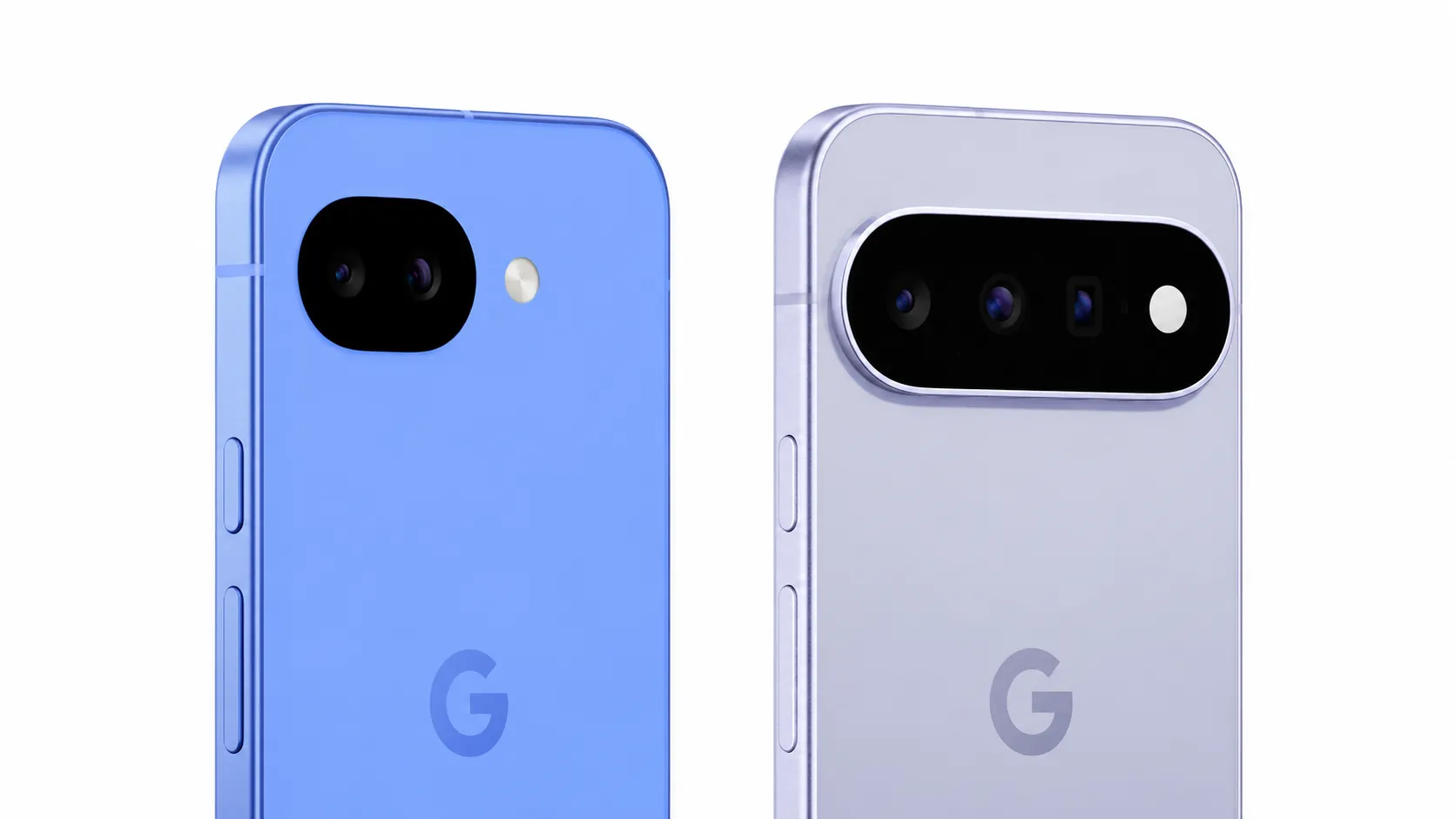
The Pixel brand's credibility runs through its cameras. That makes it particularly damaging that, across three successive foldable generations, Google's folding phones have shipped with cameras that trail the slab Pixel Pro lineup. According to Android Authority, the Pixel 10 Pro Fold's camera hardware is largely unchanged from the Pixel 9 Pro Fold. The telephoto and ultrawide results are "downright disappointing" for a phone in this price tier, Android Police found last October. Samsung fitted a 200MP primary sensor in the Galaxy Z Fold 7; vivo included 50MP periscope telephoto and ultrawide cameras in the X Fold 5. Google's 10.8MP telephoto and 10.5MP ultrawide, as Android Authority put it, look pitiful by comparison.
The foldable-specific hardware tells a similar story. The Galaxy Z Fold 7 opens to a frame just 4.2mm thick and runs a Snapdragon 8 Elite that Android Police concluded clearly outperforms the Tensor G5. The Pixel 10 Pro Fold is over 40 grams heavier, a gap you feel across a full day of use. The vivo X Fold 5 packs a 6,000mAh battery alongside a slimmer, lighter chassis and faster charging, both wired and wireless, according to Android Police. These aren't marginal differences. They're the distance between leading a category and following it at a comfortable remove.
Android Authority laid out the arithmetic plainly: buying the Pixel 10 Pro Fold means accepting worse cameras than the Pixel Pro slab and lower peak performance than competing foldables at similar prices. That's not a trade-off most buyers make willingly. They accept it because no other option delivers the same Pixel software experience in a foldable form. Which raises the obvious question.
The software argument, and why it doesn't close the gap
Google's software pitch for the Pixel Fold is coherent on paper. Gemini AI features are part of the package; the large inner display enables Android multitasking that genuinely outperforms what a slab phone offers, and Pixel's seven-year OS and security-update commitment means the device is supported for as long as Samsung's alternatives.
The trouble is that Samsung counters with DeX, a desktop-mode environment that pushes the productivity case well beyond stock Android, and matches that with the same seven-year OS and security-update commitment. Android Police flagged both as concrete reasons to prefer the Z Fold 7. Google's large-screen software advantages are real but narrow.
On the competitive side, brands like Honor, Huawei, Xiaomi, and Oppo have demonstrated that class-leading performance and cameras are achievable in a foldable form, according to Android Police, which makes Google's software pitch harder to lean on when the hardware ceiling is already lower.
A software-first identity for the Pixel Fold could work. But it requires the camera and chip deficits to be small enough that software tips the balance. Right now, the deficits are too large. The device needs hardware competitive enough that software becomes the reason to choose it. Currently, those are in reverse order.
What the Pixel 10 Pro Fold actually gets right
The improvements Google has made deserve a clear accounting, not a passing mention before the verdict.
IP68 water and dust resistance is a genuine engineering achievement on a device with a moving hinge, and Android Police called it a significant step in the right direction. Google says the inner display was tested to withstand more than ten years of folding under its stated daily-fold assumption.
The 6.4-inch cover screen peaks at 3,000 nits, making it usable in direct sunlight. One Android Police reviewer reported two full days of mixed use from the 5,015mAh battery, a result that suggests stronger endurance than many premium phones even if rival foldables pack larger cells. The gearless hinge is well-executed. Qi2 wireless charging is a practical convenience.
On resale, the Pixel Fold also holds up better than the category average. SellCell, which tracked trade-in prices across more than 40 US buyback companies, found the Pixel Fold lost about 58.1% of its value at six months, compared to 56.1% for the Pixel Pro, a gap of roughly 2%.
Samsung's Z Fold and Flip devices dropped 63.7% in the same window versus 48.3% for the Galaxy S, a 15.4% spread that represents a genuinely punishing ownership penalty.
So who should actually buy this phone? Someone already committed to the Pixel software experience, who values daily-use durability and battery life over flagship camera output or raw performance, and who isn't drawn to Samsung DeX or the hardware ambition of Chinese brands not widely available in the US market.
That's a real audience. It's also narrower than Google likely intends to serve. If Pixel cameras are the priority, the Pixel 10 Pro delivers them at a lower price. If foldable hardware leadership is the goal, the Galaxy Z Fold 7 is ahead on that measure.
Are foldable Pixel phones worth it? Only if Google changes course.
The foldable market structure makes Google's current position more precarious than it appears. When Apple enters and captures an expected 20% of a growing segment, according to TrendForce, the existing Android players compete harder for share that isn't expanding at the same rate. Google's limited feature set is a structural weakness in that environment, something Android Police identified as a meaningful detriment to the kind of global aspirational positioning that foldables require.
A cautious phone at $1,799 carries more cost than a bad one. A bad phone is at least legible. Android Police described the Pixel 10 Pro Fold as a cautious update that "doesn't move the needle much further ahead." Android Authority was more direct: Google's current strategy "isn't working." Three generations is enough runway that neither verdict can be brushed aside as impatience.
The path forward requires three things. Cameras that match the slab Pixel Pro: with the latest model still relying on hardware largely unchanged from the original Pixel Fold, this has become non-negotiable.
A direct answer on chip performance, whether through Tensor development that closes the gap at the top end or a different arrangement for the foldable SKU. And a software experience, built on Gemini integration and Android's large-screen strengths, that advances far enough to genuinely differentiate against Samsung DeX and the hardware edge of Chinese rivals.
The depreciation data underlines the urgency. Foldables shed an average of 62.3% of their value within six months, versus 49.8% for standard flagships, according to SellCell. Google outperforms Samsung here, but the only durable defense against category-wide depreciation is building a phone people don't immediately want to replace.
The Google Pixel Fold's future depends on whether the next device can finally answer the one-sentence test. Not "good enough for a foldable Pixel." Something sharper: the phone that proves Google still understands what a flagship Android device is for.







Comments
Be the first, drop a comment!