



Pixel 10 Magic Cue New Name and Google's AI Rebrand Explained
Google launched Magic Cue as a headline feature of the Pixel 10 last August, describing it as "proactive support, tightly woven across your phone," per the launch announcement. Two months ago, the company introduced Gemini Intelligence as its new label for proactive AI across Android devices, using language that maps closely onto what Magic Cue already does. Google has not announced a rename. But taken together, the product descriptions, the rollout roadmap, and Google's track record with AI branding suggest Magic Cue is a strong candidate for consolidation under the Gemini Intelligence umbrella.
No confirmation exists. What follows is an evidence-based case for why that outcome is plausible, what it would and wouldn't change for users, and what to watch for.
What Magic Cue actually is: infrastructure, not a feature
Understanding the rename question requires understanding what Magic Cue actually does, because "feature" undersells it.
Magic Cue is aware of information across Gmail, Google Calendar, Keep, Messages, and Screenshots, then surfaces contextual suggestions inside Google Messages, the Phone app, Pixel Weather, notifications, and Gboard's suggestion strip, according to 9to5Google's coverage at launch. It operates without being explicitly invoked. If a friend texts asking for tonight's event address, a suggestion card appears at the bottom of the conversation; one tap inserts the details pulled from a Gmail confirmation or Calendar entry. The same logic applies during phone calls: when a user calls an airline, Magic Cue surfaces the relevant confirmation number from Gmail on the in-call screen, as Google's feature overview explains.
The breadth matters here. Pixel Weather shows the forecast for upcoming calendar events. Photo retrieval and hotel reservation details are also within scope, 9to5Google noted. When the system finds nothing relevant, Google says it won't disturb you. That restraint is built into the design: Magic Cue is meant to feel ambient, not intrusive.
All processing runs on-device, handled by the Tensor G5 chip and the local Gemini Nano model. "With your permission, Tensor G5 and the latest version of Gemini Nano work together to run Magic Cue privately and securely on your phone," Google stated at launch. Users can disable the feature entirely or restrict which data sources it draws from. That on-device architecture isn't incidental; it's why Google can offer cross-app context without triggering the same privacy concerns that cloud-dependent AI features carry.
Pixel 10 Magic Cue rebrand: where it fits within Gemini Intelligence
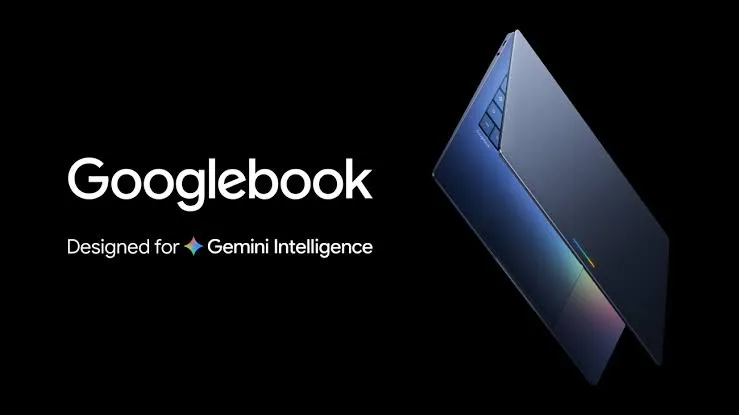
Two months ago, Google introduced Gemini Intelligence as a new label for proactive AI on Android. The company described it as bringing "the best of Gemini" to advanced devices, with capabilities spanning multi-step task automation, content summarization, form completion, and natural-language widget creation, per the official announcement. Rollout starts with the latest Samsung Galaxy and Google Pixel phones this summer, expanding to watches, cars, glasses, and laptops later this year.
That scope is broader than Magic Cue. Gemini Intelligence also includes a Gemini assistant built into Chrome for Android, which started rolling out in late June, capable of researching, summarizing, and comparing content across the web, according to the same announcement. Natural-language widget creation and multi-step automation in food and rideshare apps go beyond what Magic Cue does today.
The overlap, though, is specific. Both Magic Cue and Gemini Intelligence are described as proactive, cross-app, context-aware systems that act without explicit user requests. Google confirmed it spent months fine-tuning Gemini Intelligence's multi-step automation on the Galaxy S26 and Pixel 10 specifically, in the May announcement, placing the Pixel 10 at the center of the Gemini Intelligence story before any rename happens.
A simpler way to read this: Magic Cue appears to be an early, Pixel-specific implementation of what Google is now calling Gemini Intelligence. Not a different product that rhymes with it. One component that could plausibly receive a platform identity rather than staying a device-exclusive label. As Gemini Intelligence spreads to Galaxy devices and beyond, a Pixel-only name for comparable functionality starts to look like an inconsistency rather than a distinction.
Google's naming pattern and why Magic Cue fits it
Google's AI branding history follows a recognizable sequence. Assistant became Gemini. Bard became Gemini. Now, as analyst Jayson L. Adams observed in May, Gemini has become Gemini Intelligence. Each documented shift replaced a narrower product name with a broader platform identity.
The competitive context is relevant. Apple positioned Apple Intelligence as a "personal intelligence system" across iPhone, iPad, and Mac, absorbing individual AI features under one umbrella rather than letting them accumulate as a disconnected list, per Adams's analysis. Google appears to be following a structurally similar path.
Magic Cue fits the profile of names Google has consolidated before. It's Pixel-exclusive. It doesn't carry "Gemini" anywhere in the label. It describes, through an evocative but opaque phrase, something Gemini Intelligence is now positioned to own at the platform level. Based on Google's past branding shifts, that combination tends to resolve in one direction.
Adams also speculates that Google may eventually simplify further and rebrand the whole platform as "Google Intelligence," though he frames this as prediction rather than reporting. That's a further step removed from the near-term question, and worth noting as context rather than signal.
What a rename would and wouldn't mean for Pixel 10 users
The practical question for anyone using Magic Cue today is whether a label change brings anything beyond a new label. Based on what Google has confirmed about the current architecture, a rename alone would not necessarily change how the feature works.
The on-device processing that defines Magic Cue, with Tensor G5 and Gemini Nano handling data locally, is what makes the feature's cross-app reach acceptable. Users who've configured which sources Magic Cue can access have done so on the basis of an explicit privacy commitment. Google states directly that users can enable or disable the feature and manage app access at any time. 9to5Google confirmed that control extends to individual sources including Gmail and Calendar.
If that architecture carries forward under a new name, and there's no indication it wouldn't, the functional experience stays the same. But the branding shift would need to make that continuity explicit. Gemini Intelligence as an umbrella includes features with different data handling characteristics. If Magic Cue's on-device privacy controls aren't surfaced prominently under any new label, users have a legitimate reason to ask what changed.
There's a second practical question: does a rename affect feature parity across devices? If Magic Cue-style functionality arrives on Galaxy phones under the Gemini Intelligence label while Pixel 10 still calls it Magic Cue, the gap will be hard to miss. If Google closes it with a rename, that signals the Pixel 10 is being positioned as part of the platform, not just a preview of it.
The signals worth watching:
- Changes to the Magic Cue label in Pixel settings menus or support documentation
- Whether Galaxy S26's Gemini Intelligence rollout includes equivalent functionality described under consistent terminology
- Google's language in future Pixel announcements, specifically whether "Magic Cue" appears alongside or beneath "Gemini Intelligence"
- Any update to the on-device privacy disclosures that currently govern Magic Cue's data access
None of these require a formal announcement. They're the incremental signals that have historically preceded Google naming consolidations. The feature's behavior is unlikely to change. What it's called, and whether that name clearly communicates both function and privacy, is where this story develops next.






Comments
Be the first, drop a comment!