



Google Play Store Natural Language Search: What v52.4 Changes
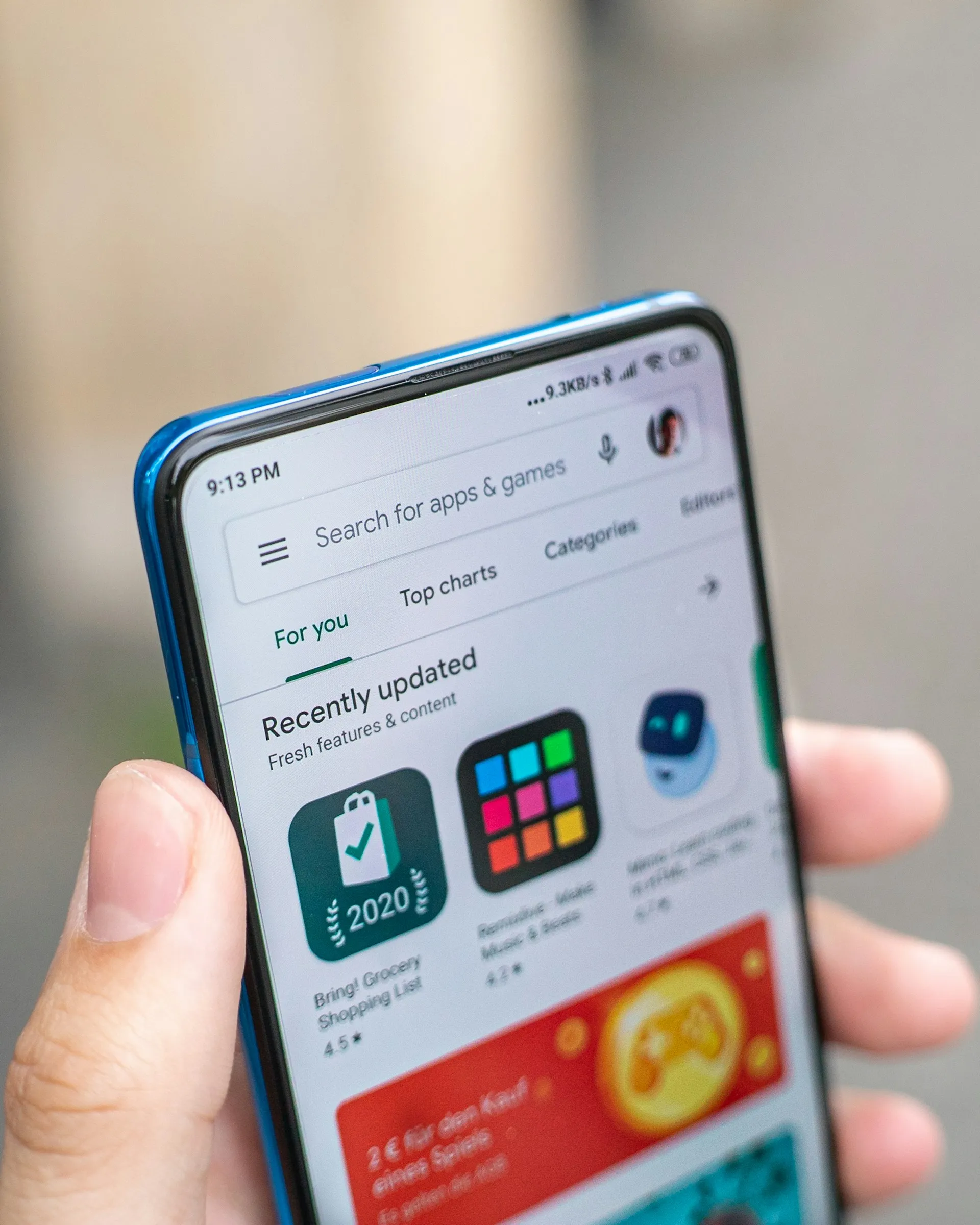
Google Play Store's July 2026 update quietly added two search changes to Android phones: the search input box now expands to two lines, and the store will begin showing natural language queries. Both entries appear in the v52.4 release notes covered by 9to5Google this week. What's confirmed is the interface change. What isn't confirmed is whether the underlying search engine can actually do more with a longer, descriptive query than it could with two keywords.
That distinction matters. Google Play Store natural language search has been a stated direction since I/O 2026, when Google announced Ask Play, a Gemini-powered conversational overlay designed so users can describe what they want in plain language when looking for an app, per Google's I/O blog two months ago. The v52.4 update suggests the search input is being rebuilt to match that direction. Whether results will improve depends on a backend question Google hasn't yet answered publicly.
What the Google Play Store search update changes in v52.4
Two things changed in the search interface, both phone-only.
The first is straightforward: the search input box and suggestions field now expand to two lines, per the v52.4 release notes via 9to5Google. Users typing longer queries will see more of what they've written instead of having it disappear off the edge of a single-line bar.
The second is less clear. The changelog states: "With this update, we show natural language queries." The most natural reading is that Play will begin surfacing sentence-style or intent-based suggestions as users type think "app to track sleep without a subscription" appearing as a suggestion rather than just "sleep tracker." But Google hasn't specified whether that change lives in the interface, in how queries are interpreted by the search engine, or both. Treat it as a confirmed UI change with unconfirmed implications for retrieval.
The practical split is fairly clean. Users who search Play with short keywords "weather," "budget app," "VPN" won't notice much difference. Users who tend to type out what they need in a phrase will have more room to do it and may start seeing suggestions that match that style. Both changes are listed as phone-specific, with no mention of tablets or other form factors.
Who has it now, and when to expect it
Appearing in the changelog doesn't mean a feature is live on your phone. Google's own release notes carry a standing caveat: features may be experimental, limited to certain users, and some capabilities take months to reach broad availability, as 9to5Google notes in its July coverage. No rollout timeline has been published for the v52.4 search changes.
A previous Play Store search update offers some context, though not a forecast. Android Authority first spotted a redesigned voice search UI in January 2025, when it appeared inconsistently and only within the Search tab Android Authority noted at the time that the behavior could have been unintended. The same outlet confirmed the feature was rolling out broadly in September 2025, roughly eight months after it was first spotted. That's one data point, not a pattern Google has committed to.
Ask Play, the Gemini-powered conversational feature announced at I/O, is part of the same broader push toward descriptive search. It builds on Q&A tools already in Play that Google says handle 95% of user queries, and adds a "Highlights" feature that surfaces AI-generated summaries at the top of search results, per 9to5Google from two months ago. Ask Play's own availability is also uneven.
The honest summary: some users on v52.4 may already see the new search behavior. Most probably don't. There's no confirmed timeline.
The question that decides whether results actually improve
The interface change is documented. The harder question is what happens when a longer, descriptive query hits Play's search engine.
Play Store search works in two sequential phases, according to analysis by The IOn Project from three months ago. First, candidate retrieval pulls a pool of apps based on keyword matching against app metadata. Second, ranking sorts that pool using engagement and quality signals like retention rates and ratings. An app that doesn't make it into the candidate pool never gets ranked at all. A bigger search box only produces better results if the retrieval phase can correctly interpret a longer query against what's actually in app listings.
That's where the metadata constraint comes in. Google indexes three fields per listing: the app title (30 characters), a short description (80 characters), and a full description (4,000 characters), per Sonar's research from seven weeks ago. Developers can create up to 50 country-specific versions of a listing, each with its own indexed text. Those fields were built for keywords. Whether retrieval can bridge a conversational query like "quiet meditation app with no account required" to a listing whose title reads "Calm Focus" depends on improvements to the matching logic that Google hasn't confirmed are part of this update.
There's a related development on the developer side. At I/O, Google announced Gemini-powered tools that can auto-apply trending search terms to app metadata and localize listings across languages, via 9to5Google two months ago. Those tools could help listings better match more descriptive queries over time, though Google has not linked them directly to the v52.4 natural language search rollout. They're parallel work, not a confirmed part of the same release.
The gap is specific: Google has confirmed the interface changes. It has not confirmed any change to how candidate retrieval interprets a natural language query against short, keyword-optimized metadata fields. If retrieval can handle it, users get meaningfully better results. If it can't, they get a more expressive input box sitting on top of the same matching logic.
What to watch for next
The v52.4 entries fit a clear strategic direction: Play's search interface is being rebuilt for more descriptive input, with Ask Play at the conversational end and the two-line search field at the typed-query end.
What that direction actually delivers to users depends on two things Google hasn't confirmed. First, whether candidate retrieval has been updated to handle natural language queries and not just match keywords in metadata. Second, whether enough developers update their listings to reflect how users will actually describe what they want. Neither question gets answered by a changelog entry.
When the rollout reaches your phone, the test is simple: try a descriptive search you wouldn't normally type, and see whether the results are meaningfully different from a two-word version of the same query. That outcome will say more about the update's real scope than anything in the release notes.





Comments
Be the first, drop a comment!