





Google's revamped Android 17 iOS migration tool for Pixel phones is live, and two Pixel generations that qualify for the OS can't use it. The updated Android Switch utility is limited to Pixel 8 and newer, plus a handful of Samsung foldables, leaving Pixel 6 and Pixel 7 owners with the OS update but none of the upgraded process's additional transfer capabilities. Pixel 8 owners fare only slightly better: they can access the tool exclusively during initial device setup.
The tool itself adds several data types that earlier versions couldn't transfer, including passwords, passkeys, Wi-Fi credentials, home screen layouts, call history, encrypted RCS messages, and eSIMs. Paul Dunlop, Google's product lead for Android onboarding and settings, described the upgrade as potentially capable of moving more data than some Android-to-Android transfers.
The feature is available now on Pixel 8, 9, and 10 series phones, along with Samsung's Galaxy Z Fold 8, and Z Flip 8, per the official Android blog. The Pixel 6 and Pixel 7 are not included, despite both being eligible for Android 17.
Which Pixel phones support Android Switch?
Pixel 6 and Pixel 7 owners cannot access the upgraded Android Switch experience, although Google says they can still use the classic transfer process during setup.
Access is uneven even among supported Pixels. According to Google's support documentation as cited by Android Authority, the Pixel 8 can only run Android Switch during initial device setup. Pixel 9, Pixel 10, and the supported Samsung foldables can initiate a migration at any point afterward, through the Accounts and backup section in Settings.
For Pixel 8 owners who have already finished setup, using the upgraded process would appear to require resetting the phone and repeating initial setup. For Pixel 6 and 7 owners who updated to Android 17 expecting the switching improvements Google announced, those improvements are simply absent.
Google said the feature is coming to more Android devices "soon," per the Android blog, but named no specific devices and gave no timeline. The initial rollout began with a small percentage of Android 17 devices in June, Dunlop said at the time. What's confirmed today is the device list above. Nothing more.
What the upgraded Android Switch tool actually does
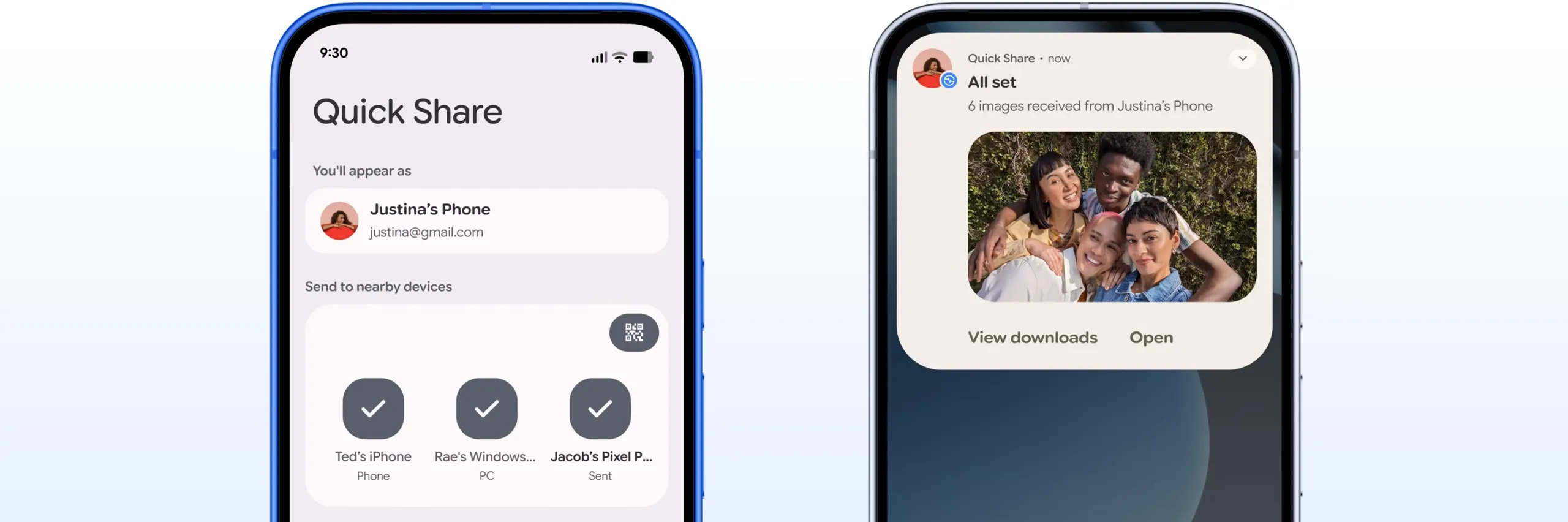
The migration experience is now built natively into both Android and iOS, with no standalone app required. Transfer runs over Wi-Fi by default, though wired remains an option, Android Authority reported in June.
The expanded data set is substantial. Transfers now cover passwords and passkeys, saved Wi-Fi credentials, home screen layouts and wallpapers, call history, Apple Notes attachments and labels, files and folders, calendar attachments, and encrypted RCS messages, 9to5Google reported in June. Accessibility settings also carry over now; previously, users who relied on them had to reconfigure everything from scratch after switching, per Android Authority.
Message migration has improved for data types already supported. SMS, MMS, RCS, and iMessage conversations now transfer with reactions, stickers, media, and thread structure intact, Android Authority reported in June. eSIM migration is handled during setup, though carrier coverage remains incomplete globally.
Developers can also opt in to migrating in-app data alongside the app itself, 9to5Google reported in June. Where supported, users won't start from zero inside every application after switching, which, if it holds in practice, removes one of the more persistent friction points in moving between platforms. The Google Account from an iPhone also transfers automatically, eliminating a separate sign-in step on the new device.
The gap between OS access and feature access is getting wider
The Pixel 6 and 7 exclusion fits a documented pattern. Android Police argued last month that phones running identical Android versions can now differ materially in which features they actually have because Google distributes major capabilities through Quarterly Platform Releases on a cadence only Pixel devices follow consistently. Samsung didn't push its Android 16 QPR2-based One UI 8.5 update to flagships until May 2026, by which point Google had already moved on to the next release.
The Quick Settings panel is one concrete example. Android Police noted that Google revamped it as part of Android 16 QPR1, but Samsung's flagship devices didn't receive equivalent customization options until One UI 8.5 dropped more than nine months later. Non-Pixel devices from other manufacturers may not get those options before their Android 17 update, if they get them at all.
A parallel gap shows up in AI. Android Authority reported in May that the Pixel 9 lineup is already excluded from Gemini Nano v3 on-device model support, a feature currently limited to the Pixel 10 series, despite Google's seven-year update commitment. The same logic applies here: OS version confirms security support and software eligibility; it no longer reliably predicts which announced capabilities a device will receive.
The underlying cause, as Android Police described it, is that Google stopped saving major features for one annual update and now ships them whenever they're ready, through QPR releases that only Pixel phones track consistently. Android Switch on Android 17 is the latest feature to land inside that system. Google has not publicly defined the criteria that determine where the cutoff falls, or why it falls where it does.
What Pixel 8 owners should do now, and what Pixel 6 and 7 owners can expect
Pixel 8 owners planning to switch from iPhone have one window: complete the migration during initial device setup. Once that screen is gone, accessing Android Switch requires a factory reset. Google's support documentation lists no post-setup option for the Pixel 8. That makes timing the transfer a practical priority, not an afterthought.
For Pixel 6 and 7 owners, the answer is less clear. Google's "coming soon" language in today's blog post covers more Android devices generally, but names no specific candidates. The Pixel 6 and 7 are not mentioned. Dunlop said in June that improvements would expand "over the coming weeks and months" to non-Pixel devices, per 9to5Google, but that framing focused on broadening manufacturer support rather than resolving the within-Pixel exclusion. Whether Pixel 6 and 7 are on any internal roadmap isn't known.
For anyone choosing a Pixel now with an iPhone switch in mind, device generation determines which version of a headline feature you get. Pixel 9 and 10 owners get the full experience, including the ability to run a migration after setup is complete. Pixel 8 owners get a narrower window. Pixel 6 and 7 owners, for now, get neither. That distinction is worth knowing before purchase.



Comments
Be the first, drop a comment!