





Google Maps Immersive Navigation has appeared on Android Auto for at least one U.S. user, with screenshots published showing the new 3D interface running on a car display. Four months after Google said Android Auto would receive the feature "over the coming months," Android Authority reported the first publicly documented evidence that it's arriving.
The inconsistent availability suggests a staged, server-side rollout. Availability is confirmed only in the U.S., and what the screenshots show is a subset of what Google has described for the platform.
CarPlay users saw the new interface before Android Auto users did, per Android Authority. Android Auto appears to be catching up now, though the gap between what's confirmed and what Google has advertised is substantial enough to track carefully.
What the Android Auto immersive navigation UI actually shows
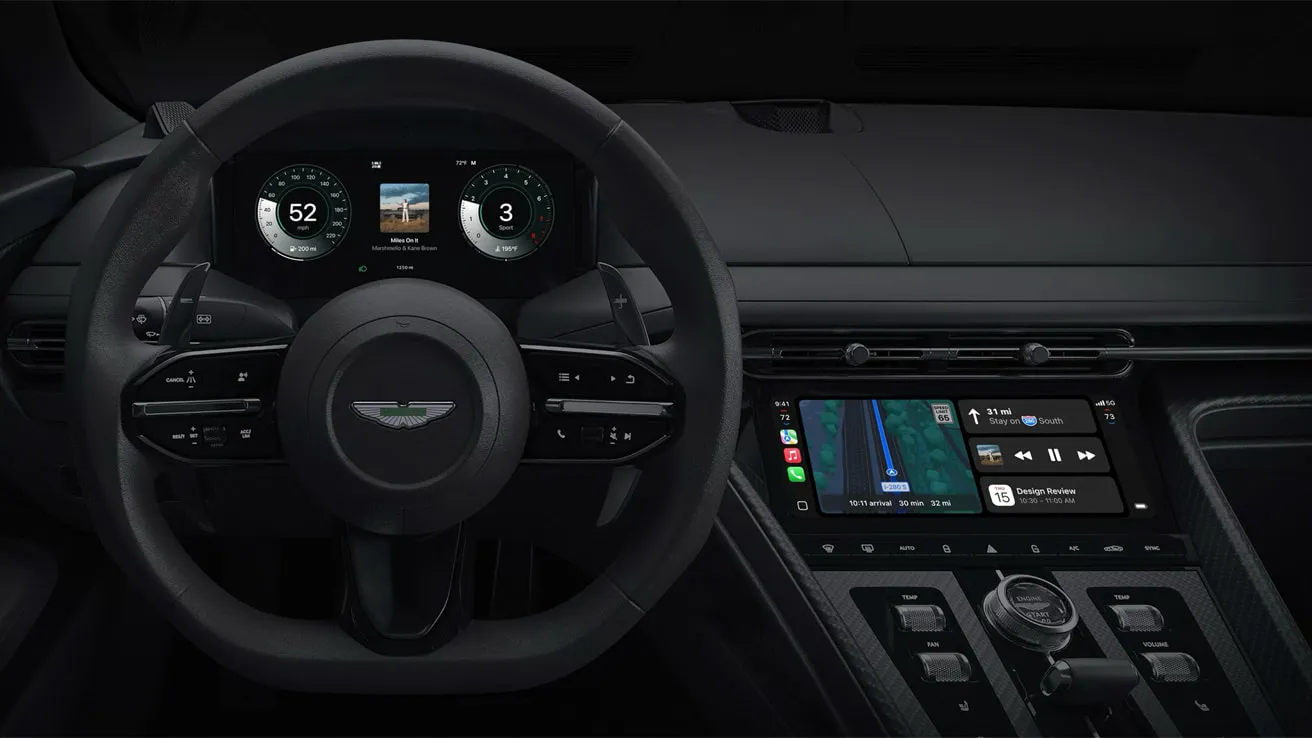
The evidence comes from Reddit user radgatt, whose screenshots were picked up by Android Authority. The images show the Android Auto immersive navigation UI running on a car display: 3D buildings, more readable overpasses and off-ramps, and individual trees rendered in the surrounding environment. It's publicly documented evidence that the Google Maps 3D navigation Android Auto experience is live for at least one user.
What the screenshots capture is the visual overhaul Google described when it announced Immersive Navigation in March as "a complete transformation of the navigation experience, with redesigned visuals and more intuitive guidance." That announcement identified Android Auto as a rollout target alongside CarPlay and mobile devices. CarPlay users began seeing the new interface first; this is the first reported instance of it functioning on Android Auto.
The user noted seeing the new UI after updating to Android Auto v17.3, released yesterday. That timing makes the version update look like the trigger, but Android Authority notes that a separate user running the latest beta builds of both Android Auto and Google Maps saw no change at all. That inconsistency points toward a server-side rollout that coincided with the update for one user rather than a version-gated release.
The pattern is consistent with how other recent Maps changes have arrived in-car. In early June, 9to5Google reported a redesigned Maps alert UI rolling out to Android Auto users with no clear link to a specific app version. No trigger, no toggle, no way to force it: Google pushes the change from its end, and it lands for some users before others.
Why it may not have appeared for you, and what won't change that
Updating to v17.3 is not a confirmed path to the feature. Running beta builds won't accelerate delivery. There's no known setting or developer flag to enable it manually. If the new interface hasn't appeared, the honest answer is that Google hasn't pushed it to that account yet.
The inconsistent activation suggests Google is enabling the interface remotely rather than solely through an app-version requirement. What determines that eligibility, whether head unit type, screen resolution, hardware capability, or simply queue position in a staged rollout, hasn't been addressed publicly.
Android Auto spans a wide range of display configurations, from factory-installed systems to aftermarket units to phone-projection setups, and whether the rollout is scoped to specific hardware at this stage is an open question.
Geographic depth within the U.S. is also unresolved. Immersive Navigation is available in the U.S. across all its supported platforms, including iOS, CarPlay, Android, Android Auto, and cars with Google built-in, Android Authority reports.
But whether the current Android Auto rollout covers the country broadly or follows a metro-first pattern is unconfirmed. When Google introduced enhanced navigation in late 2024, it launched in over 30 metro areas before expanding further. Google has established a precedent for measured geographic distribution, and it may apply here too.
International users are not in the picture yet. Google hasn't said anything publicly about when or whether other countries will be added, per Android Authority.
What the screenshots don't confirm, and what Google has promised
The 3D visual layer is what the screenshots show. Google has described a more complete experience, and those additional layers haven't been verified as part of the current rollout.
In a May post on in-car updates, Google detailed what Immersive Navigation is meant to deliver in car environments. The 3D terrain and buildings are the visual foundation, but the full feature set as Google described it also includes highlighted traffic lights and stop signs at complex intersections, and a lane-level guidance system that overlays a blue line directly on lane markers so the driver knows which lane to hold. None of those additional layers have been confirmed as active for current Android Auto recipients.
A separate, hardware-dependent capability is live lane guidance, which Google previously introduced for supported Polestar 4 vehicles with Google built-in. That's a meaningfully different capability from anything the screenshots show, relying on the car's own hardware rather than pre-rendered map data.
Google framed it in that same May post as a coming capability even for cars with Google built-in, which suggests the most advanced features represent a subsequent step regardless of platform, not something bundled with the initial visual overhaul.
For context, this is the same staged approach Google took with its broader Maps redesign. The March announcement described Immersive Navigation as launching first on U.S. devices and expanding to in-car platforms over the following months. The features haven't all arrived simultaneously on any platform; the car-specific capabilities Google highlighted in May were presented as additions to, not replacements for, the base rollout.
Taken together, the screenshots confirm a real visual overhaul is reaching Android Auto. The fuller feature set Google has promoted for the platform, traffic-signal and lane-detail enhancements in Immersive Navigation, plus the separate camera-assisted live lane guidance available on supported Google built-in vehicles.
What's confirmed, what isn't, and what's still ahead
Google Maps immersive navigation is reaching Android Auto. Screenshots from a U.S. user show it working: 3D buildings, clearer exit visuals, rendered trees on the map. Google announced the feature in March, said Android Auto would get it over the coming months, and the rollout now appearing reflects that commitment, if not the full scope of it.
The fuller picture remains incomplete in several ways. No confirmed geographic scope within the U.S. No confirmed hardware eligibility criteria. No dedicated Google announcement confirming the Android Auto rollout is live. The evidence is a single user's screenshots and one outlet's reporting, not an official launch statement. The traffic signal highlights, lane-level guidance, and camera-based live lane guidance Google has described for the platform haven't been verified as part of what's currently active.
Google also hasn't issued any update on international timing. For users outside the U.S., there's no public indication of when this arrives, if a timeline even exists yet.
What's live now looks like the beginning of the Android Auto rollout rather than its completion. The 3D visual layer is a genuine improvement on what existed before. The more capable features Google has described, particularly live lane guidance using the car's own camera, are likely a subsequent step that requires compatible Google built-in vehicle hardware and should not be assumed to be part of the Android Auto rollout.






Comments
Be the first, drop a comment!