



A dataset collected from 147 Deaf signers using smartphone cameras has produced the largest ASL fingerspelling recognition dataset ever assembled, and the results carry real implications for what Gboard sign language recognition could eventually look like. No such feature has been announced. Nothing in the available evidence connects the research to a Google product plan.
The dataset is called FSboard. Researchers designed it around a specific, practical scenario: a Deaf user needs to enter a surname, a medication name, or a job title into a phone. These are the strings where autocomplete is useless and where a camera-based alternative could matter, if recognition holds up well enough. The paper, presented at CVPR 2025 about a year ago, describes what the data actually shows and where the limits are.
What the FSboard dataset shows
Researchers collected more than 3 million characters and 250 hours of footage from 147 paid Deaf signers using Pixel 4A selfie cameras across varied real-world settings. At that scale, FSboard is the largest ASL fingerspelling recognition dataset on record, larger than its nearest predecessor by a factor of more than 10x, per the paper.
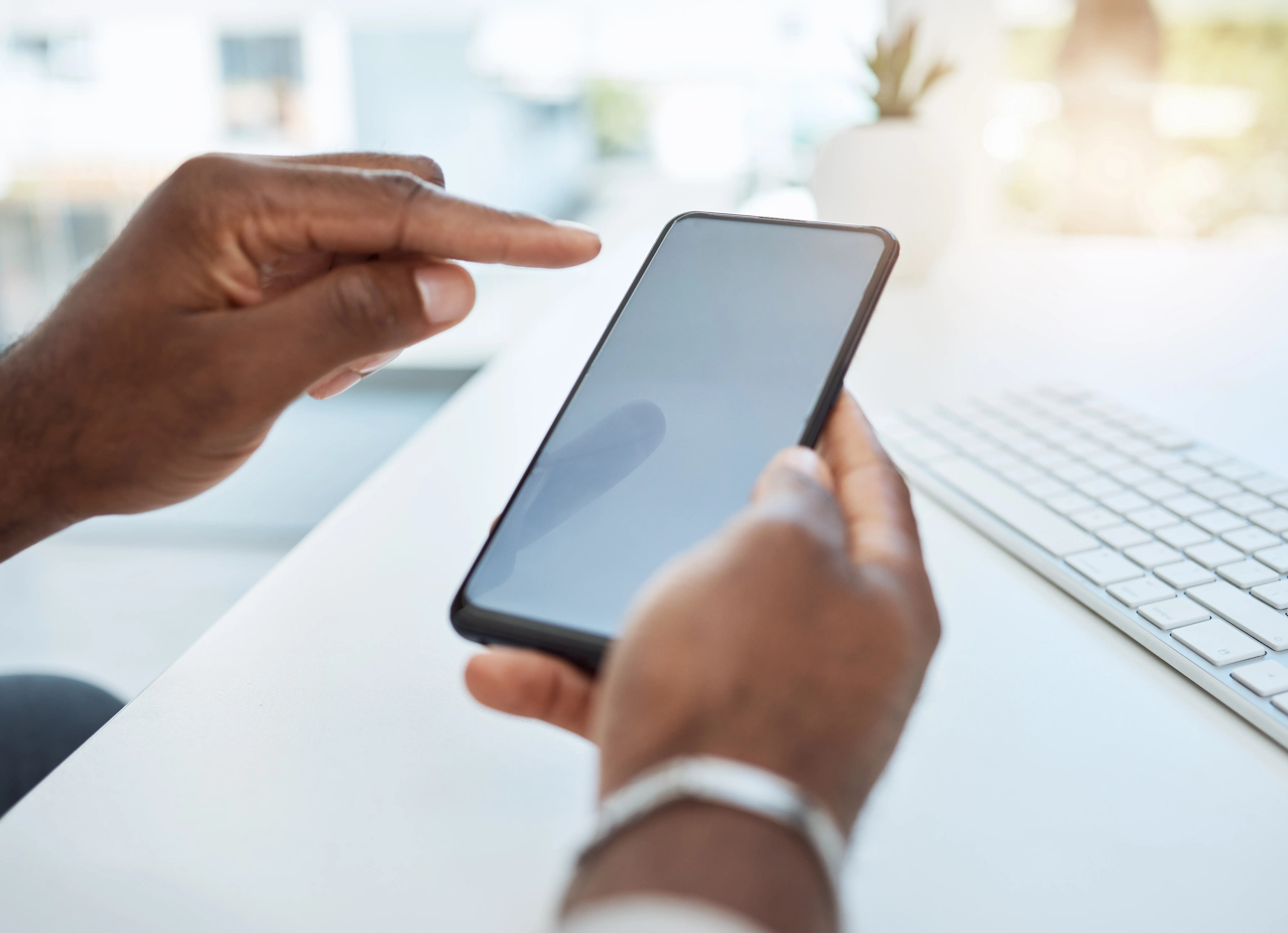
The decision to use a consumer smartphone rather than a research-grade camera rig is what makes the scale meaningful. These numbers come from conditions that resemble how people actually use phones, not a controlled lab.
A baseline recognition model trained on the data achieved an 11.1% character error rate on test phrases and signers it had never seen before, according to the CVPR paper. Roughly one wrong character in every nine. Human transcribers of ASL fingerspelling reach 2.2% CER, providing a useful benchmark for the accuracy a production input system may need to approach.
The gap between 11.1% and 2.2% matters differently depending on the task. Whether that error rate would be workable for surnames or drug names—particularly with autocorrect assistance—has not been established.
The paper also found that model performance degraded gracefully when researchers reduced frame rates and stripped out some facial and body landmark data. Those are precisely the constraints an on-device model running on a consumer processor would face: less data per second, fewer input signals, tighter compute budgets. That the system held up under those conditions supports further investigation of on-device deployment, not a conclusion that deployment is already practical.
One boundary deserves explicit acknowledgment: all 147 signers used a Pixel 4A. Results that hold on that device do not automatically transfer to lower-end hardware, older camera modules, or non-ASL sign systems. The dataset reflects genuine diversity in signers and environments, but it is still one device, one sign language, one language context.
Why Gboard accessibility features don't yet include camera-based sign input
ASL fingerspelling is the practice of spelling words letter by letter using distinct handshapes. It is how a Deaf person would enter "metformin" or "Kowalski" in conversation where no established sign exists for that word. Recognizing those handshapes one character at a time is a bounded machine learning problem with a clear benchmark and measurable progress.
Conversational American Sign Language is a different problem entirely. Continuous sign language translation, converting flowing signed conversation into text, requires deep learning systems operating at a fundamentally different level of complexity than alphabet-level recognition. That complexity gap is not a benchmark to be closed incrementally; it is a structural difference in what the system must model.
Sign language systems also vary substantially in structure, morphology, and community context across different countries and linguistic traditions, according to the same research. A model trained on ASL fingerspelling would require significant independent work before it could be applied to BSL, LSF, or any other sign system. The FSboard findings are specific to one sign language in one mobile context.
There is also a practical access question embedded in any camera-based input design. Earlier sign language recognition systems relied on web cameras and dedicated hardware that users had to purchase and carry separately. A front-facing phone camera removes some of that friction, which is part of why FSboard's mobile-first approach matters. But "camera on a device you already own" and "a feature that works reliably for you" are not the same thing, and the error rate data makes that gap visible.
The practical implication is narrow but genuine. A camera-based Gboard feature built on current research could help Deaf users do one specific thing better: enter short, precise strings where standard text input is slow and autocomplete provides no meaningful assistance. That is a real problem worth solving. It is also a fraction of what the phrase "sign language input" suggests to most readers, and the research does not yet support the broader version.
What Google has confirmed and what it doesn't tell us
Google's documented accessibility work does signal investment in non-standard text input. About seven months ago, the Google Blog announced that an upcoming Gboard update would let users trigger voice dictation with a two-finger double-tap, alongside separate Gemini-powered accessibility updates, including Guided Frame and Voice Access activation.
The TalkBack improvements specifically targeted voice dictation friction for users who cannot rely on standard touch typing, per the announcement. The Gboard and TalkBack text-entry update involves voice rather than camera-based input. The announcement does discuss camera use separately through Guided Frame, but not for sign-language entry.
Nothing in the available record connects FSboard, camera-based sign input, or related research to Gboard's development roadmap, Android's accessibility APIs, or any named Google product team. The research and the product direction exist in parallel, without documented overlap.
What would actually change this story is specific: a Gboard beta flag surfaced by teardown analysts, an Android API update referencing camera-based gesture input, a confirmed demo at Google I/O, or documented testing conducted with Deaf community partners. None of those exist. The inference from Google's voice-input accessibility work to a camera-based sign language feature is reasonable as speculation. It is not evidence.
What it would take to get this right
The honest state of the field is this: the technical case for camera-based ASL fingerspelling input is more credible than it has previously been. The FSboard dataset is more than ten times larger than anything before it and was collected under conditions that reflect actual phone use, per the CVPR paper. The baseline model's performance under on-device constraints suggests the engineering path is not theoretical. Those are real advances.
But the 11.1% character error rate against a 2.2% human baseline means the technology is not yet reliable enough for primary text input. Potential on-device optimizations—including reduced frame rates, fewer landmarks, and tighter inference budgets—could place additional pressure on accuracy. Closing that gap to something approaching human-level performance is a substantial engineering problem, not a near-term product decision.
The distinction worth holding onto: camera-based fingerspelling recognition could plausibly become a useful niche input aid, covering surnames, medical terms, and technical strings, well before anything resembling full sign language translation arrives. Those are different products. The current research supports only the narrower one, and even that would require closing nearly nine percentage points of the error rate first.
Whether any feature that eventually ships would actually serve Deaf users well depends on something the error rate cannot measure. Assistive technology built without sustained input from the communities it targets has a documented pattern of technical success and practical failure. The disability-justice framework described in this research goes further: it calls for co-developing solutions with locally rooted disabled users, centering their experiences rather than consulting them after the architecture is already set.
That criterion matters as much as any benchmark. A Gboard feature labeled as sign language support that Deaf users find unreliable or inaccessible would be a product failure regardless of what the CER showed in a research paper. The dataset is the beginning of a credible technical path, not the end of the design process.


Comments
Be the first, drop a comment!