





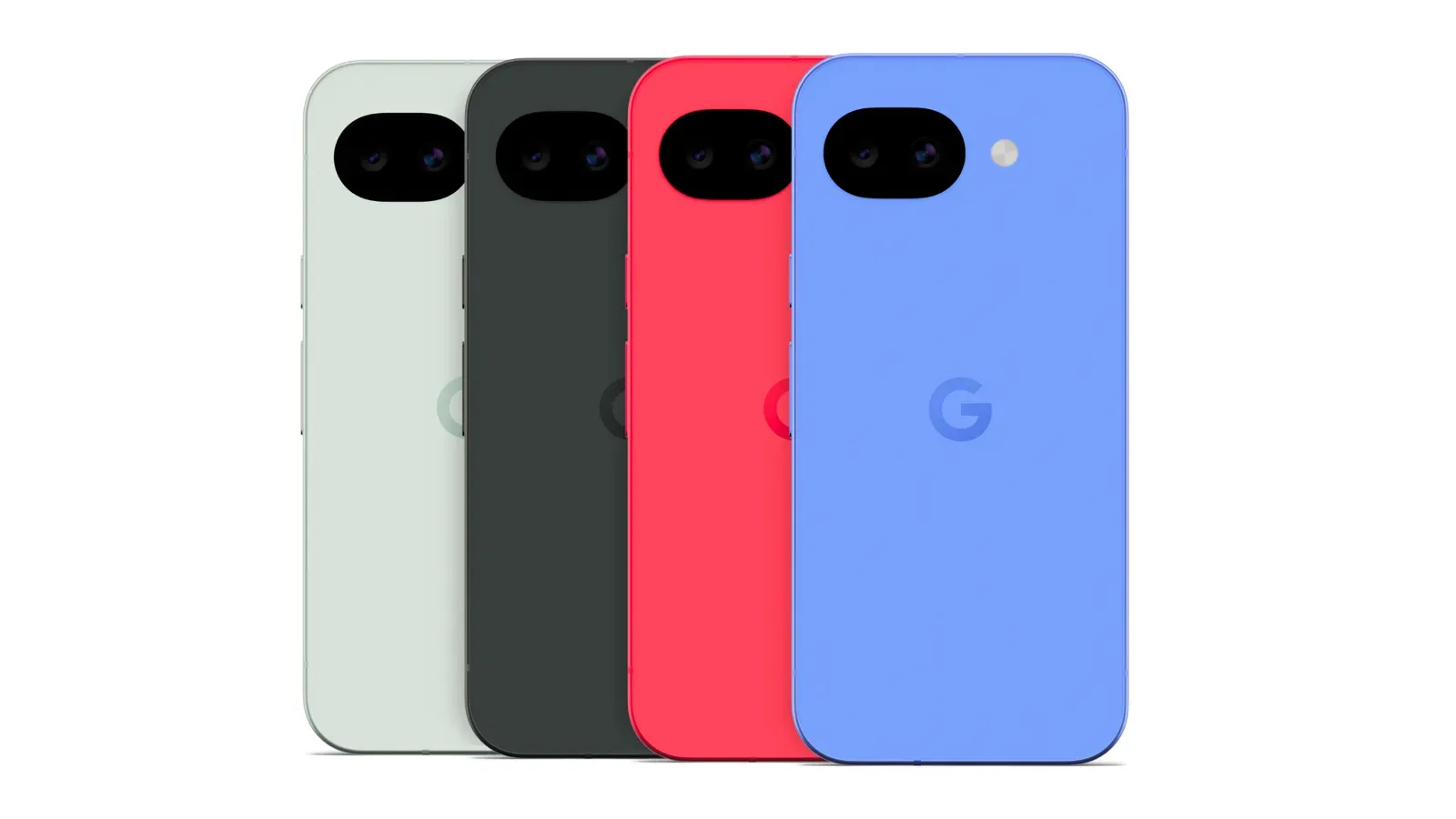
Google's Pixel lineup has accumulated plenty of labels over the years: standard models, Pros, Folds, XLs, and the more affordable phones whose names end in a lowercase "a." The last one looks simple enough, but Google has never publicly given the letter an official meaning.
That means "A stands for affordable," one of the most common explanations, is not technically a definition Google has confirmed. It is, however, a reasonable interpretation of how the company has positioned the lineup since the first A-series Pixel appeared in 2019.
The distinction matters because an A-series Pixel is not simply the year's flagship phone with a lower price tag. Google's approach has changed across generations, and the differences now extend to processors, cameras, displays, memory, charging, and other hardware.
What does the 'A' in Google Pixel mean?
Google has not publicly expanded the "A" in Pixel A-series into a particular word. Product names including the Pixel 8a, Pixel 9a, and Pixel 10a use the letter without defining it as an acronym or abbreviation.
The strongest clue comes from the beginning of the lineup.
Google introduced the Pixel 3a and Pixel 3a XL on May 7, 2019, as lower-cost alternatives to its premium phones. The Pixel 3a started at $399 in the US, while the larger Pixel 3a XL started at $479. Google's own launch messaging emphasized that the phones delivered core Pixel features without the premium-phone price.
That positioning explains why "affordable" became such a natural interpretation of the letter. But even when introducing the first 3a phones, Google did not state that the "a" itself was short for "affordable."
The safest answer, then, is also the simplest: Google has not officially said what the "A" stands for, but affordability has been central to the A-series from the beginning.
How Google's A-series strategy has changed
The details of what buyers get for that lower price have not stayed the same.
The Pixel 6a, announced in May 2022 at $449, is a good example of Google's earlier approach. It used the same first-generation Tensor processor found in the Pixel 6 and Pixel 6 Pro while carrying over several software and camera features from the more expensive phones.
That generation made "same chip, lower price" a tempting way to describe the A-series. It was accurate enough for the Pixel 6a's processor, but it is not a rule that applies across the lineup.
Google has changed the formula as its phones have evolved.
The Pixel 10a went on sale March 5, 2026, for $499. Google equipped it with Tensor G4, 8GB of RAM, a 120Hz display, Gemini features, and a dual rear-camera system. The company continues to position the A-series as a way to bring many Pixel features to a lower price point.
But the processor now illustrates the gap between the A-series and Google's newest flagships more clearly.
Google introduced the Pixel 11, Pixel 11 Pro, and Pixel 11 Pro XL in August 2026 with the newer Tensor G6 processor. The standard Pixel 11 also starts at $899, compared with the Pixel 10a's $499 launch price.
That makes the A-series easier to understand as Google's lower-priced Pixel tier rather than as a fixed recipe. An A-series phone may inherit important features from Google's more expensive Pixels, but exactly what carries over changes from one generation to another.
Some generations can share a processor with their flagship siblings. Others may use an older chip while retaining many of the software features that define the Pixel experience.
What do you give up with a Pixel A-series phone?
The lowercase "a" does not tell you which corners Google cut on a particular model.
Depending on the generation, differences can appear in the processor, camera hardware, display, RAM, charging speeds, storage options, materials, or other premium features. That is why comparing a current A-series phone with the newest standard Pixel is more useful than assuming the relationship is the same every year.
Software support is another area where older assumptions can be misleading.
Google's current Pixel software update policy gives the Pixel 8 generation and later models seven years of operating-system and security updates starting from their initial US Google Store availability. That group includes the Pixel 8a, Pixel 9a, and Pixel 10a.
The Pixel 6a and Pixel 7a fall under Google's earlier five-year policy instead. Older A-series phones such as the Pixel 5a and Pixel 3a are no longer receiving Android version or security updates.
So the "a" by itself tells you less about a phone's longevity than its generation does. Someone shopping for an A-series Pixel should check the support window for that specific model rather than relying on what was true of earlier A-series phones.
The same principle applies to hardware. A buyer comparing, for example, a Pixel 10a with a newer standard Pixel should look directly at the processor, camera sensors, display specifications, RAM, charging support, storage, and construction. The price difference can be substantial, but so can the hardware differences behind it.
Does the 'A' stand for affordable?
Not officially.
Google has not publicly defined the "A" in Pixel A-series as "affordable," "A-series," "almost flagship," or another expansion. Any claim that one of those is Google's official definition goes further than the company's public explanations support.
"Affordable" nevertheless fits the history better than most alternatives. Google created the 3a as a lower-cost Pixel, continued using the letter for successive value-oriented models, and still positions today's A-series below its flagship line on price.
What the letter represents in practice has evolved. The Pixel 6a could pair the flagship generation's processor with a cheaper price, while the Pixel 10a uses an older Tensor generation than the Pixel 11 line. Update support has changed, too, from five years on models such as the 6a and 7a to seven years on newer A-series phones.
So there is no secret acronym to decode. The "A" remains undefined by Google, but the phones carrying it have established a clear identity: they are the less expensive route into the Pixel lineup, with many of Google's signature features and a set of compromises that changes with every generation.





Comments
Be the first, drop a comment!