





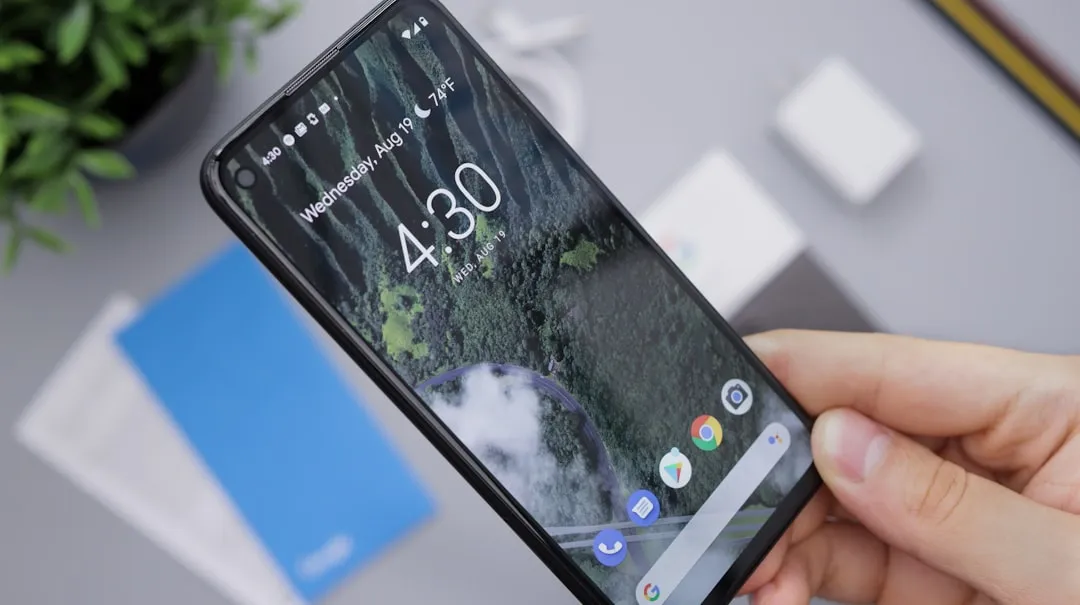
Reviewers largely agree that the Google Pixel 11 undercuts the Pixel 11 Pro by $200 while matching its RAM, storage, and chip, according to The Verge. Whether that's worth it depends almost entirely on what phone is already in your pocket.
The base model starts at $899 with 12GB of RAM, 256GB of storage, and the same Tensor G6 chip found in both Pro models. PCMag calls it the "top value" phone in Google's current lineup, while Trusted Reviews calls it "a tricky sell" at a higher price than last year's Pixel 10. Both assessments can make sense depending on whether the comparison is against the Pixel 11 Pro or the previous base Pixel.
For Pixel 10 owners, the Pixel 11 is a difficult upgrade to justify. Pixel 9-or-older owners get a more substantial stack of changes, while shoppers choosing between the Pixel 11 and Pixel 11 Pro can save $200 without giving up the base RAM, storage, or processor.
Google Pixel 11 vs Pixel 11 Pro: is the $200 saving worth it?
The best-value case only holds up once you see what $899 buys against its two nearest siblings, and what it gives up to get there.
The Pixel 11 matches the base Pixel 11 Pro's 12GB of RAM and 256GB of storage for $200 less, $899 versus $1,099, and its single-core Geekbench score of 2,742 lands essentially on par with the Pro's roughly 2,700. That's a genuinely narrow gap for a phone $200 cheaper.
What that extra $200 buys on the Pro is a brighter LTPO display that can scale down to 1Hz, versus the Pixel 11's switch between 60Hz and 120Hz, plus Ultra-Wideband, Thread networking, and larger camera sensors.
Trusted Reviews argues that skipping the LTPO panel is "almost unforgivable" on a phone this expensive. Fair complaint, but it carries more weight if you're chasing premium display specs than if your actual alternative is a $1,099 phone.
That $200 gap shows up in daily use, too. Trusted Reviews measured roughly 90 minutes for a full charge even with Extreme Charging Mode switched on. The mode prioritizes faster charging by limiting background activity when the battery is low.
Pair that with camera sensors smaller than the Pro's and the missing UWB and Thread radios, and the savings come with real trade-offs, not just numbers on a spec sheet.
At the other end of the lineup, the Pixel 10a costs $400 less than the Pixel 11. The Verge says the Pixel 11 counters that gap with a faster processor, more RAM, more storage, and a telephoto lens the 10a doesn't have.
The Pixel 11 trades premium display tech for a $200 discount off the Pro, and adds a telephoto lens and faster processor over the 10a for $400 more. Anyone torn between the 11 and the Pro should buy the 11 unless the 1Hz display, UWB, Thread, or bigger sensors are worth paying extra for.
If you own a Pixel 10, wait
9to5Google put the Pixel 10 and Pixel 11 side by side and found "basically nothing to separate" them: identical screens, nearly identical dimensions, and even the same Obsidian color.
The jump from Tensor G5 to G6 "isn't much of a leap," and battery life between the two phones ran "in almost complete lockstep" in 9to5Google's testing.
The main hardware gain is a larger 48MP main sensor that Google says offers 56% better light sensitivity, along with digital zoom stretched from 20x to 30x. Those are real improvements, but narrow ones for someone who already owns the Pixel 10.
9to5Google puts the upgrade case bluntly: "In 99.9% of cases, the answer is probably 'no.'" The Verge reaches the same conclusion, saying the Pixel 11 isn't worth upgrading to from the Pixel 10 for now.
If you're on a Pixel 9 or older, here's what actually changed
Owners of a Pixel 9 or something older are looking at multiple generations of upgrades stacked together, not one.
Engadget says anyone coming from a Pixel older than the previous generation will see "a significant upgrade."
The compounding is concrete. The telephoto lens itself was new to the Pixel 10 generation, and the Pixel 11 then enlarged the main sensor and pushed maximum digital zoom to 30x on top of it.
For most Pixel 9 owners, those accumulated changes should feel more meaningful than they do for Pixel 10 owners, even without a direct Pixel 9-to-11 comparison in the testing.
Magic Capture is another addition. It records a short video while capturing and generating still photos from the same moment, using AI to select useful frames. Google says the feature analyzes hundreds of frames during a session, while reviewers have found it particularly useful for fast-moving scenes such as sports, parties, pets, and children.
The Pixel 11's battery lasted longer than the Pro in PCMag's Wi-Fi video rundown at full brightness, running 19 hours and 13 minutes compared with 13 hours for the Pixel 11 Pro.
Wireless charging is also faster than on last year's base model. Google rates the Pixel 11 for up to 25W Pixelsnap wireless charging with a Qi2.2-certified charger, up from 15W on the Pixel 10.
One caveat on the software pitch: Gemini's Proactive Assistance isn't switched on automatically. The Verge found it only "partially helpful, but like an intern that gets just enough wrong that you just feel better doing it yourself."
Availability also varies by country, language, and specific feature, so don't assume every Proactive Assistance capability shown in US reviews is available everywhere.
The short version
Whether the Pixel 11 deserves its reputation as the best-value phone in the Pixel 11 lineup depends on what's already in your hand:
Own a Pixel 10: wait. The display is unchanged, dimensions are nearly identical, Tensor G6 is only a modest generational step, and battery life tracked closely with the Pixel 10 in 9to5Google's testing. A trade-in that makes the upgrade free or close to it is the strongest reason to reconsider.
Own a Pixel 9 or older, or buying your first Pixel: buy the 11. It undercuts the Pro by $200 while matching its base RAM, storage, and processor, and it stacks camera, charging, storage, and performance improvements over older Pixels.
Choosing between the 11 and the Pro: buy the 11 unless the 1Hz LTPO display, UWB, Thread, or larger camera sensors are worth $200 to you.
Budget-constrained: the Pixel 10a saves $400 but drops the telephoto lens and uses an older, slower processor. It's the better value if camera range and flagship performance aren't priorities.
Launch pricing rarely holds for long, and promotions can change the calculation quickly. The Pixel 11 is already a much easier recommendation against the $1,099 Pro than it is as a yearly upgrade from the Pixel 10.
For most Pixel 10 owners, waiting makes more sense. For Pixel 9-or-older owners ready to upgrade, the Pixel 11 offers enough accumulated hardware and camera improvements to make a stronger case.







Comments
Be the first, drop a comment!