



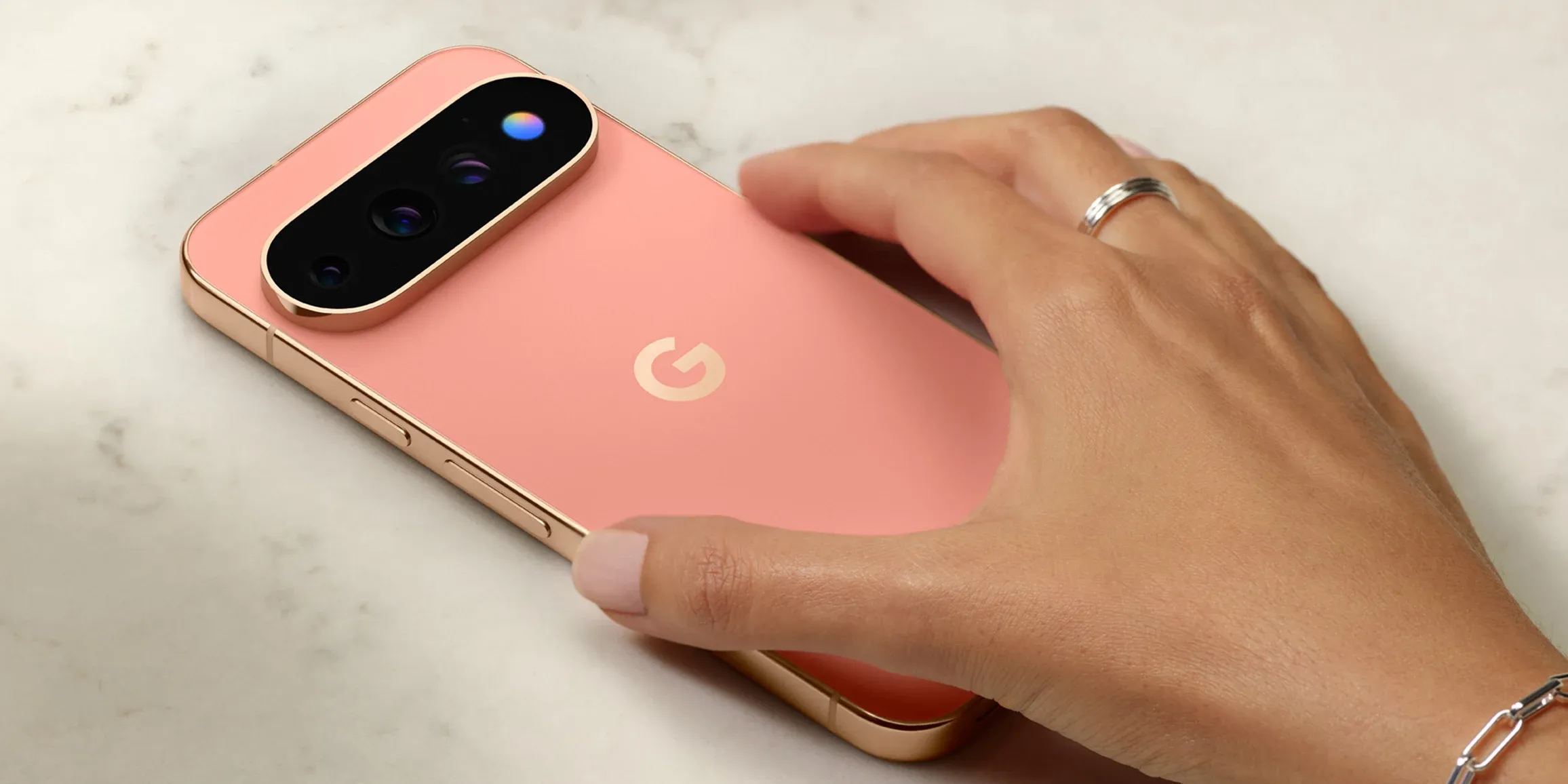
Ask Pixel owners to name the phone's biggest hardware flaw, and the answer isn't close. In a reader survey published last week, Android Authority found that 81.4% of respondents chose either overheating or stagnant battery capacity as the Pixel problem they most wanted fixed, rather than complaints about thinness, weight, or Pro-only features.
That's a striking level of agreement about the Pixel line, but not evidence about a phone that hasn't been announced. The survey was conducted among Android Authority readers looking at the current Pixel generation, not leaked Pixel 12 specifications.
A newer poll published on August 25, 2026, asked readers directly about the Pixel 12. Android Authority found that 64% wanted Google to prioritize better hardware, just under 19% wanted equal attention to hardware and AI, fewer than one in six preferred more competitive pricing, and less than 2% wanted smarter AI as the priority.
All of these are self-selected reader surveys rather than representative polling of Pixel buyers. Still, the pattern is unusually consistent: this audience wants Google to address hardware fundamentals before emphasizing AI.
Context makes the pattern harder to dismiss as noise. A separate Android Authority poll found that 69.2% of readers think Google should scrap its Tensor chip line entirely. And a much larger US dataset from Recon Analytics found that hardware failure was the largest single purchase driver across every tracked brand tier and month in its May-to-December 2025 purchase data.
Taken together, the results suggest Google's clearest opportunity with the Pixel 12 is sequencing. Lead with battery, thermal, performance, and reliability improvements, and let AI features build on top of those fundamentals.
Pixel 12 battery life and overheating: the trade-off readers would accept
Given four major hardware complaints to choose from, 42.3% of readers named overheating as the Pixel's top flaw, with 39% choosing Google's tendency to keep battery capacity similar generation after generation, according to Android Authority's survey.
Combined, that's 81.4% of respondents asking for the same basic outcome: a phone that runs cooler or offers more battery capacity. The remaining votes split between weight and thickness at 14% and Pro-only software features like HiLight at 4.7%, a distant fourth-place concern.
That 14% figure undercuts the idea that a thinner, lighter design is what these Pixel readers want most. A related Android Authority poll with more than 6,400 votes found battery life took 53% of responses on what Google should improve, well ahead of improved performance at 27% and faster charging at 4%.
Reader comments in the hardware survey go further than raw percentages, though they're anecdotes, not data points. One commenter wrote they'd take a "1-2mm thickness increase" in exchange for a "6500 battery" and a vapor chamber "good enough to finally fix the overheating."
Another argued that since the camera bump already adds roughly 3mm to the phone's body, in that reader's own estimation, Google might as well use more of the available space for a bigger battery too.
That's useful evidence of sentiment and tolerance for trade-offs. It isn't a technical claim that a larger battery or better vapor chamber would resolve chip-efficiency problems.
The responses suggest some Pixel readers would accept extra thickness if it produced a meaningful battery or cooling benefit, a specific ask rather than vague dissatisfaction with the phone's build.
Why Tensor performance sits at the center of the Pixel 12 wish list
Nearly five years into Google's custom silicon project, 69.2% of more than 1,700 surveyed readers said Google should cancel Tensor because the company "hasn't been able to make it work," versus 31% who thought its benefits still outweighed the drawbacks, Android Authority reported on July 24, 2026.
That reporting described reader frustration as centered on battery management, heat output, and performance that fades over time, a list that overlaps directly with the hardware survey's top complaints.
At the time, the poll article referred to prelaunch rumors about the Tensor G6. The Pixel 11 has since launched with the G6, so those rumors shouldn't be treated as evidence about whatever silicon eventually powers the Pixel 12.
Post-launch testing does provide a clearer benchmark for what Google would need to improve next. Android Authority's Tensor G6 testing found meaningful CPU gains over the G5 and a smaller increase in peak GPU performance, but substantial performance gaps remain against current rival flagship chips. Its stress testing also found the Pixel 11's GPU performance dropping after several minutes of intensive load.
Those are findings about the Pixel 11 and Tensor G6, not confirmed Pixel 12 hardware.
One reader in the earlier Tensor poll claimed that top Snapdragon and Apple chips match Tensor's AI performance while beating it on CPU, GPU, and battery life. That exact comparison wasn't established by the poll, although current Tensor G6 benchmarks do support the broader concern about CPU and GPU performance versus flagship rivals.
Battery capacity, battery endurance, thermal management, and chip efficiency also aren't interchangeable.
A larger battery can extend how long a phone runs between charges. Better cooling, whether through a larger vapor chamber or improved heat spreading, can help manage heat and sustained performance.
Neither alone determines how efficiently the processor converts power into computing work. A phone can ship with a larger battery and better cooling and still consume that extra capacity faster than a more efficient rival.
For the Pixel 12, a bigger battery and stronger thermal hardware could improve runtime and heat behavior without necessarily closing an underlying efficiency gap. Battery capacity, cooling, and silicon efficiency all need to be judged separately.
A loyal base, but split on reliability
Chip complaints and thermal complaints are one thing. Software reliability is a separate signal pointing to a wider concern than hardware alone.
Among more than 2,700 respondents to a Pixel-focused poll published July 1, 2026, 51.6% said they still love their phones, while 44% said they "can't bear the bugs" introduced by unreliable software updates, according to Android Authority.
That's specifically about update reliability, not battery life or heat, and there's no basis for assuming the same respondents who complained about bugs also complained about overheating.
The polls are separate samples run by the same publication, each capturing a different slice of Pixel-owner sentiment. Together, they suggest that dependability concerns aren't confined to one component or feature.
Where AI fits: sequencing, not rejection
The August 25 Pixel 12 poll puts the hardware-versus-AI question more directly than the earlier surveys. Better hardware alone took 64% of the vote, while less than 2% wanted smarter AI to be Google's sole priority. Just under 19% wanted Google to focus equally on both.
That doesn't mean AI features have no appeal.
In a broader US consumer survey, 451 Research from S&P Global Energy Horizons found that 42% of respondents said new AI capabilities would make them somewhat or much more likely to upgrade sooner, five points higher than in Q4 2024.
Among respondents with phones from Apple, Google, or Samsung, 58% said they use existing AI features often, while 77% said those features are easy to use. That's real, active appeal rather than outright rejection.
At the same time, 43% said they'd prefer not to have integrated AI features at all, and privacy remained the top stated AI concern at 55%.
Pixel readers show a similar split over cloud processing. In another survey, 58.7% said they'd consider accessing newer Pixel features through the cloud under at least some circumstances, while about 41% said they'd prefer on-device processing even if it meant missing out, Android Authority found in June.
One commenter cited unstable home internet and mobile service as a reason cloud-based features were "a big NOPE."
The Recon data supplies a broader, differently measured check on those reader polls. Recon Analytics data reported by Light Reading covers more than 104,000 US respondents across a five-quarter report series, while the purchase-driver analysis focuses on completed device purchases from May through December 2025.
Consumers who considered upgrading but didn't ultimately buy a phone aren't represented in that purchase analysis.
Hardware failure was the largest single purchase driver for every tracked brand tier in every month of that May-to-December period, ranging from 5.6% to 13.2% depending on brand and month.
"New model available," a distinct purchase-driver category rather than a direct measure of AI appeal, accounted for just 1.1% to 4.6% of purchase decisions. Performance and battery life combined represented 27% to 30% of feature selections, while AI feature priority peaked at 5.1% for any single brand.
Google's numbers within that dataset need particular care. These are shares of completed Google purchases associated with a hardware-failure trigger in a given month, not a defect rate reported by Google and not a claim that the same percentage of Pixel phones failed.
By that measure, Google's hardware-failure share hit 13.2% in July 2025, the highest brand-month reading in the study, before falling to 5.9% in August.
Recon attributes that swing to changes in the composition and timing of Pixel buyers, including launch and promotional effects. It isn't evidence of a fixed reliability rate for the Pixel line.
The broader pattern is simpler: among completed purchases in Recon's dataset, hardware failure and fundamental performance priorities were stronger drivers than the arrival of a new model or AI features.
That supports treating battery, thermal, performance, and reliability improvements as a foundation for the Pixel 12 rather than assuming another round of AI features will answer hardware concerns on its own.
How to judge the Pixel 12 at launch
The Android Authority polls are best understood as separate snapshots of a self-selected enthusiast audience, not representative surveys of all Pixel owners. The newer Pixel 12 poll nevertheless strengthens the pattern by asking the hardware-versus-AI question directly.
Some improvements will be visible as soon as Google announces the phone. Rated battery capacity, physical thickness, charging specifications, and any Google Pixel 12 cooling improvements, whether that's a larger vapor chamber or different heat-spreading materials, can be checked against the previous generation immediately.
Performance and efficiency need more testing. Short benchmark runs can reveal peak CPU and GPU performance, while sustained-load tests can show how quickly performance changes as the phone heats up.
Battery endurance takes real-world use across comparable workloads, and long gaming sessions or video calls can reveal thermal behavior that a brief launch-day test may miss.
Software reliability sits further out on that timeline. The 44% of readers who said bugs from unreliable updates outweighed their loyalty to the brand didn't reach that conclusion from a first week of use. That judgment builds slowly, update by update, over months.
Whether Google ships a meaningfully bigger battery, better thermal hardware, more efficient silicon, and fewer update regressions is an engineering and business decision no poll can predict.
But the feedback is specific. If the Pixel 12 launch emphasizes AI while battery capacity, heat, performance, and reliability concerns go largely unaddressed, it would run directly against the priorities these Pixel readers have now expressed.





Comments
Be the first, drop a comment!