





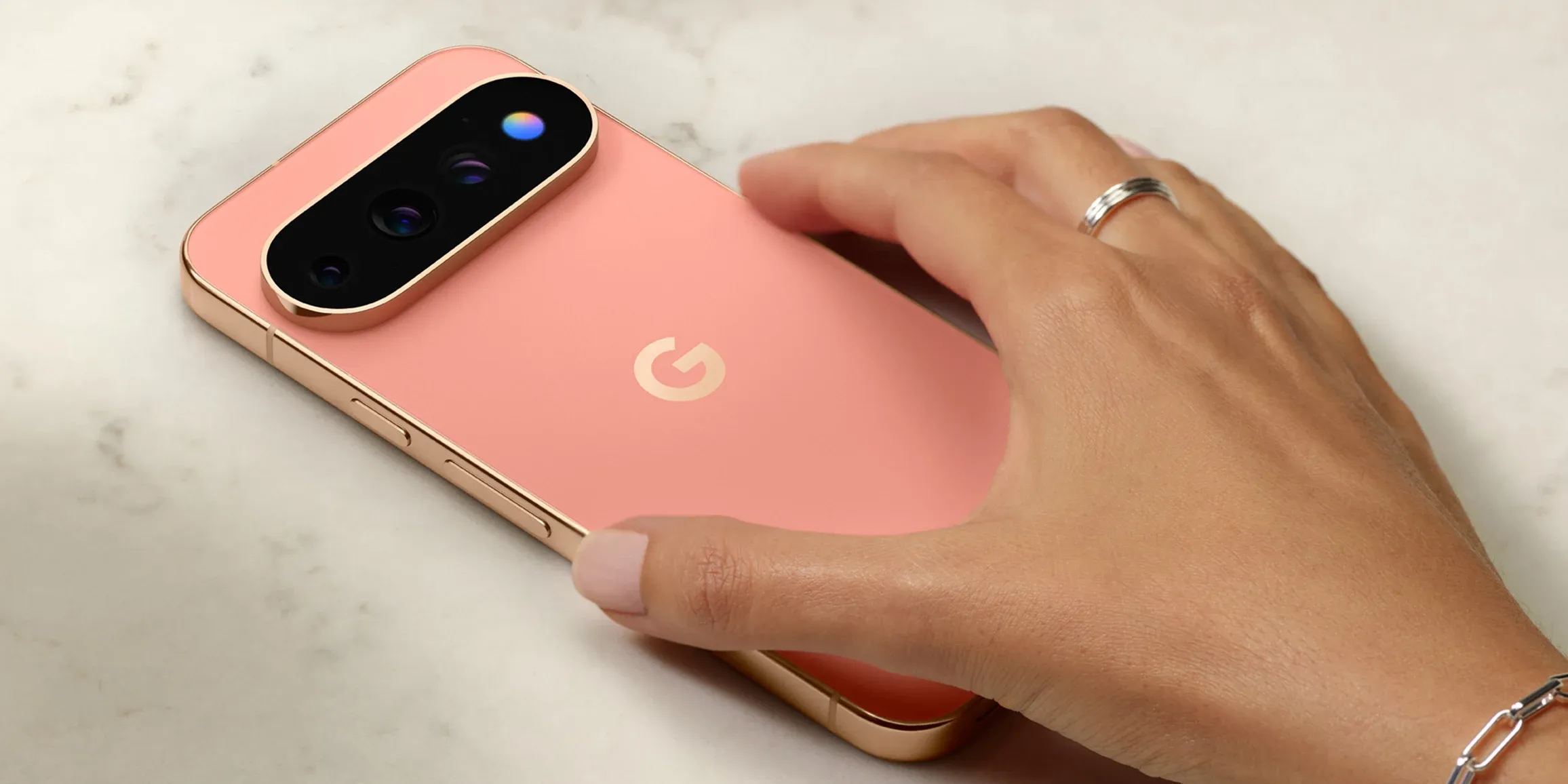
Google has spent several generations narrowing the gap between its base and Pro Pixels, and this year the two phones sit closer together than ever. The Pixel 11 and Pixel 11 Pro share the same Tensor G6 processor, and the Pro's starting RAM dropped from 16GB to 12GB, landing at the same figure as the base model, according to Android Authority.
That convergence is the whole story here: the Pixel 11 Pro isn't a bad phone, but for most people weighing it against the standard Pixel 11, it's the wrong Pixel to buy this year.
For shoppers deciding Pixel 11 vs Pixel 11 Pro, the question boils down to this: pay $1,099 for a better camera, brighter LTPO display, and a handful of Pro extras, or save $200 and get the same processor, starting RAM, storage, wired charging speed, and wireless charging speed.
The Pixel 11 Pro starts at $1,099 for 256GB of storage and 12GB of RAM, while the Pixel 11 starts at $899 with the same storage and RAM. Both phones also receive seven years of OS and security updates, so speed and software longevity don't make much of a case for spending more this year.
What $200 actually buys: Pixel 11 vs Pixel 11 Pro, spec by spec
Start with battery, since it inverts the expected hierarchy. The Pixel 11 carries a 4,985mAh cell versus 4,850mAh in the Pixel 11 Pro, a decrease from the prior Pro generation's 4,870mAh.
The cheaper phone has the bigger battery.
Charging doesn't separate the standard models either. Google rates both the Pixel 11 and Pixel 11 Pro for fast charging up to 55% in about 30 minutes with a 30W USB-C PPS charger or higher, along with Pixelsnap Qi2.2 wireless charging up to 25W.
The 45W wired figure applies to the larger Pixel 11 Pro XL, which Google rates for up to 75% in about 30 minutes. It isn't a Pixel 11 Pro advantage.
Core software also lines up closely. Both phones ship with Gemini Intelligence, Magic Capture, Creator Suite, and the latest Circle to Search features.
The Pro adds AI-powered Pro Zoom, HiLight, and a six-month Google AI Pro subscription that Google lists at a $119 value. Those are extras, but they don't create a fundamentally different everyday software experience.
The camera and display are where the Pro has the clearest case for its higher price.
The camera and display case for the Pro
The Pro's camera hardware is the most substantial upgrade. It uses a 50MP main camera, 48MP ultrawide, and redesigned 48MP 5x telephoto, compared with the Pixel 11's 48MP main, 13MP ultrawide, and 10.8MP 5x telephoto.
Google says the Pro's redesigned telephoto sensor has 30% more light sensitivity than the previous generation, and Pro Zoom now reaches 120x. The base Pixel 11 tops out at 30x Super Zoom.
Instant Night Sight is another Pro advantage. Google says the Pixel 11 Pro and Pro XL can capture Night Sight images up to 4.5 times faster than before.
The display advantage is confirmed too. The Pixel 11 Pro's 6.3-inch LTPO panel runs from 1Hz to 120Hz and reaches up to 2,400 nits HDR and 3,600 nits peak brightness.
The base Pixel 11 uses a 60Hz-to-120Hz display rated for up to 2,000 nits HDR and 3,000 nits peak brightness. That gives the Pro a 600-nit advantage at peak brightness along with the more flexible LTPO refresh rate.
Then there's HiLight, the notification-light system built around the camera flash. Right now it signals Gemini's status through lighting patterns and can assign colors to favorite callers. Useful groundwork, but not enough by itself to justify another $200.
The zoom upgrade also serves a narrower audience than the marketing suggests. Android Authority's reviewer says they rarely go beyond 15x to 30x zoom, a range the base Pixel 11 can already reach.
If long-range photography, larger camera sensors, and the brighter LTPO screen aren't priorities, the shared processor becomes harder to ignore.
Same chip, flagship price: why Tensor G6 undercuts the Pro's value case
Since both phones share Tensor G6, none of its benchmark results gives the Pro an advantage over the Pixel 11.
Tensor G6 gains roughly 18% in Geekbench single-core performance and 21% in multi-core performance over Tensor G5, but rival flagship chips remain substantially faster in peak CPU testing, according to Android Authority's benchmarks.
A Galaxy S26 Plus with Exynos 2600 scored 18% higher in single-core and 51% higher in multi-core testing than the Pixel 11 Pro XL. Across the wider comparison, Snapdragon-powered rivals held a 37% single-core and 52% multi-core advantage over the Pixel 11, while Apple's CPU held a 44% advantage in the comparison highlighted by Android Authority.
Graphics trail by an even wider margin. The Snapdragon 8 Elite Gen 5's Adreno 840 scored more than twice as high as Tensor G6 in 3DMark Wild Life Extreme, while Apple's silicon held a 60% advantage.
Tensor G6 does fare better when looking at how much peak performance it retains. At the end of Android Authority's 20-run stress test, the chip retained about 79% of its peak performance, compared with roughly 50% to 75% for the faster competitors.
That doesn't mean Tensor becomes faster under sustained load. Rival chips begin far enough ahead that they still finish comfortably in front despite losing a larger percentage of their peak performance.
The same Tensor stress test also showed the G6's GPU dropping below the previous generation's performance after several minutes, suggesting its modest peak GPU gains aren't fully sustained.
For everyday use, Android Authority still describes Tensor G6 as plenty powerful. For buyers prioritizing top-end CPU or graphics performance, however, paying $200 extra for the Pro doesn't improve the situation because both phones use the same chip.
Battery, heat, and the new modem: a whole-family caveat, not a Pro advantage
Earlier Tensor-powered Pixels have drawn repeated complaints about heat, mobile-data battery drain, and modem performance. An Android Police reviewer described their Pixel 8 Pro throttling during navigation in direct sunlight and extended 4K recording.
With Tensor G6, Google has moved away from the Exynos modem used in previous generations and adopted MediaTek's M90 across the Pixel 11 family, according to Android Police. The change is expected to improve power efficiency and cellular performance, but real-world results depend on Google's implementation.
Google says Tensor G6 delivers 15% faster app launches and 25% faster web browsing. Early reviews generally agree that everyday performance is responsive, even if those gains aren't especially obvious in routine use.
Despite the smaller battery, Google rates the Pixel 11 Pro for more than 30 hours per charge, up from the 24-plus-hour rating it gave the Pixel 10 Pro. That improvement depends on greater system efficiency rather than added battery capacity.
Early standard-Pro testing doesn't establish a clear battery advantage over the base Pixel 11. 9to5Google found its early Pixel 11 Pro battery life hadn't differentiated greatly from last year's model, while other early testing of the Pixel 11 family has been more encouraging.
Battery life therefore isn't part of what the $200 Pro premium clearly buys. The standard Pixel 11 starts with a slightly larger cell, while both models share the same Tensor G6 platform and 30-plus-hour Google rating.
Pixel 11 or Pixel 11 Pro: who should buy each?
The Pixel 11 Pro's premium buys a materially better camera system, a brighter LTPO display, HiLight, and a few Pro-specific software perks. It doesn't buy a faster processor, more starting RAM, faster charging, longer software support, or a larger battery.
For the mainstream buyer, choose the Pixel 11. Same processor, same starting RAM and storage, same wired and wireless charging speeds, a slightly bigger battery, and $200 saved.
For the frequent long-range or low-light photographer, the Pixel 11 Pro makes more sense. Its larger ultrawide and telephoto sensors, 120x Pro Zoom, and faster Instant Night Sight are meaningful upgrades over the base camera system.
For the outdoor worker or heavy sunlight user, the Pro offers a confirmed display advantage: up to 3,600 nits peak brightness versus 3,000 nits on the Pixel 11, plus an LTPO panel that scales from 1Hz to 120Hz.
For the power user or gamer who prioritizes peak CPU and GPU performance, neither Pixel is the strongest choice. Tensor G6 improves on Tensor G5, but its peak benchmark performance remains well behind current Snapdragon, Exynos, and Apple flagship silicon.
For everyone else, the Pixel 11 Pro's $200 premium is harder to justify than it used to be. The Pro still has better hardware when it comes to cameras and display quality, but Google's base Pixel now shares most of the specs that affect everyday speed, longevity, and charging.
Unless those camera and display upgrades are worth $200 to you, the Pixel 11 remains the more defensible purchase.





Comments
Be the first, drop a comment!