





A full set of press renders for the Lenovo Googlebook 15 surfaced this week, giving the clearest look yet at Google's new Android-based laptop category before either company has said a word about it. The images, first shared by Digital Citizen, show a 15-inch laptop built for Google's Gemini-first computing push, complete with a new Google 'G' key that leak reports identify as a Gemini shortcut.
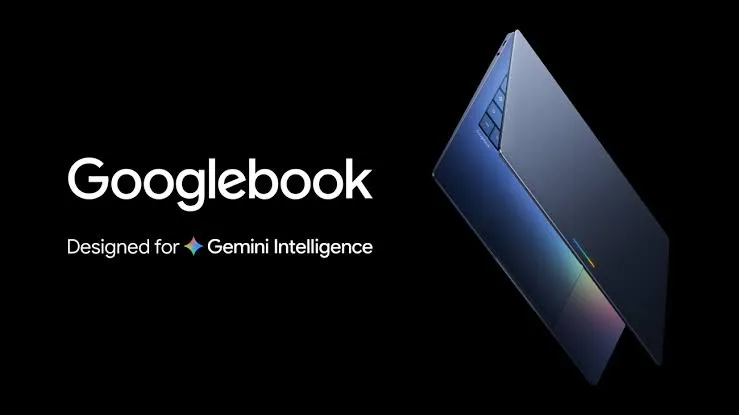
Google introduced Googlebook as a new laptop category in May, describing it as a machine "designed for Gemini Intelligence" and naming Acer, ASUS, Dell, HP, and Lenovo as partners for a fall 2026 rollout. The Verge also reported leaked images of a second Lenovo device this week: a 2-in-1 tablet carrying matching Googlebook branding, suggesting Lenovo is building a small lineup rather than a single laptop.
Neither Google nor Lenovo has commented on the leak, and the renders leave plenty unanswered. But they're the first detailed, product-specific renders showing how one manufacturer may implement Google's pitch.
The hardware: ports, display, and design details
The leaked Lenovo Googlebook 15 carries a full-size HDMI port, two USB-C ports, a USB-A port, an SD card reader, and a 3.5mm headphone jack. TechSpot, reviewing the same images, noted that Lenovo appears to be setting minimalism aside in favor of broader connectivity here, a departure from some of the platform's more pared-back design choices elsewhere.
Other visible details include a 15-inch display with slim bezels, a camera notch with a physical privacy shutter, upward-firing speakers with Dolby Atmos branding, and a textured, fluted underside with a metallic appearance with what look like fan intakes.
Branding leans toward Google rather than Lenovo. The palm rest reads "Googlebook" instead of Lenovo's usual product-line names, something Android Authority read as a sign of tight control by Google over how the platform presents itself.
The Verge reports that Lenovo's leaked 2-in-1 tablet carries the same Googlebook branding on its keyboard, and that the leaked laptop and 2-in-1 appear to include rear light elements echoing the "glowbar" Google has called the platform's visual signature.
Google's own announcement promises "premium hardware" and "premium craftsmanship" across the Googlebook line. The renders show intended design language, not build quality. Durability, repairability, and finish stay unknown until review units exist.
The software: what the leak shows about Googlebook vs Chromebook
Several outlets describe the operating system running on these renders as "Aluminium OS," which reportedly blends Android and ChromeOS into a single interface built around Gemini. That name doesn't appear anywhere in Google's own material, which describes Googlebook only as built on "part of the Android tech stack."
The leaked desktop carries visible Android roots, including a smartphone-style status bar running along the top edge with time, battery, Wi-Fi, and Gemini indicators. TechSpot describes the rest of the layout as a fairly standard desktop arrangement built around that Android-style status bar.
The keyboard mixes eras. A Chromebook-style Quick Insert key occupies the traditional Caps Lock position, sitting alongside 14 function keys and a dedicated accessibility key, a feature rarely seen on laptops at all.
The rendered taskbar includes Canva and Adobe Premiere Pro alongside core Google apps. Android Authority reads that as a signal Google wants Googlebook seen as a machine for creative and productivity work rather than the browser-only reputation Chromebooks never fully shook, though the renders show marketing intent, not confirmed app availability or performance.
Gemini's promised role in the leaked hardware
The most visible new element is a dedicated "G" key sitting where a Windows key would normally go. TechSpot compares it to Microsoft's Copilot key and says it is expected to provide a shortcut into Gemini, though that function hasn't been confirmed beyond the renders themselves.
A Gemini star icon also sits fixed in the status bar next to the other system indicators. The Verge notes that Chromebooks have carried a similar Gemini-summoning key, called Quick Insert, in the Caps Lock position since 2024, so a hardware shortcut to the assistant isn't entirely new territory for Google.
Having a key doesn't say much about what pressing it actually does. Google's own pitch centers on Magic Pointer, a cursor that surfaces contextual suggestions, such as offering to add a date from an email to the calendar or merging two selected photos when both are highlighted.
Google has also described a "Create Your Widget" tool that builds custom widgets from a text prompt, a personalized dashboard pulling from Gmail and Calendar, and Quick Access, which lets users view or pull phone files onto the laptop without a manual transfer.
A leaked video of Aluminium OS in action surfaced earlier this year, so the operating system itself has been seen running before this week's images. Magic Pointer, Create Your Widget, and Quick Access, though, have only appeared in Google's own announcement. Nothing in the leak speaks to latency, accuracy, offline behavior, or whether any of it can be switched off.
What's still unknown, including the Lenovo Googlebook 15 release date
The leaked images don't include any technical specifications, and neither Google nor Lenovo has commented on the leak. Android Authority reports that Lenovo may unveil the device at IFA in September, but that timing is unconfirmed by either company.
No Lenovo Googlebook 15 release date has been confirmed. Google has said only that the first Googlebooks from its five launch partners are due sometime this fall, without naming a specific date or price.
That leaves the bigger questions about the platform open: how Android apps actually perform on a 15-inch desktop, how Gemini's access to email and calendar data gets governed, what battery life and real-world performance look like, and how pricing compares against similar Windows and Mac laptops. A leaked image set, however detailed, doesn't answer any of that.
What the renders confirm, and what they don't
The leak gives physical form to what Google announced in May: a new 'G' key reportedly intended to summon Gemini, an Android-flavored interface, and a glowbar as the platform's visual signature across at least two Lenovo devices.
What it doesn't confirm is whether any of it works well. Magic Pointer, the personalized dashboard, and Quick Access remain company promises, and specs, pricing, and app performance are still unreported. With a possible September reveal for Lenovo and a wider fall launch across five manufacturers, those answers are due later this year, not months from now.





Comments
Be the first, drop a comment!