




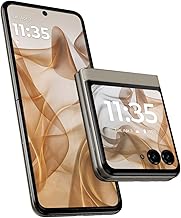

Is the Motorola Razr Waterproof? IP Ratings by Model
If you're wondering whether the Motorola Razr is waterproof, the short answer is no. That applies to every model in the lineup. The more useful question is whether your specific Razr is meaningfully water-resistant, and that depends entirely on which generation you own.
This covers the Motorola Razr clamshell foldable lineup: older legacy Razr foldables, the 2024 Razr, and the three-model 2025 Razr lineup. Water protection has changed substantially across these generations. The 2024 Razr earned an IPX8 rating, indicating tested submersion resistance in fresh water, as Android Police noted in its review. The entire 2025 Razr lineup carries an IP48 rating, adding partial dust protection alongside comparable water resistance, The Verge reported in 2025. Older Razr foldables are listed as splash-proof with a water-resistant nanocoating, with no IP rating on the spec page, per Motorola Support AU.
Newer Razr models offer real, certified water resistance. What that protection actually covers, and what it doesn't, depends on which model you own.
Which Razr you have determines what you're working with
Three distinct protection tiers exist across the Razr foldable lineup, and the gaps between them are meaningful.
Older Razr foldables (pre-2024) are listed as splash-proof with a water-resistant nanocoating, carrying no IP rating, Motorola Support AU confirms. No submersion tolerance, no dust rating. Treat these as protected against brief, incidental contact with water only: a light rain or a counter splash, nothing more.
The 2024 Razr shipped with an IPX8 rating, a major step up for a foldable. The "8" indicates tested resistance to fresh-water submersion, with the specific depth and duration conditions defined by the manufacturer. The "X" means no dust rating is listed. Android Police highlighted IPX8 as one of the standout quality-of-life improvements in its review of the device.
The 2025 Razr lineup covers all three models, each carrying IP48. The first digit, 4, adds limited dust protection: larger particles are blocked, though fine dust can still work through over time, according to The Verge, which noted that dust remains a concern even with the rating. The second digit, 8, retains the same class of fresh-water submersion protection as the 2024 model. Motorola's own specifications for the Razr 60 confirm IP48 dust and water protection. Worth noting: Motorola uses "Razr 60" branding in some markets for what is sold elsewhere as the 2025 Razr lineup, so if that link looks unfamiliar, that's why. The Verge also noted that the IP48 rating puts all three 2025 models on par with Samsung's Galaxy Z Flip 6.
One important caveat: equal second digits don't automatically mean identical real-world tolerance. Under IP standards, an "8" means the manufacturer specifies the immersion conditions, including depth, duration, and temperature, and testing is conducted against those parameters. The rating class is the same across the 2024 and 2025 models; the exact tested conditions Motorola specified for each may differ.
Motorola Razr IP48 rating: what it means in real life
IP stands for Ingress Protection. The two digits describe resistance to solid particles and resistance to liquids, in that order. An "X" in either position means that category wasn't tested. The scale for liquid protection runs from 1 to 9, with level 8 meaning the device is suited for immersion at depth under conditions specified by the manufacturer, per Motorola's support documentation. Level 6 is the maximum for dust protection, meaning complete dust-tightness, according to the same source.
Think of it like the weatherproofing seal on a door frame. IP68, the rating on most flagship bar-form smartphones, means the seal is complete: level 6 dust protection and level 8 water protection, so no dust penetrates and the device can survive submersion in fresh water at depth. IP48 means the water protection is in the same class, but the dust protection is limited rather than complete, so fine particles can work through over time. IPX8 skips the dust test entirely.
In practice, IP48 and IPX8 both mean the device has been tested against fresh-water submersion. What they do not cover: pool water, ocean water, soap, or any liquid other than clean fresh water. Motorola is explicit on this point; its devices are not designed for exposure to pressurized water or liquids other than fresh water, per Motorola Support US.
There's a second distinction that matters even more: Motorola states these phones are not designed to work while submerged, the same Motorola Support US documentation confirms. The rating covers survival from accidental exposure, not active operation underwater. A phone that survives being dropped in a puddle is not a phone you should be filming with at the pool. Those are two very different use cases, and the IP rating only addresses the first.
What falls within spec and what doesn't, based on Motorola's stated limitations:
- Within spec: Rain caught outdoors in a downpour; sink or countertop splash; brief drop in a puddle or shallow fresh water
- Outside spec: Swimming pool or any chlorinated water; ocean or saltwater exposure; shower use, which involves pressurized water; any liquid other than fresh water; charging while wet
The pool and saltwater exclusions follow directly from Motorola's "liquids other than fresh water" caveat, Motorola Support US confirms. Shower use falls under pressurized water, the same source notes. Charging while wet is explicitly flagged as something to avoid, per Motorola Support US. These aren't edge cases. They're the scenarios most people actually encounter around water.
The warranty and wear gaps that change the calculation
IP ratings are tested on brand-new devices under controlled laboratory conditions, Motorola Support US notes explicitly. Not on phones that have been folded and unfolded thousands of times over a year or two of daily use.
Motorola acknowledges directly that water resistance decreases with normal wear, per Motorola Support US. The protection a device shipped with is not the protection it will have indefinitely. For a clamshell that gets opened and closed dozens of times a day, the hinge and its surrounding seals take more mechanical stress than most phone components ever do.
The warranty language draws a clear line between water resistance and guaranteed protection: liquid damage is explicitly excluded from coverage, regardless of the device's IP rating, Motorola Support US states. That exclusion applies to a brand-new phone with a fresh IP rating, let alone one that has seen eighteen months of daily use. Motorola also advises against charging a wet phone, a basic caution that reinforces the gap between "resistant to accidental exposure" and "safe to use wet," per the same source.
The practical implication: the IP rating tells you what the phone was designed to survive, not what Motorola will repair or replace if it fails. Those are different commitments, and only one of them is in writing.
Is the Motorola Razr fold waterproof? The clamshell design factor
The clamshell foldable form factor introduces a specific water-resistance challenge that a standard bar phone doesn't share. Every time the phone opens and closes, the hinge flexes. The seals around the display, the hinge gap, and the folding mechanism are all points where the ingress protection can weaken over time in ways that don't apply to a sealed slab.
That's part of why reaching IPX8 on the 2024 Razr was notable. Foldables had historically lagged well behind bar phones on water resistance, partly because the mechanical complexity of a folding hinge makes it harder to seal effectively. The step from nanocoating to IPX8 to IP48 across the Razr generations reflects real engineering progress.
The Motorola Razr splash-proof designation on older models reflected the limits of that earlier approach: a nanocoating offers some incidental protection, but it degrades with use and carries no tested standard behind it, per Motorola Support AU. The IP ratings on the 2024 and 2025 models reflect a different level of commitment, one backed by testing against a defined specification. But the hinge remains the weak point, which is why even the 2025 models carry a "4" for dust rather than the maximum "6." The folding mechanism still makes complete dust-tightness difficult to achieve.
Decision framework by model
The practical guidance is model-specific.
If you have a 2025 Razr, IP48 covers brief accidental fresh-water exposure: a sink splash, getting caught in the rain, a dropped phone fished out of a puddle. Dust protection is limited, not complete, so fine particulate buildup in the hinge is a longer-term concern. Water resistance is a safety net for accidents, not a license for water use, per The Verge and Motorola Support AU.
If you have a 2024 Razr, the water protection class is equivalent to the 2025 models on that second digit, so accidental fresh-water exposure is similarly within spec. No dust rating means the hinge and folding mechanism have no listed particle-ingress protection, a distinction that matters more as the phone ages, as Android Police noted in its assessment.
If you have an older Razr, treat it as splash-resistant only. There is no IP rating on the spec page and no submersion tolerance documented, Motorola Support AU confirms. If you're buying used and accidental dunk resistance matters to you, the 2024 model is the minimum threshold worth considering.
The short version: pre-2024 Razrs offer splash protection only; the 2024 Razr adds certified fresh-water submersion protection with no dust rating; the 2025 lineup keeps that water class and adds limited dust protection on top. No Razr is waterproof, liquid damage is excluded from Motorola's warranty regardless of model, and protection degrades as the device ages.
For the full technical breakdown of what each IP digit level means in testing terms, Motorola's support documentation covers the standard in detail, including the caveats Motorola builds in around wear and warranty.


Comments
Be the first, drop a comment!