



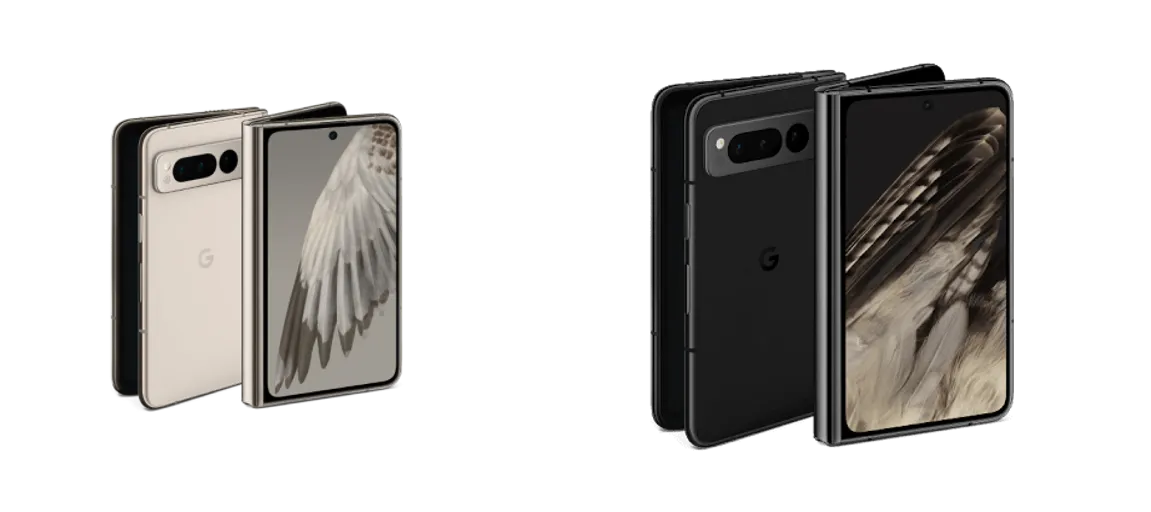
Ask readers interested in Pixel foldables whether Google's hardware still measures up, and the results are divided. In a poll of 2,825 voters, 39% named hardware as the thing that "doesn't keep up," the single largest response, while 24% still credited software as Google's advantage, 28% said they'd wait for the Pixel 11 Pro Fold before deciding, and a smaller 9% said they're waiting for Apple's foldable instead. That's not a verdict on whether Google Pixel foldable phones are worth buying. It's a sizeable share of an engaged readership choosing to wait and see.
Six months ago, a separate Android Authority poll of more than 1,700 readers asked a different question: what should the next Pixel foldable actually be? The results showed strong demand for a major upgrade, with 56% wanting a substantial overhaul against 21% who'd accept another modest update. That poll flagged appetite for a bigger leap well before this summer's hardware complaints surfaced.
These are two different polls asking two different questions, so neither proves confidence has measurably declined over time. What they do show is a hardware gap wide enough, 39% versus 24%, to take seriously, paired with an earlier signal that this audience wanted more than incremental change even before the July poll ran. Whether that pressure eases or hardens now depends almost entirely on what Google ships next.
What Pixel foldable fans are actually saying
The July poll's four options were mutually exclusive, so the 24% who still credit software reflects the current balance of opinion among respondents, not proof that software's standing has weakened. No earlier poll asked the same question, so there's no baseline for comparison. Still, hardware pulling 39% against software's 24% is a gap worth taking seriously in how this audience currently views the product.
Some respondents wanted a different form factor entirely, not simply a refinement. Six months ago, 14% said they wanted a clamshell "Pixel Flip" instead of another iteration of the book-style Pro Fold. That response points to demand for a different shape, though it doesn't reveal why respondents wanted it.
There's also a smaller but pointed signal. Nine percent of July's respondents said they're specifically waiting for Apple's foldable instead of Google's next one. That's well below the 28% still undecided about Pixel itself, but Apple's expected entry into the category could give some undecided buyers another option to consider.
One caveat runs through both polls. They draw from a self-selected audience interested enough to participate in a foldable survey on an enthusiast site, not a representative sample of smartphone buyers generally. Treat this as sentiment among a specific readership, not a market-wide read.
Pixel foldable phone problems: what's confirmed and what's rumored
Start with what's actually confirmed. Android Authority lists the current Pixel 10 Pro Fold with a 6.4-inch outer display, an 8-inch inner display, an IP68 rating, magnetic charging, and a $1,799 MSRP. Those are real specs, not rumors.
The criticism fueling most of the hardware complaint is a characterization, not a lab test. Android Authority describes Motorola's Razr Fold as delivering roughly two days of battery life, capable cameras, and seven years of Android updates. No spec-by-spec breakdown of thickness, weight, or charging speed accompanies that claim in the source, so it reads as one outlet's evaluative judgment rather than an independently verified head-to-head.
Samsung has now launched the wider Galaxy Z Fold8 alongside the Galaxy Z Fold8 Ultra, adding two confirmed alternatives to Google's annual foldable cycle.
What's rumored for the Pixel 11 Pro Fold is where the real uncertainty sits. Reports point to a chassis only a fraction of a millimeter thinner than the current model, a smaller battery, and camera hardware limited to a possibly refined 50MP sensor, none of it confirmed by Google. Those are the rumored compromises now driving concern about Pixel Pro Fold hardware, not a confirmed spec sheet.
Set against that is an earlier and more optimistic forecast. 9to5Google reported four months ago that Counterpoint expected "a thinner chassis" and an improved hinge design that would position Google's 2026 foldable in the "ultra-premium tier." These two accounts don't have to contradict each other outright.
A phone can be only fractionally thinner and still be thinner than its predecessor; an improved hinge could still support a premium position even with a smaller battery. The unresolved question, based on what's public, is whether that change is meaningful enough to answer the hardware complaint or just a footnote next to an otherwise unchanged experience.
On software, the poll doesn't ask respondents why they chose it as Google's strength, so any explanation is a guess. It's plausible the 24% are thinking of Google's AI features, camera processing, or update commitments, but those remain plausible explanations, not something the data confirms.
Taken together, this sets a reasonable bar for judging whether the next Pixel Fold justifies its price: a chassis that's noticeably thinner, not just fractionally so; a camera upgrade buyers can actually notice; and enough detail on battery life and hinge durability to know whether Google addressed the exact points raised in the Razr comparison. That's this article's proposed standard, applied to unconfirmed rumors, not a verified test result.
Why Samsung and Motorola put pressure on Google
A full comparison with the unannounced Pixel 11 Pro Fold is not yet possible. Samsung has, however, confirmed specifications for both the Galaxy Z Fold8 and Z Fold8 Ultra. What can be compared is scale, and here the gap is stark.
Counterpoint's global 2025 breakdown put Samsung at 40% of the foldable market, Huawei at 30%, Motorola at 12%, Honor at 7%, and Google Pixel at just 2%. Its 2026 forecast has Samsung sliding to 31% and Apple entering at 28%, while Google's global sliver is projected to shrink further, from 2% to 1%. Pixel isn't competing with Samsung on volume, at least not by these numbers.
That leaves software and image processing as Pixel's most defensible differentiator in this comparison, since nothing in the available evidence establishes hardware leadership over Samsung or Motorola. It's not necessarily a losing position, but it does mean the matchup tilts toward hardware specifics Google hasn't confirmed it can meet.
If the Pixel 11 Pro Fold's rumored specs hold, buyers who care most about thinness, battery life, or camera hardware may have reasons to look at Motorola's Razr Fold or Samsung's reported Z Fold 8 Ultra once specifications, pricing, and availability are actually confirmed.
Should I wait for the Pixel 11 Pro Fold?
Timing matters more than any spec debate right now. Google's last two foldables, the Pixel 9 Pro Fold and Pixel 10 Pro Fold, were both announced in August. Google has scheduled its next Made by Google event for August 12, 2026. That confirms when the next hardware announcement will occur, although Google has not yet confirmed every device that will appear or when the Pixel 11 Pro Fold will ship.
That gap changes the calculus for anyone shopping right now. Waiting could cost only a few weeks if Google announces soon. If the timeline slips toward Q4 instead, anyone who needs a foldable soon should weigh that longer wait against buying now rather than assuming patience is always the safer bet.
The buying decision while the picture is unresolved
Discounts change the math considerably. In a poll testing willingness to buy the Pixel Fold at a specific price, 32.5% said they'd make it their daily phone at $560, and another 21.3% would buy it at that price as a secondary device. That's a strong stated appetite for a steep discount at one specific price point, not a confirmed street price or a general ceiling on the phone's worth. Anyone considering this route should check current listings for new, refurbished, and used units rather than assume $560 is still realistic.
One reader's comment captures the sentiment well. He said he could never justify launch prices above $1,700, but picked up a unit for $320 and called it "an absolutely fantastic phone." That's a single anecdote, not evidence every discounted Pixel Fold delivers the same satisfaction, but it illustrates how dramatically a discount can change one buyer's view of value.
Put those pieces together, and a framework for the decision starts to take shape:
Buy the current Pixel Fold now if:
It's available at a substantial discount from the $1,799 MSRP, and current new, refurbished, and used listings have actually been checked rather than assumed
Google's software, AI features, and camera processing matter more than having the newest chip or the thinnest hinge
A large-screen phone is wanted immediately, and an earlier hardware generation is an acceptable trade for getting one now
Wait, or look elsewhere, if:
The price is close to MSRP, since paying near full price makes the rumored hardware compromises — a thinner-but-not-much-thinner chassis, a smaller battery, a minimal camera bump — harder to justify
Thinness, battery life, or camera hardware are top priorities, the exact areas current rumors suggest the Pixel 11 Pro Fold may not meaningfully improve
There's willingness to compare the Pixel with the Motorola Razr Fold or Samsung's Galaxy Z Fold8 and Z Fold8 Ultra at their current prices.
Market share adds context without changing that framework much. Counterpoint's North America forecast projects Google's foldable share slipping from 5% to 3% in 2026, proportionally a smaller decline than Samsung's or Motorola's, even as Apple is expected to launch its first foldable iPhone and take an estimated 46% of the North American category.
That's the smallest proportional drop among Android's three big foldable brands, but a market-share forecast says nothing about Google's product roadmap or update-support commitments. Those would need confirmation from Google directly, not inference from a sales projection.
Where this leaves buyers
Pixel foldables make the most sense right now for buyers who value Google's software and camera processing more than cutting-edge hardware, and who can find the current model at a steep discount rather than MSRP. They make the least sense for anyone chasing the thinnest chassis, the longest battery life, or the most capable camera, the exact areas where Motorola's Razr Fold already draws favorable comparisons and where the Pixel 11 Pro Fold's rumored specs offer little reassurance.
What happens next comes down to three things: whether the Pixel 11 Pro Fold's chassis turns out thinner in a way buyers can actually feel, whether Google confirms a launch date or the wait stretches toward Counterpoint's Q4 forecast, and whether the outgoing model receives meaningful discounts in the meantime. None of that is settled yet.
The trade-off buyers face today is the same one Google has always asked Pixel owners to make: take the software experience now, or hold out for hardware that might finally close the gap with Samsung and Motorola.





Comments
Be the first, drop a comment!