



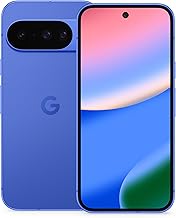

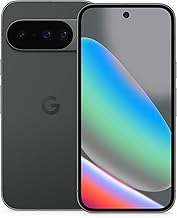
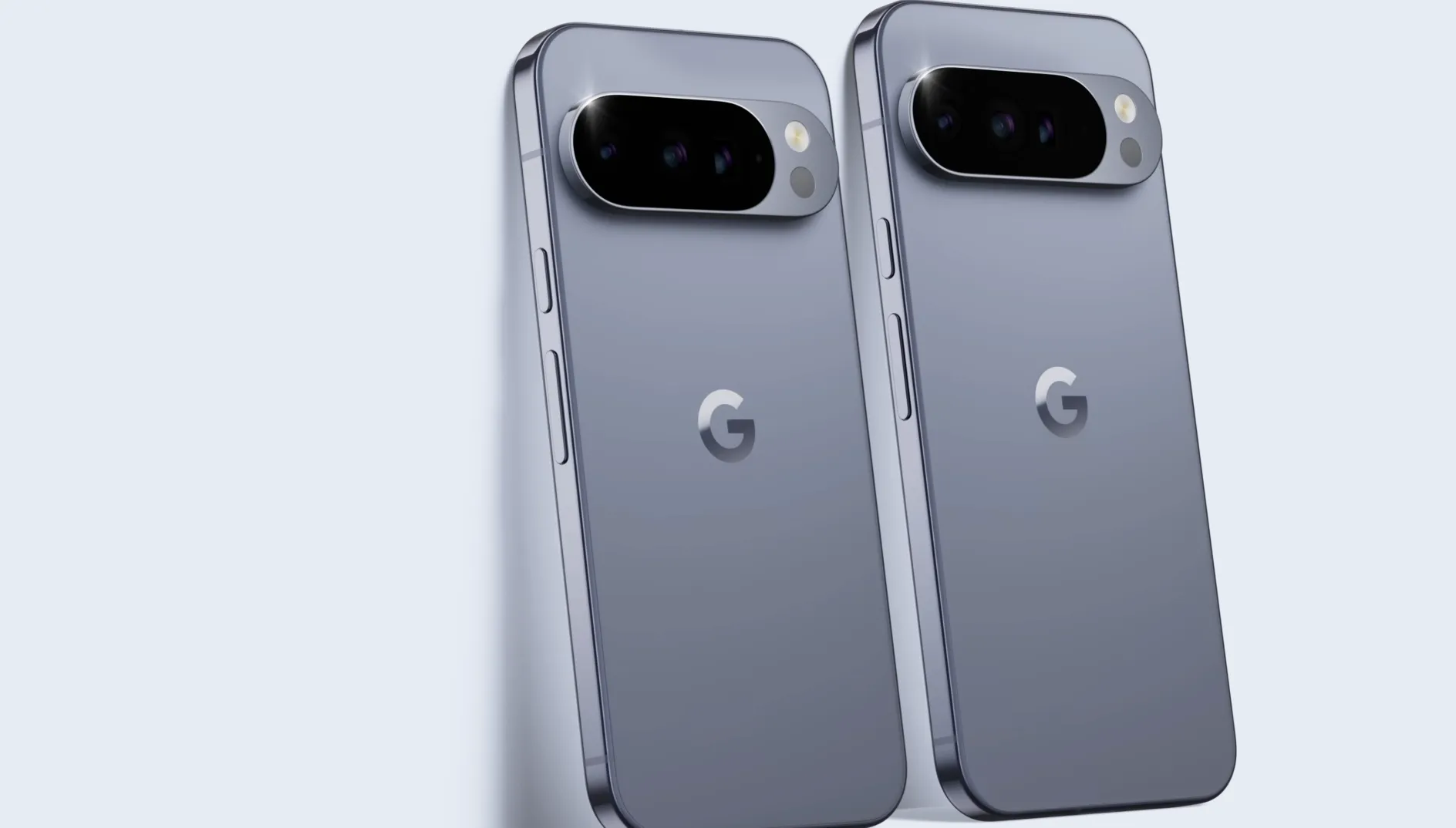
A Pixel imported into a country where Google doesn't officially sell it runs the same chip, takes the same photos, and largely runs the same software as any other Pixel right up until the local carrier shuts down its 3G network. At that point, the phone may stop making calls entirely because Google doesn't enable Voice over LTE (VoLTE) in unsupported markets, per Android Authority. That's not a SIM-tray curiosity. That's a phone that stops working as a phone.
Most buyers in officially supported markets will never encounter any of these international Google Pixel vs US model differences. But for anyone purchasing across regions to save money, access a device early, or use a Pixel somewhere it isn't sold, the risks are specific, structural, and worth understanding before the transaction.
This piece draws primarily from the Pixel 10 generation, which represents Google's current approach. Where differences apply broadly to recent Pixels (Pixel 7 and later), that's noted; where something is new with Pixel 10, it's called out as such.
Unlike Samsung, which has historically shipped different processor silicon in different regions (Snapdragon in some markets, Exynos in others), the hardware gap between US and international Pixels is considerably narrower, with the same chip, display, and cameras across markets. Where the phones diverge is in cellular compatibility.
Same phone, different market: why regional variants exist and what stays consistent
Every country presents its own set of requirements for devices sold within its borders. Frequency allocations differ, regulatory frameworks vary, and eSIM infrastructure adoption is uneven globally. Google tweaks its products to conform to local regulations and customer preferences, Engadget notes. The US market specifically has stricter testing and vetting requirements for phones sold through carriers than many other countries, a dynamic that Engadget points to as one reason many Chinese phones aren't officially sold here.
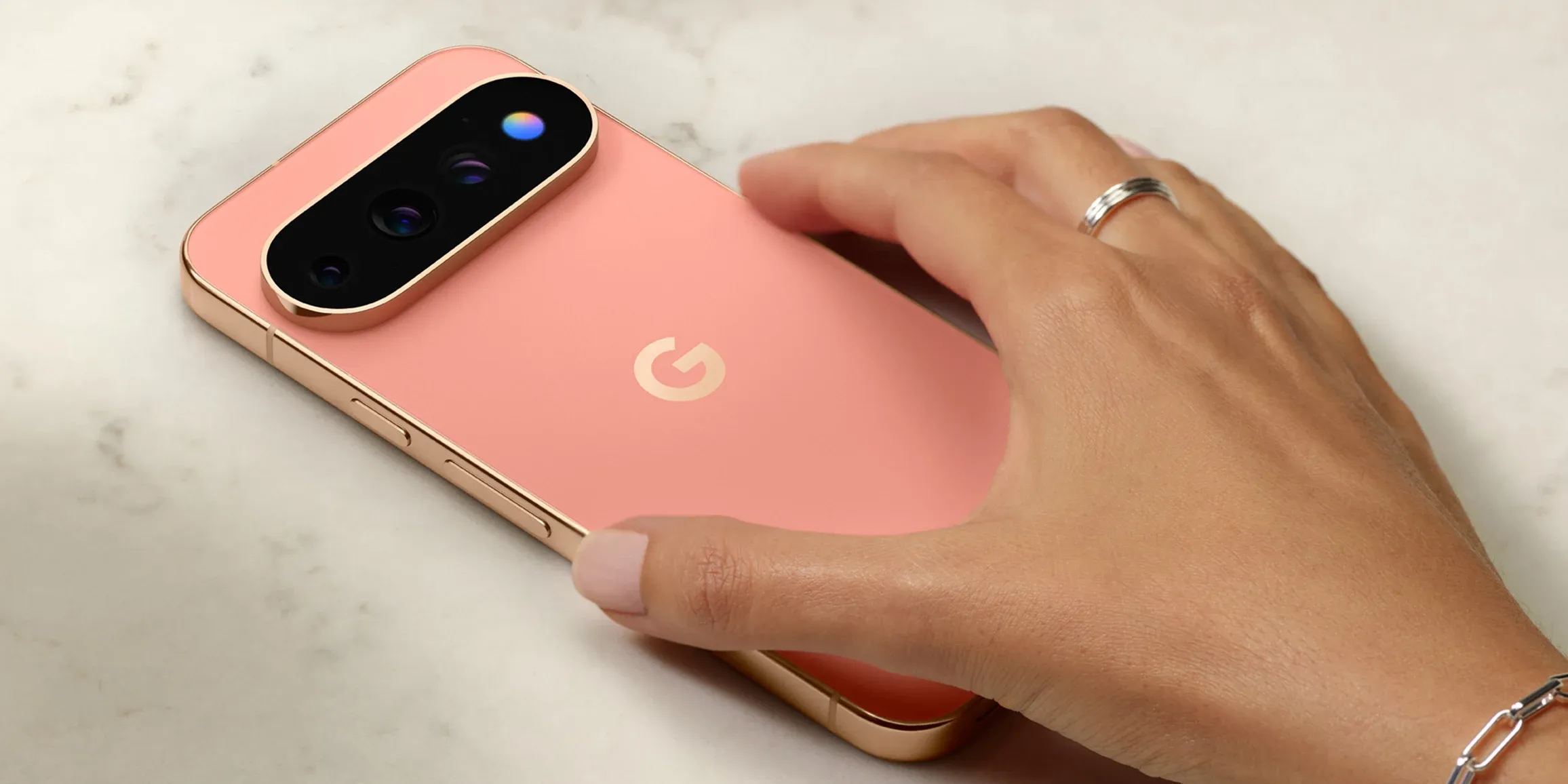
What stays identical across every market is the core hardware. The Pixel 10 ships with the same Tensor G5 chip, 12GB of RAM, 128GB or 256GB storage, a 6.3-inch Super Actua OLED display, and identical camera hardware: a 48MP main sensor, 13MP ultrawide, and 10.8MP telephoto, regardless of where it's sold. Physical design is equally consistent: the same materials, finishes, and color options appear in every market.
That parity matters as a baseline. The conversation about American vs international Pixel phones isn't about performance compromises or camera degradation. It's narrower than that, and it organizes cleanly into three tiers: cosmetic or negligible (specs, design), convenience-level (SIM format, feature rollout timing), and deal-breaker (cellular band support, VoLTE in unsupported markets).
The third tier is the one that can leave you with a device that no longer functions as a telephone.
US vs international Pixel 10: SIM, bands, and carrier support
Tier 1 convenience: the SIM tray
An eSIM is a programmable chip embedded directly into the phone, replacing the physical, removable SIM card. Think of it as the difference between a physical hotel key and a digital room code stored on your phone: same function, different form, not yet universally supported everywhere.
The Pixel 10, 10 Pro, and 10 Pro XL are the first Pixels in Google's history to ship without any physical SIM slot in the US. The same models sold internationally in the UK, India, Australia, Germany, France, Italy, Canada, and other markets retain a nano-SIM slot alongside eSIM support, reflecting uneven eSIM infrastructure globally. The sole exception is the Pixel 10 Pro Fold, which keeps the nano-SIM slot in all markets, including the US.
Google's rationale connects two decisions directly: American carriers broadly support eSIM, and removing the physical tray freed internal space for the antenna hardware required to support mmWave 5G. US Pixel 10 models support two active eSIM profiles simultaneously and can store more than eight profiles on the device.
For US residents purchasing through normal domestic channels, the practical impact is low. Apple made the same move with US iPhones in 2022, and Android Authority notes Google is now following that precedent with the Pixel 10. eSIM support among major American carriers is now routine. The friction shows up for travelers who want a local prepaid physical SIM abroad, buyers who prefer tangible carrier switching, or anyone reselling to international buyers.
Tier 2 moderate: cellular bands and mmWave
Cellular bands are distinct slices of radio spectrum that carriers use to deliver calls and data. A phone missing a carrier's key bands will fall back to slower network generations or lose signal in coverage gaps, the difference between full bars and hunting for a connection.
mmWave 5G operates on extremely high frequencies, delivering fast speeds over short distances. It's useful in dense urban environments, stadiums, and transit hubs. US carriers, particularly Verizon, have invested heavily in mmWave infrastructure, while most international carriers haven't, making it a US-specific priority. International Pixel 10, 10 Pro, and 10 Pro XL models drop mmWave support entirely as a deliberate cost and optimization tradeoff, not an oversight.
A concrete illustration of what this means in practice: at least three US Pixel 10 owners reported receiving international-variant replacement units through Google's support process, per Android Authority. Those users gained a physical SIM slot but lost mmWave and US-specific 5G bands n29, n48, and n70.
The inverse also holds that those international models carry additional LTE bands (21, 32, 39, 42, and 75) not present in US versions, which can broaden roaming compatibility for frequent international travelers. Google has offered no public explanation for the practice, and the reported cases are small in number, useful as a window into the tradeoffs, not as evidence of a widespread pattern.
Tier 3 deal-breaker: VoLTE and Wi-Fi calling in unsupported markets
VoLTE (Voice over LTE) routes voice calls over 4G infrastructure rather than the older 3G circuit-switched network. As carriers globally retire 3G, VoLTE is what keeps a modern smartphone functional for standard voice calls. Without it, a phone has nowhere to route calls once the older network is gone.
Google does not enable VoLTE on Pixel phones used in markets where Pixels aren't officially sold. Wi-Fi calling is similarly unavailable in unsupported markets. A Pixel imported into one of those countries may currently still make calls over 3G, but as that network is retired, it may lose voice calling entirely, with no LTE or Wi-Fi fallback available and no indicated fix from Google.
This is not a theoretical edge case. An Android Authority writer documented it directly after importing a Pixel 7 Pro: the phone worked until 3G retirement timelines made clear it would eventually lose call functionality with no recourse. That same account notes the limitation applies to Pixel phones broadly in unsupported markets, with no indication Google plans to change the policy for future models.
A phone that can no longer make calls is no longer a phone. That's the distinction this tier represents.
Software differences: feature timing, not a different OS
US and international Pixels run the same operating system with the same core feature set. The differences are about when features arrive, not whether the phone runs properly.
New tools tend to become available first in English-speaking North American markets while Google handles regulatory compliance and localization for other regions, Engadget noted today. Pixels are sold in more than 30 countries with support for over a dozen languages, a scale that makes simultaneous global launches difficult by design.
Magic Cue, Google's AI feature that surfaces contextually relevant information like addresses and calendar appointments within messages, is a useful concrete example. It's currently live in the US, Canada, India, the UK, and Japan, with additional markets still pending.
For most users, feature-timing gaps are a minor inconvenience. They don't affect whether the phone operates; they affect when the next AI tool arrives. Anyone weighing a cross-region purchase primarily for software access is solving the wrong problem.
Who actually needs to worry: a scenario-based decision framework
US resident buying through official US channels: The regional differences described here are effectively invisible. A US-optimized device with full carrier support, mmWave where available, VoLTE on any supported carrier, and first access to new software features. No action is required beyond normal eSIM setup.
Buyer considering an import, either a US buyer wanting a physical SIM, or an international buyer ordering from the US: Some functions will work fine; network support can vary sharply depending on your carrier and country.
Verify: Does your carrier support eSIM if you're importing a US-only model? Does your home carrier support the Pixel's frequency bands? Does Google officially sell Pixels in your country? If not, VoLTE and Wi-Fi calling may not function, and that gap grows as 3G networks continue to retire globally. Worth noting too: international Pixel 10 models carry LTE bands 21, 32, 39, 42, and 75 that US models don't support — a genuine advantage for anyone who regularly travels internationally and wants broader roaming coverage.
Person moving to or living in an unsupported market: The highest-risk scenario. The practical guidance, stated plainly: buy the phone in the country where you'll live. An imported Pixel in an unsupported market isn't just suboptimal; it may eventually stop functioning for voice calls with no software fix indicated by Google.
Verification checklist before any cross-region purchase
Five questions worth answering before committing to a cross-border Pixel purchase:
Is your destination country on Google's official Pixel availability page?
Does your carrier support the Pixel 10's frequency bands? (Check band compatibility against your carrier's published spectrum list.)
Does your carrier support eSIM activation if you're buying a US-only model?
Does your carrier support VoLTE on imported Pixels specifically, not just VoLTE support in general?
Is mmWave 5G deployed and relevant on your carrier and in your city?
That last question cuts both ways. If mmWave isn't active in your area, losing it on an international model costs nothing. If your carrier has built out mmWave coverage in your city, an international unit represents a real connectivity step down.
For band-by-band regional spec comparisons, GSMArena publishes full breakdowns for each Pixel SKU worth checking before any cross-border purchase decision.
The hierarchy is the point
US and international Pixels share the same processor, cameras, and display. The meaningful differences are connectivity decisions: SIM format, radio band support, and whether Google officially backs your market.
Missing a SIM tray is a minor inconvenience manageable for most US buyers and irrelevant to those in international markets where the slot is still present. Missing mmWave is a moderate tradeoff with a clear rationale; the freed space goes directly toward supporting that same mmWave hardware in US models. Losing VoLTE in an unsupported market is a different category entirely, a problem that compounds over time as 3G networks disappear carrier by carrier, with no fix on the horizon.
Google's US eSIM-only move follows Apple's 2022 precedent, and the Pixel 10 marks the first time a US Pixel has shipped without any nano-SIM slot. As global eSIM adoption accelerates, that particular distinction may eventually close. Cellular band differences and market-support limitations are a different matter; they reflect real infrastructure investment decisions and regulatory realities that aren't converging on any near-term timeline.
For anyone purchasing locally through official channels, most of these differences remain invisible. For anyone buying across borders, the hierarchy above is the map.




Comments
Be the first, drop a comment!