





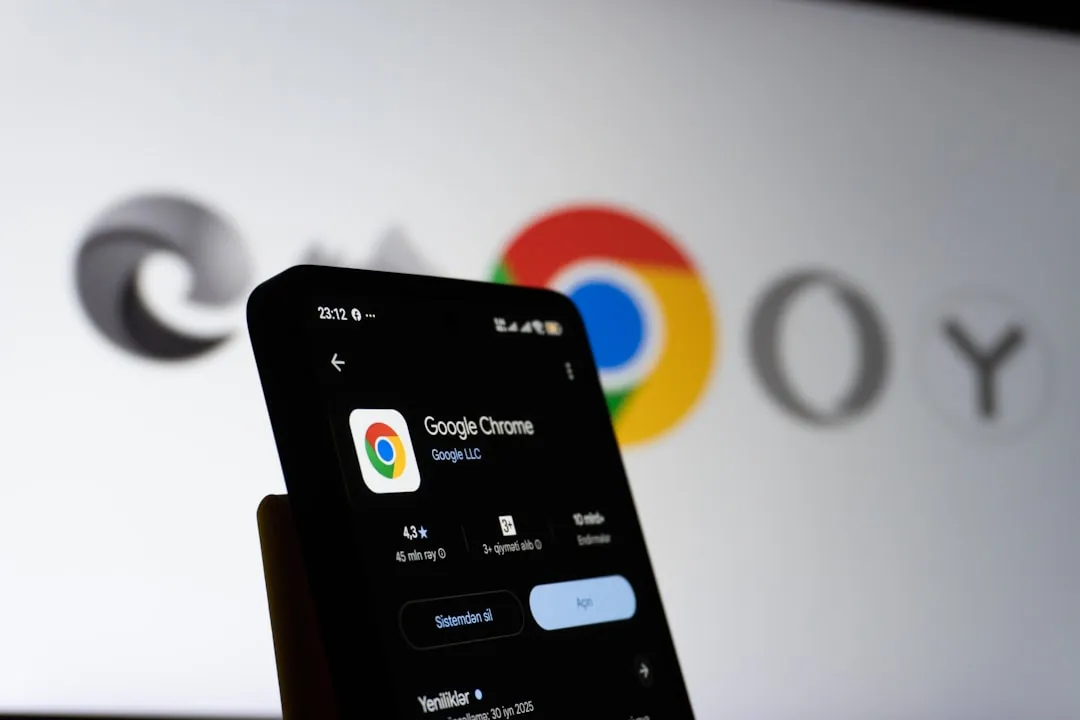
Google last week announced a feature that changes what happens after you open a link on your phone. Starting late June, Gemini in Chrome on Android will place an AI icon in the browser toolbar. Tap it, and a panel slides up over the page you're already on, ready to summarize, explain, or answer questions about that specific content, without opening a new tab or leaving the page.
The gap between opening a page and understanding it just got a lot shorter. Rather than reading a dense article straight through, or bailing to a search box for a simpler explanation, the question-and-answer interface now sits directly on top of the content.
Here's how the feature actually works, who can use it and when, what the paid auto browse tier adds, and where Google's privacy commitments stand today versus what's still coming.
How Gemini in Chrome on Android works on any page
Tapping the Gemini icon opens a bottom sheet over the current page. From there, Google says users can ask questions about what they're reading, request a plain-language summary of a long article, or get an explanation of a complex passage — all without switching apps or tabs, with follow-up questions building inside the same panel. The page itself is the context; no copy-pasting required.
The practical payoff is clearest with dense or technical content. Open a long policy document on your phone, ask Gemini to summarize the main points, then ask what one section means for a specific situation. That entire exchange happens overlaid on the article, not in a separate search session.
Google also positions the feature as a connector between what you're reading and the rest of your Google apps. From a recipe page, users can send ingredients to Google Keep. An event listing can populate a Calendar entry. Users who have Gmail connected can ask Gemini to pull relevant information from their inbox and relate it to the page they're reading, according to Google. The assistant bridges what's on screen to what you've already received, not just what it knows in general.
One additional layer: users who opt into Personal Intelligence can get responses shaped by their stated interests, hobbies, and personal context. Google labels all generative AI features as experimental, which means capable but not guaranteed experience.
Who gets it and what the requirements are
Both Gemini in Chrome and auto browse roll out to eligible Android devices in late June, U.S. only — consistent with how Google has paced earlier AI Mode and Search updates before expanding elsewhere, as the April 2026 Chrome AI Mode announcement illustrated.
Hardware and language requirements apply to both features. Devices must run Android 12 or higher, carry at least 4GB of RAM, and have the system language set to English (US), Google confirmed. These are real constraints. A device running a localized language setting or an older Android version won't qualify, even if it's capable hardware.
On the subscription question, Google specifies that auto browse is limited to AI Pro and Ultra subscribers. Its announcement does not attach the same subscription requirement to Gemini in Chrome's core Q&A and summary features. The two are distinct products sharing a rollout date, not the same offering at different price tiers.
Auto browse: what AI Pro and Ultra subscribers get on top
Auto browse shifts from reading a page to acting on it. Google is pitching it as a way to let Chrome complete routine web tasks after a user prompt. The examples from Google's announcement: Chrome reading event details from a ticket confirmation and booking parking through SpotHero, or updating a recurring product order on Chewy based on a plain-language instruction.
That positions auto browse as the browser-level extension of agentic logic Google began building into Search. A year ago at Google I/O 2025, Google described AI Mode as capable of scanning hundreds of ticket listings and pre-filling purchase forms, with the user completing the final transaction. Auto browse in Chrome brings that capability to the browser itself, independent of a Search-initiated query.
The guardrails Google has built in are worth understanding. Auto browse is designed to pause before sensitive actions, such as purchases, social media posts, and require explicit user confirmation. During any active automation, a notification chip stays pinned to the top of the screen and cannot be dismissed, even if the user navigates away from the page where the task started. A "View progress" option lets users watch what Chrome is doing in real time.
For most users arriving at the Gemini icon in Chrome for the first time, auto browse isn't the relevant story. The free Q&A and summary tier is where the day-to-day utility lives for ordinary browsing.
Privacy controls: what exists now, and what doesn't yet
An AI assistant that reads the page you're on, connects to Gmail, and shapes responses around your personal interests is more capable precisely because it has broader access. That's the exchange users accept when they enable these features, which makes the control surface as important as the feature set.
What's in place at launch: users can opt in or out of individual features, and Gemini's access is restricted to apps they explicitly permit, Google said. The real-time "View progress" option and the persistent notification chip during automation are both live from day one.
What isn't ready yet: app-level permission settings that let users specify which apps Gemini can access for automation are coming later in 2026. Android's Privacy Dashboard is also being updated to show which AI assistants were active and which apps they used in the past 24 hours. Neither feature is available at the time of launch.
On security, Google says auto browse includes defenses against prompt injection, where malicious page content attempts to redirect what the AI does. Key parts of the underlying architecture are described as open-source, binary transparent, and subject to third-party audit, according to Google's security blog. That's a substantive structural commitment. Google's post describes these protections in detail, but the company did not provide public test results for this specific Chrome feature in the materials reviewed.
What this fits into
Google described AI Mode as "one fluid experience" between search, conversation, and links as far back as January 2026. Gemini in Chrome on Android is where that logic reaches the link itself. The page is no longer a destination you read and close. Google is positioning it as a starting point for a conversation that can extend into your calendar, your inbox, and eventually the tasks you'd otherwise do manually.
Three things worth watching after late June: whether on-page summaries and answers hold up in real-world use across the range of pages people actually visit; whether the Privacy Dashboard audit log and app-level permissions ship when Google has indicated; and whether the rollout moves past English (US) and U.S. geography in any reasonable timeframe. For the majority of Android users worldwide, late June is still not their date.


Comments
Be the first, drop a comment!