





Looking at Google's AI strategy, there's a fascinating contradiction at play. While the company possesses what many consider superior AI technology, they're taking an unexpectedly cautious approach to rolling out Gemini – yet simultaneously reshaping how we interact with information in ways that most users don't even notice.
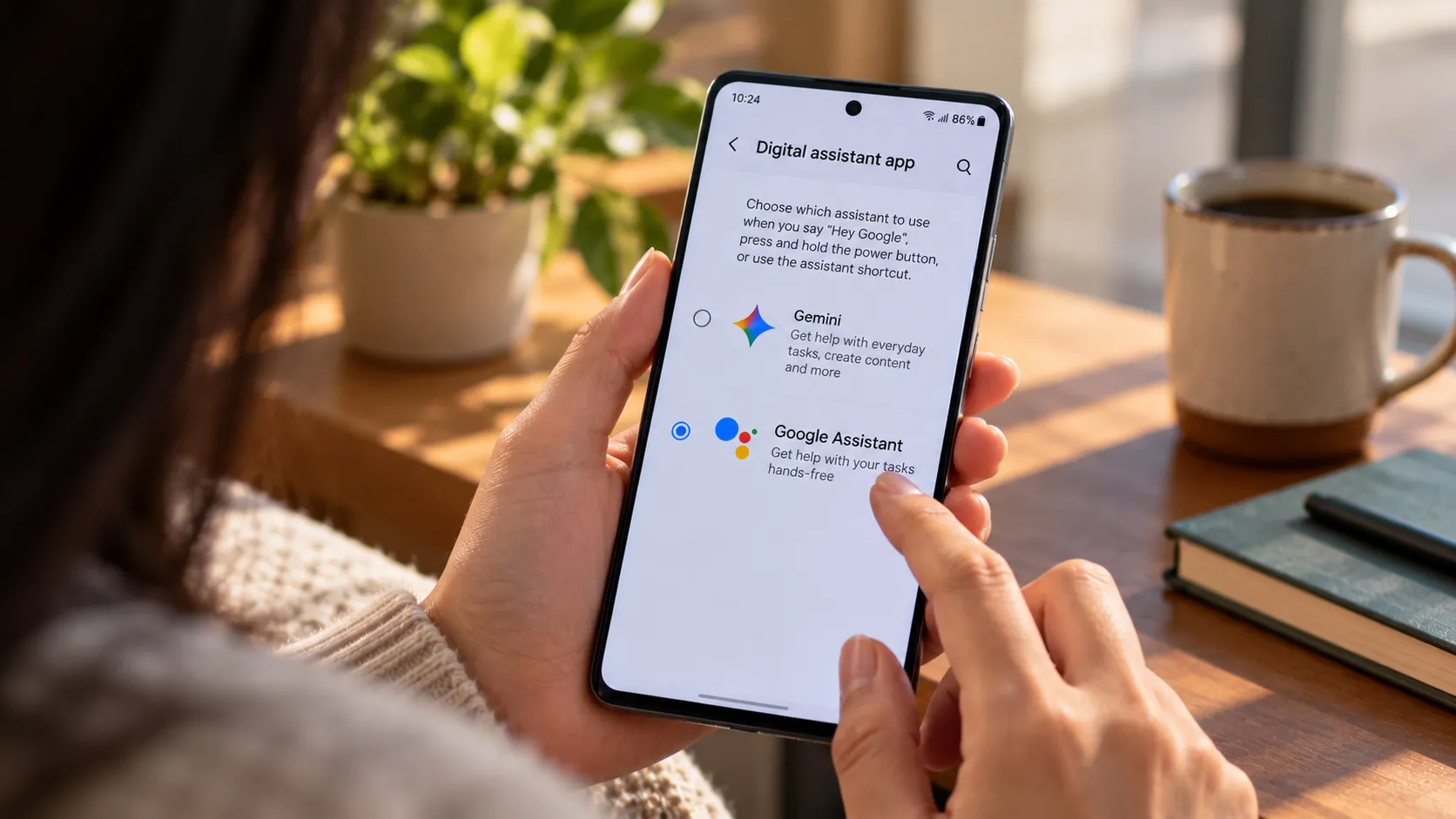
The most visible changes came at I/O 2025 when Google One AI Premium transformed into "Google AI Pro", keeping that familiar $19.99 monthly price tag. But here's where Google's long-term thinking becomes clear – they also introduced "Google AI Ultra" at a substantial $249.99 per month, signaling their intent to capture both mainstream and enterprise markets. Meanwhile, Google pushed back their timeline for fully replacing Google Assistant with Gemini to 2026, extending what was originally planned as a 2025 transition.
Why Google's playing the long game with Gemini
This measured approach might seem puzzling given the AI arms race, but it reveals Google's understanding of what's actually at stake. The company wants the transition to be completely seamless for users, without any technical issues – a smart strategy when you consider that Google announced an ambitious vision to fundamentally change how smartphones work, moving from simple voice commands to AI that can reason and understand context deeply.
This cautious strategy becomes more compelling when you look at what Google has built underneath. The platform has reached approximately 450 million monthly active users with 35 million daily users, with engagement metrics that suggest genuine utility rather than novelty – 45% increased session time and an average of 11.4 minutes spent on the platform. Even more telling, 61% of daily interactions happen on mobile devices, with mobile app usage growing 210% year-over-year.
What makes these numbers particularly significant is the technical foundation supporting them. Gemini handles multiple data types natively within a unified framework, processing text, images, code, audio, and video simultaneously – not as separate capabilities bolted together, but as an integrated system. The ecosystem integration runs deep too, with seamless connections to Calendar, Docs, Sheets, and Gmail, giving Google a substantial advantage over competitors working through limited APIs. With Gemini 3 Pro representing their most advanced reasoning model for complex coding and problem-solving tasks, we're seeing AI that can handle genuinely sophisticated workflows rather than just responding to simple queries.
The hidden evolution changing everything
Here's what most people miss about Gemini's development: Google operates what researchers call a "hidden release cycle" that fundamentally differs from traditional software updates. These aren't one-off events but iterative, frequent releases that sometimes arrive as "flash" drops, changing how the model sources, summarizes, and surfaces content on what feels like a weekly basis.
This rapid iteration strategy has enabled Gemini to move from experimental assistant to dominant generative search layer in under two years. The scale is remarkable – by Q2 2025, Gemini was powering 21% of global generative AI search interactions and driving a 28.9% traffic increase to gemini.google.com. The Gemini web app is available in 230+ countries and the platform supports 70+ languages (per Google support), demonstrating Google's commitment to global reach rather than English-first development.
But this constant evolution creates real challenges for users and businesses. Practitioners report reliability gaps including hallucinations on complex tasks, a January 2025 knowledge cutoff, and latency spikes, despite acknowledging improvements in coding performance and agent capabilities. The technical architecture means the model should be reserved for high-value, high-complexity workflows, with cheaper models handling routine traffic.
Most importantly for businesses and developers, model choice is no longer a one-time platform decision but an ongoing optimization problem. You can't simply choose Gemini and forget about it – you need systems that treat foundation models as pluggable components that can be swapped as better options emerge.
Regulatory pressure and privacy implications
Google's aggressive Gemini rollout hasn't escaped regulatory attention, particularly in Europe. The EU launched a formal antitrust investigation into Google's generative AI practices, examining whether Google is abusing its market position by favoring Gemini-powered services and leveraging privileged web data access. The investigation focuses on whether Google's integration of AI Overviews into Search crosses into anticompetitive territory.
For individual users, the privacy implications are becoming increasingly complex and concerning. Google recently changed Gemini to access data from third-party apps on Android phones, with this access continuing even when users disable Gemini Apps Activity. Even when you try to limit data collection, Google's approach remains extensive – disabling Gemini Apps Activity limits chat storage to 72 hours, but Google still retains some data during that period.
The data retention policies reveal the scope of Google's monitoring. Google stores user data in Google Accounts for 18 months by default, and a subset of chats are reviewed by human reviewers for quality assessment. Even supposedly anonymized conversations are disconnected from your account before being sent to service providers but are still retained for up to three years – a substantial retention period for conversations users might assume are private or temporary.
What this means for your digital future
Google's strategy with Gemini represents more than just building a better AI assistant – it's fundamentally reshaping how information flows through the internet. Rather than traditional link-based search, Google is moving toward AI-mediated responses that synthesize broader evidence across documents, images, and audio. This shift means the optimization landscape is moving from link-focused metrics to hybrid approaches emphasizing structured credibility and multimodal richness.
The technical capabilities emerging from this shift are genuinely impressive. Google's testing shows that Gemini can understand and process over 1000 pages of PDF documents, using native vision capabilities to transcribe tables, interpret complex multi-column layouts, understand charts, sketches, diagrams and handwritten text. This isn't just text processing – it's genuine document understanding that could replace substantial manual work.
Looking ahead, expect increased release velocity with modular announcements, deeper workspace integration, and multimodal dominance. Google appears positioned for broad Gemini 3.0 availability in Q1 2026, with potential previews tied to Android 16 releases in late 2025.
Your roadmap for an AI-first future
Google's message with Gemini is essentially this: embrace constant change in exchange for increasingly powerful capabilities. Features like Gemini Live and complex question-answering make it significantly better than the old Assistant, but you're trading predictability for power.
The pricing strategy reveals Google's broader ambitions. While Google AI Pro maintains that accessible $19.99 monthly price, Google AI Ultra at $249.99 per month targets enterprise and power users willing to pay substantially more for advanced capabilities. Ultra subscribers get features like Deep Think with 10 prompts per day using a 192,000 token context window and Project Mariner, a browser agent research prototype that allows performing 10 tasks simultaneously.
The central question isn't whether AI assistants will become more capable – it's whether you're comfortable with Google's vision of an AI-first future where the assistant becomes the default way to handle daily tasks and leverage data from various apps. This transformation goes far beyond replacing Google Assistant; Google is creating an AI layer that could mediate most of your digital interactions.
PRO TIP: If you want to maintain some control in this evolving landscape, pay close attention to privacy settings, understand the pricing tiers, and prepare for a future where AI assistants function less like tools and more like digital companions that never quite stay the same. Whether that prospect excites or concerns you probably depends on how much you trust Google with an AI-mediated version of your digital life – and how comfortable you are with a relationship where the terms keep evolving on Google's schedule.









Comments
Be the first, drop a comment!