



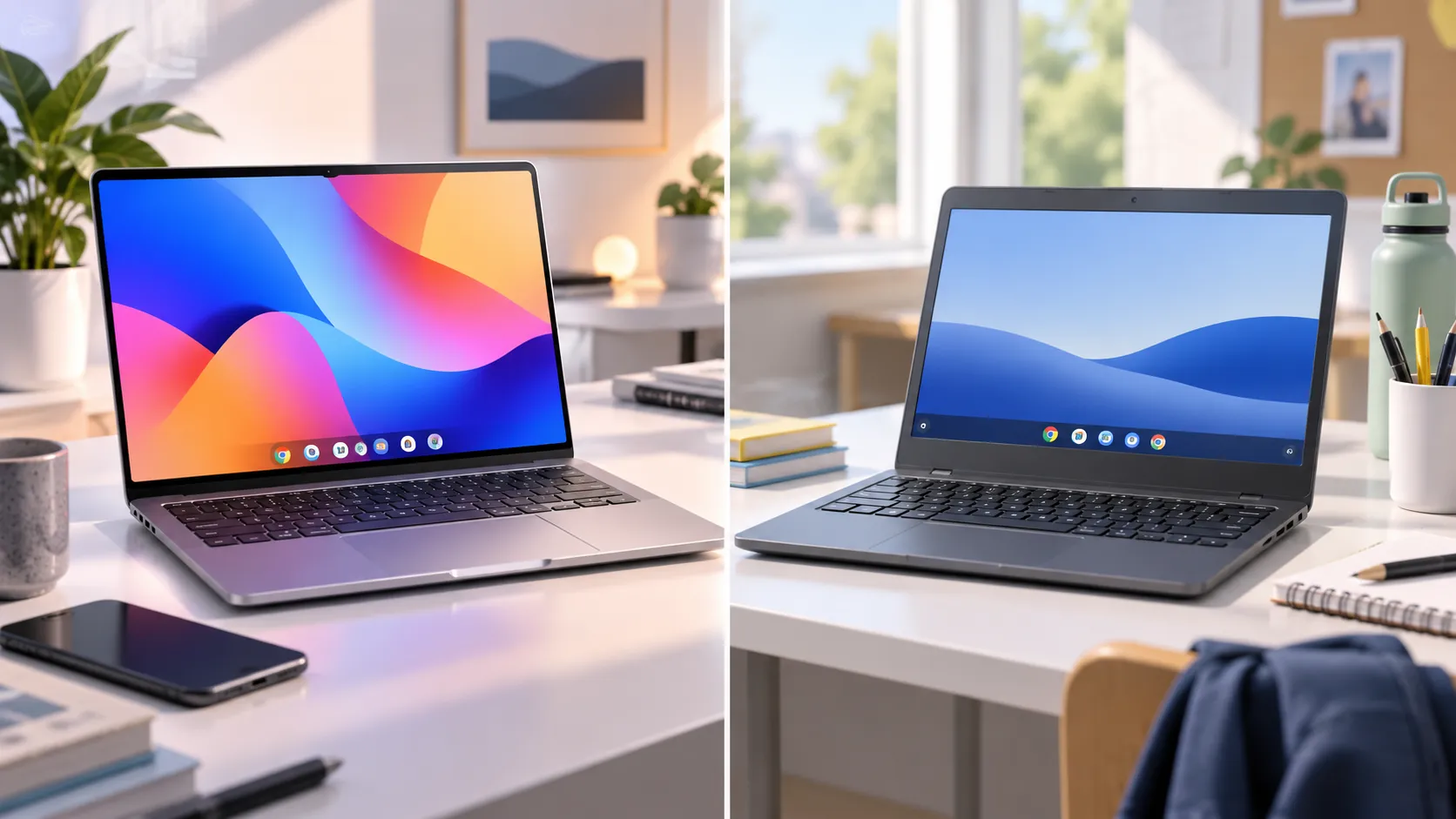
Googlebook preorders opened September 21, and the first laptops now start at $899.
Google has also filled in several of the blanks that were still open before launch: five manufacturers have models coming, the first devices reach US stores October 4, and buyers can order through the Google Store, Best Buy, and other select retailers, according to Google's launch announcement.
That ends months of Google describing the laptops only as arriving "later this year" or "this fall." The company's original May announcement introduced Googlebook as a new category built around Android, ChromeOS foundations, and Gemini Intelligence without giving prices, model names, or a firm retail date.
Those details are now much clearer. This article covers when Googlebooks arrive, which manufacturers are building them, what the Gemini-powered features are supposed to do, and what buyers should still check before choosing a model.
When Can You Pre-Order Googlebook Laptops?
Preorders opened Monday, September 21 at 9 a.m. ET, the date Google had emailed to people who signed up for updates and that 9to5Google reported ahead of launch.
The preorder window is now live through the Google Store, Best Buy, and other select retailers.
Google says devices reach shelves October 4 in the US. Canada, the UK, Ireland, France, Germany, and Australia follow on October 5.
That gives buyers a much firmer timeline than the original "this fall" language. A preorder still doesn't guarantee that every model or configuration ships on exactly the same day, so anyone ordering should check the delivery estimate attached to the specific laptop before paying.
Which Brands Are Making Android-Based Googlebook Laptops?
Googlebook isn't one device made by Google. It's a category built with manufacturing partners: Acer, ASUS, Dell, HP, and Lenovo.
Google has now confirmed five flagship launch models, with prices starting at $899:
Acer Googlebook 14: starts at $899. It is the only convertible in the initial lineup and uses Intel Core Ultra Series 3 processors.
Dell XPS Googlebook: starts at $1,199 and uses Qualcomm's Snapdragon X Elite platform.
ASUS Googlebook 14: starts at $1,299, with Intel Core Ultra processors and a 14-inch 2.8K OLED touchscreen.
HP Googlebook 14: starts at $1,299, with Snapdragon X Elite processors and up to 32GB of RAM.
Lenovo Googlebook 15: starts at $1,299, with an Intel Core Ultra 5 Series 3 processor and a 15.3-inch OLED touchscreen.
Google's hardware overview says every launch model includes at least 16GB of RAM, a touchscreen, a backlit keyboard, and a dedicated NPU capable of more than 45 TOPS.
Processor choice varies by manufacturer, with Intel Core Ultra Series 3 and Qualcomm Snapdragon X Elite chips represented at launch. Google says MediaTek-powered Googlebooks are also coming later.
What You're Actually Pre-Ordering: Gemini and Android Integration
Google's pitch still centers on Gemini features alongside the hardware itself. The company describes Googlebooks as laptops designed for Gemini Intelligence, built on an Android technology stack combined with desktop foundations from ChromeOS.
The headline feature remains Magic Pointer. Wiggle the cursor and Gemini appears in context with whatever is on the screen. Google says it can handle tasks such as translating selected text, organizing calendar information, or acting on content without forcing users into a separate chatbot window.
Create My Widget also survived from the original preview, though Google now calls it Create My Widget rather than "Create your Widget." Users describe what they want in natural language and the system generates a desktop widget that can surface relevant updates.
Google has also added more detail around phone integration. Signing in can bring an Android phone's settings, saved passwords, Wi-Fi networks, and messages onto the laptop.
The Files app can view, search, and open files and photos stored on the phone without requiring a manual transfer. Continue On lets supported tasks move from an Android phone to the Googlebook, while Cast My Apps can stream and control a phone app inside a desktop window.
A new feature called Rambler turns spoken thoughts into organized notes, headers, checklists, and other formatted text.
Every Googlebook also carries a Glowbar on the lid. Google now says it isn't purely decorative: it shows startup animations, visualizes battery charge, reacts while Gemini is active, and can be accessed by third-party developers for custom animations.
What the Launch Hardware Actually Includes
Google has now answered most of the broad hardware questions that were still unknown before September 21.
Every launch Googlebook has at least 16GB of RAM, with some configurations reaching 32GB. Storage starts at 256GB or 512GB depending on the model.
Display options reach 2.8K resolution, with OLED panels on several of the launch devices. Google says battery life can reach up to 14 hours of video playback or 16 hours of web browsing, although actual results will vary by laptop and workload.
Intel and Qualcomm supply the initial processors, and all launch devices include dedicated NPUs for on-device AI work.
Google also says Googlebook OS will receive feature drops and automatic software updates for up to 10 years.
The platform supports a desktop-class Chrome browser with extensions, Android apps through Google Play, and an isolated Linux environment for developer tools.
What Googlebook Costs and Where to Buy
Pricing now starts at $899 rather than remaining an open question.
The Acer Googlebook is the entry point at $899, while Dell's XPS Googlebook starts at $1,199. ASUS, HP, and Lenovo launch models start at $1,299.
Google's store listing currently carries multiple Googlebook models, with Best Buy and other retailers participating as well.
Every Googlebook purchase also includes 12 months of Google AI Pro, which Google says comes with 5TB of cloud storage and expanded Gemini access. Google is also bundling limited subscriptions or offers for services including YouTube Premium and creative software.
Those extras shouldn't be treated as permanent parts of the hardware value, since promotional offers can expire or vary by market.
What Still Needs Independent Testing
The biggest unknowns are no longer price, launch date, or basic specifications. They're how well Google's software actually works once people use it every day.
Magic Pointer looks useful in Google's demonstrations, but responsiveness and accuracy still need testing across ordinary apps rather than curated examples.
The same applies to Continue On, Cast My Apps, phone-file access, and Gemini's ability to act on onscreen context. Google now explains what those features are supposed to do, but real-world reliability will matter more than the feature list.
Battery claims also need to be checked model by model. Google advertises up to 14 hours of video playback and 16 hours of web use across the category, but the five launch laptops use different processors, screen sizes, batteries, and display technologies.
Software compatibility is another practical question. Googlebook combines Android apps, web apps, Chrome extensions, and Linux tools, but buyers coming from Windows or macOS should verify that the specific desktop software they depend on has a workable equivalent.
What to Check Before Pre-Ordering
The September 21 date is no longer the thing to wait for. Preorders are already open.
Instead, compare the actual model specifications and delivery estimates before committing. The $899 Acer establishes the floor, but moving to Dell, ASUS, HP, or Lenovo quickly pushes the starting price above $1,000.
Also check which processor architecture the laptop uses. The launch lineup includes both Intel x86 and Qualcomm ARM systems, which can matter for Linux tools, peripheral compatibility, and specialized software.
Finally, don't buy solely around Gemini features before independent reviews establish how reliably they work outside Google's demos. The hardware lineup, pricing, and release dates are now confirmed. The remaining question is whether the Android-and-Gemini experience is good enough to justify choosing a Googlebook over an established Windows laptop, Mac, or Chromebook.






Comments
Be the first, drop a comment!