



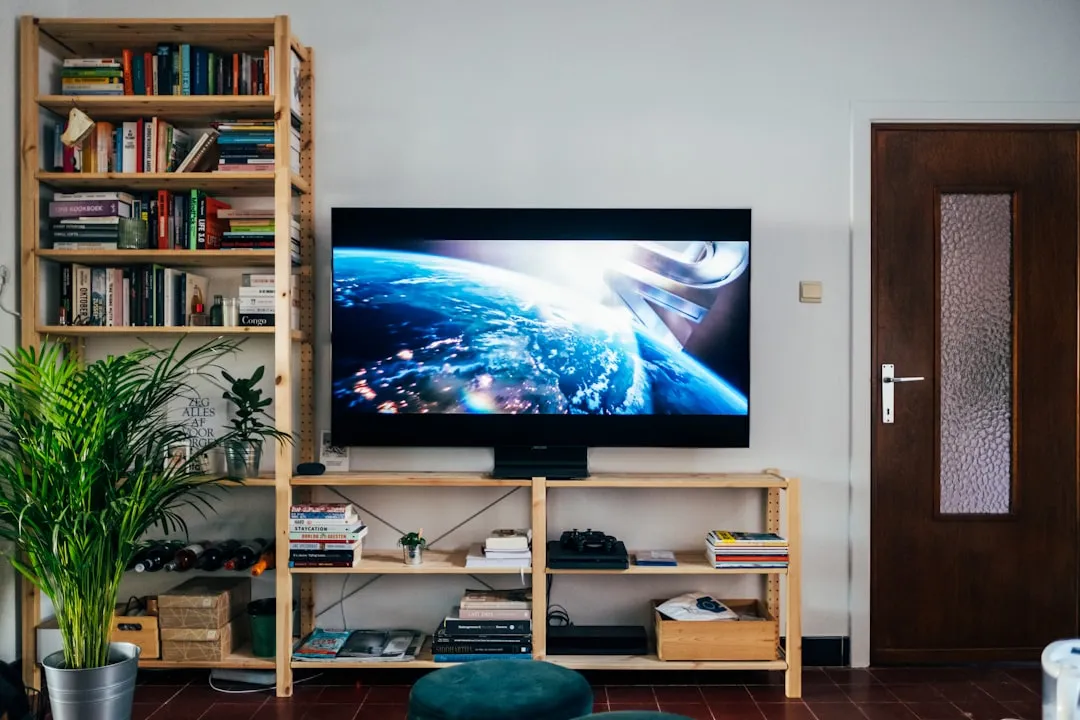
Picture this: you've just finished testing the latest Google TV projectors, expecting to write about image quality and smart features, when something entirely unexpected hits you. The safety implications of having these massive displays in family spaces suddenly become impossible to ignore.
As someone who's spent considerable time evaluating projection technology, I've always focused on the usual suspects—brightness, color accuracy, and smart platform integration. Modern projectors like the JMGO N3 deliver impressive 1,800 ISO lumens with 110% BT.2020 color coverage, while Google TV integration eliminates the need for external streaming devices. The TCL C1 projector runs native Google TV with automatic focus and keystone correction, making setup remarkably straightforward. But during my recent testing sessions, a completely different concern emerged that made me question everything I thought I knew about home theater safety.
During one test session, I watched a 6-year-old instinctively walk directly through the light beam while chasing their sibling—something that would never happen with a wall-mounted TV. That moment crystallized how fundamentally different these devices are from traditional displays when it comes to family safety considerations.
Why projector placement creates unexpected hazards
The flexibility that makes projectors so appealing also introduces risks that traditional TVs simply don't present. Ultra-short-throw models can project up to 200-inch images while sitting just inches from walls, fundamentally changing how we think about screen positioning in family spaces.
Standard projectors require careful positioning at specific distances from screens, often involving ceiling mounts or elevated surfaces that create potential falling hazards. The JMGO N3's gimbal base offers 360-degree rotation and 160-degree tilt capability, which sounds incredibly convenient until you witness the reality: children are instinctively drawn to anything that moves or spins.
In my testing, this seemingly innocent 360-degree rotation created an irresistible "spinning toy" effect that drew children away from safe viewing positions toward the device itself. Portable models like the TCL C1 can swivel 285 degrees for wall and ceiling projection, turning these sophisticated entertainment devices into tempting targets for curious hands—with potential tipping hazards that don't exist with stationary wall-mounted displays.
PRO TIP: If you're considering a projector with moving parts, plan for secure placement at least 4 feet above floor level or behind furniture that creates a natural barrier from foot traffic.
The laser light safety question nobody talks about
Here's where things get genuinely concerning, and frankly, it's something I wish manufacturers addressed more directly in their marketing. Modern projectors use laser light sources rated for over 30,000 hours of operation, delivering brightness levels that would have been unimaginable in consumer devices just a few years ago.
Hisense lists the L9Q at up to 5,000 ANSI lumens and claims 110% BT.2020 coverage; several reviews note it as one of the brightest consumer UST projectors, while laser projectors like the Epson LS800 deliver 4,000 ANSI lumens. To put these numbers in perspective, that's brighter than most office overhead lighting—concentrated into a focused beam that maintains consistent intensity throughout its decades-long lifespan.
What struck me during testing wasn't just the impressive image quality, but how easily family members could position themselves directly in the light path. Unlike traditional lamp-based projectors, laser models maintain consistent brightness throughout their lifespan, meaning there's no gradual dimming as a natural safety buffer. Even the supposedly "portable" Dangbei Atom's 1200 ISO lumens from ALPD laser technology outputs significantly more concentrated light than most families realize.
I found myself unconsciously squinting when walking between the projector and screen—and that was just peripheral exposure. The challenge is that laser projectors don't give obvious warning signs that older lamp-based models did. They're consistently, intensely bright from power-on until they finally wear out, which could be decades from now.
Bottom line: These aren't toys. Laser projectors are assigned safety classes under IEC 60825-1 (Class 1 → 4); consumer projector classifications vary by design — check each model's IEC/label for its class, which means direct eye exposure should be avoided, especially for children whose natural response is to look directly at bright lights.
Screen size psychology and family dynamics
Here's something I didn't anticipate when I started testing these devices: the ability to create cinema-scale experiences fundamentally changes viewing behavior in ways that create new safety considerations. Projectors can display images ranging from 40 to 180 inches, with some models supporting up to 200-inch projection sizes.
The TCL C1 projects 40-inch images at 47 inches distance and 65-inch images at 75 inches, but here's what the specs don't tell you: these massive displays unconsciously draw viewers closer than they'd ever sit to a traditional TV.
During family test sessions, I watched children migrate toward the 150-inch projected image, sometimes ending up much closer than recommended viewing distances. Unlike commercial theaters with projection booths safely isolated behind glass, home projectors put that same powerful light source at coffee table height, right in your living space.
There's a magnetic quality to these large projected images that makes viewers want to get closer to "feel" like they're in the action. Professional testing reveals that projectors require careful consideration of viewing distance and ambient lighting, but most families aren't thinking about "professional guidelines" when they're settling in for movie night.
What this means for your family room setup
The testing experience taught me that these devices need to be approached more like permanent installations than casual entertainment gadgets. Professional projector evaluation involves extensive testing of brightness, contrast ratios, and input lag, but real-world family safety considerations often get overlooked in technical reviews.
Here's what I learned from extensive testing that goes beyond any spec sheet: placement matters more than pixel count. Consider the natural traffic patterns in your room, where curious children might wander, and how that bright laser beam intersects with daily family life.
Key safety recommendations from my testing:
Secure mounting: Keep moving parts out of reach with ceiling mounts or furniture placement that creates natural barriers
Light path planning: Map out where the projection beam travels and establish "no walking" zones during viewing
Family guidelines: Have clear conversations about not looking directly into the projector lens or walking through the light beam
Viewing distance rules: Maintain manufacturer-recommended distances—typically 1.5-2x the screen width for optimal safety and comfort
Modern projectors deliver exceptional image quality with smart platform integration, making them more appealing than ever—which is exactly why we need to be more thoughtful about integration. You wouldn't casually place a powerful shop light in your living room without considering where that beam might end up, right? The same logic should apply to laser projectors.
Projectors have become cost-effective ways to create immersive theater experiences at home, but they require more thoughtful placement than traditional displays. The goal isn't to avoid these impressive devices, but to approach them with the same safety mindset we'd apply to any powerful home technology. Your family's safety is worth taking the extra time to plan proper installation and usage guidelines. After all, the best projection experience is one where everyone can enjoy the show without any unexpected surprises.




Comments
Be the first, drop a comment!