





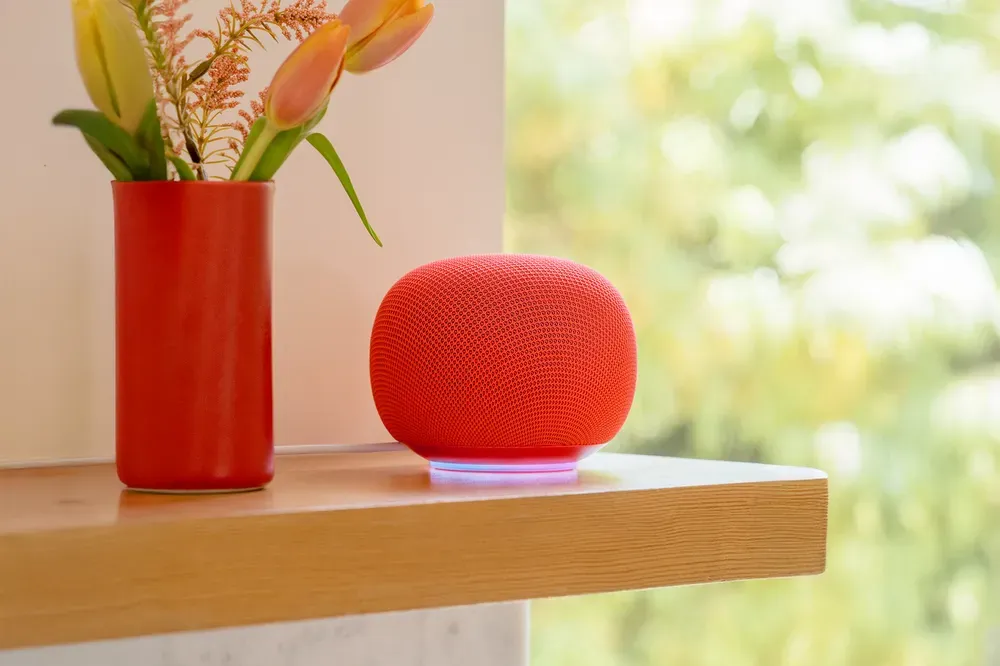
Some Google Home and Google Nest speakers are refusing to respond or taking unusually long to do so, with multiple users reporting the same failure pattern, and the symptom profile points more toward a possible backend service disruption than widespread broken hardware, Android Police reports. The scope remains unclear, but the reports are specific enough to be diagnostically useful.
The core symptom: affected speakers are hearing voice commands normally but failing to complete them. Responses arrive after roughly 30 seconds or time out altogether. The problem is showing up on brand-new hardware and older Nest devices alike, which rules out aging equipment as the cause.
Google has not confirmed an incident. At the time of writing, Downdetector's Gemini page showed report volume above baseline, but that signal alone does not confirm a mass outage; Android Police notes a useful signal of possible service disturbance, not confirmation of one. People searching for a Google Home outage this morning are finding the same reports across Reddit and tech forums.
Google Nest not responding: what the reports show
The most diagnostically useful detail is that speakers are waking up normally and registering requests. That suggests the microphone and wake-word path are working, while the failure may be occurring further downstream.
The issue spans device generations. At least two reports involve brand-new Google Home speakers behaving identically to older Nest hardware at the same time, according to Android Police. When new and old devices fail the same way simultaneously, the most plausible shared factor is the service running behind them, though without official confirmation from Google, that remains an inference rather than a confirmed fact.
A smaller number of users are reporting a different failure mode: speakers dropping offline entirely with no apparent cause. That's a separate symptom, but one that could also fit a service-side problem, though it may have local-network causes too.
What remains unknown: how many devices are affected, whether the disruption is regional or global, and which specific features voice responses, routines, smart home control are impacted beyond basic queries.
Google Home not responding: how to tell if it's the service or your setup
A Google Home speaker that hears a request but cannot deliver a response is most likely hitting a failure in the cloud call, not a local hardware fault. In general troubleshooting terms, a device fully connected to Wi-Fi can still time out if Google's servers reject, block, or fail to return the request. Being on Wi-Fi only confirms the device reached your local network, nothing more.
Google's infrastructure can experience partial disruptions where voice input registers correctly, but result delivery fails, or where only certain features break (music, routines, smart home control) while others still respond. That uneven failure pattern matches what users are describing today.
The cross-device, cross-user nature of today's reports reinforces the inference. Identical symptoms across users who share no hardware, network, or account suggest the service itself is the common thread.
The split test: Disable Wi-Fi on your phone and run the same voice command through Google Assistant on mobile data. If it fails there too, the issue may be account-level or service-side rather than isolated to the speaker. If your phone works fine on mobile data but the speaker is still struggling, the issue may be specific to your home network path or the device's sign-in state, worth investigating once the broader situation is clearer.
Factory resetting your hardware is unlikely to help right now. The "hears you but won't answer" failure mode most commonly is a cloud request problem, not a device defect, and a reset wipes the device's setup without touching anything service-side. Save that step for persistent failures after the incident window closes.
Two other things are worth checking while you wait. First, check whether any Google security prompts or expired account sessions on your phone need attention, because authentication problems can block household-device requests without an obvious speaker error. Second, DNS filtering, VPNs, or router security settings can allow general internet access while blocking the specific endpoints Google Home needs, and these are occasionally the actual culprit even when everything else looks fine.
Why today's disruption lands differently
This isn't arriving in a vacuum. Only a few weeks have passed since Gemini's June 10, 2026 outage, and before that, Google's own product leadership acknowledged the platform had been deteriorating. That sequence matters.
The user frustration behind that acknowledgment has been accumulating for months. A February Android Authority reader survey reportedly found roughly seven in ten respondents reporting frequent reliability issues with Google Home. That's audience feedback rather than a controlled study, but it tracked consistently with what community forums were showing at the time, and it predates today's problems by four months.
The recent development pace adds more texture to the picture. Earlier this year, Google shipped an early access update targeting speed improvements for Gemini voice commands, alarms, and media playback, 9to5Google reported. About a month before that, a separate update required Apple's direct involvement to restore Apple Music playback that had broken on smart speakers.
That Apple Music fix is worth pausing on. A playback integration breaking badly enough to require coordination between two companies to restore is a sign of how many interdependencies this platform currently has. Heavy backend development and stable day-to-day reliability are genuinely difficult to run simultaneously, and the pattern of recent updates suggests Google is deep in the former while struggling with the latter. Whether today's response failures are related to last week's update is unknown; the timing is notable, not conclusive.
The February survey data from Android Authority is also worth contextualizing. Google's chief product officer for Google Home and Nest had, months before that survey, publicly committed to making the platform more reliable. Four months after the survey, with another outage-adjacent event unfolding, that commitment still appears to be a work in progress.
What to do now
Run the mobile data split test. If it confirms a service-side problem, there's nothing locally to fix; waiting is the right call. If it points back to your network or device, that's a solvable problem, but address it only once you've confirmed that's actually what you're dealing with.
Google had not issued an official statement as of publication.
Google has recently been shipping voice-reliability fixes and Gemini for Home performance updates. Whether today becomes a footnote or adds to a longer documented pattern is something the next few days should clarify.




Comments
Be the first, drop a comment!