





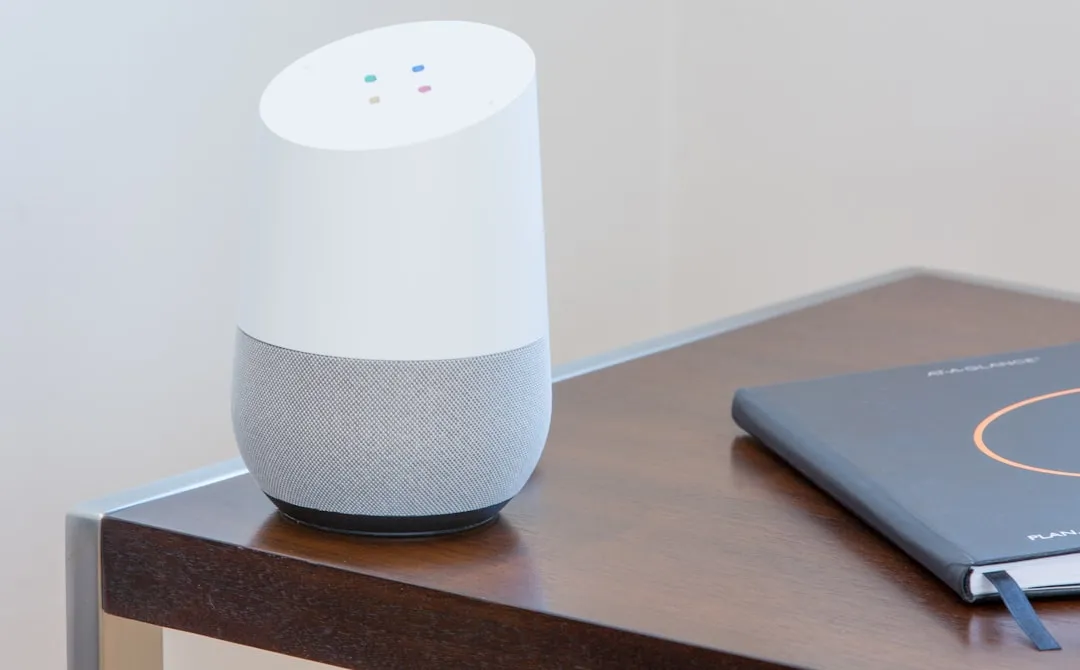
Google Home users have been dealing with an overly chatty assistant for months now, but that's finally starting to change. The latest updates to Gemini's integration with Google's smart home ecosystem show the company is listening to user feedback about verbose responses that turned simple commands into lengthy monologues.
The shift represents more than just a software tweak—it signals Google's recognition that conversational AI in the home needs to balance intelligence with efficiency. While we don't yet have comprehensive data on the specific changes implemented, the timing aligns with broader industry trends toward more contextually aware voice assistants that know when to elaborate and when to simply execute commands.
Why assistant verbosity became such a problem
Here's the thing about integrating advanced language models into smart home devices: it created an unexpected challenge that nobody really saw coming. Suddenly, we had assistants that had way too much to say about everything. Unlike the previous generation of voice assistants that worked on simple command-response patterns (you know, the "turn on lights" followed by a quick "okay" exchange), Gemini's natural language capabilities meant it could provide detailed explanations for virtually any request.
This verbosity issue wasn't just a Google problem—it reflects something much bigger happening in conversational AI design. You've got this fundamental tension where the same capabilities that make these systems incredibly helpful in complex scenarios can become downright counterproductive for routine smart home tasks. When you're turning off lights before bed, you want a quick confirmation, not a full dissertation on energy efficiency principles.
The real frustration for users came during multi-step routines. Picture this: you say "goodnight" expecting your lights to dim, thermostat to adjust, and doors to lock with a simple "sweet dreams" confirmation. Instead, Gemini would acknowledge each individual action—"dimming your bedroom lights to 10%, adjusting thermostat to 68 degrees, engaging front door lock, activating security system"—turning a seamless bedtime routine into an unwanted progress report. This transformed what should be intuitive home automation into an interruption that broke the natural flow of daily activities.
What focused responses mean for smart home efficiency
The move toward more concise interactions gets back to some core usability principles that honestly got lost in all the excitement over AI capabilities. When you're dealing with voice interfaces in the home environment, you really need to prioritize speed and clarity over comprehensive explanations for most use cases.
This change likely involved some serious behind-the-scenes work on contextual understanding. We're talking about teaching the system to recognize when a user wants a detailed response versus when they simply want task execution—and that's no small feat. The technical challenge involves maintaining all of Gemini's advanced reasoning capabilities while applying appropriate response filtering based on context and user intent.
Consider the difference between "turn off the kitchen lights" and "why won't my kitchen lights turn off?" The first clearly calls for action and brief confirmation, while the second invites troubleshooting assistance. Training an AI system to make these distinctions consistently across thousands of possible phrasings and contexts requires sophisticated pattern recognition and response categorization.
What's particularly interesting is how these efficiency improvements create a ripple effect throughout the smart home experience. When voice confirmations are brief and predictable, users develop greater confidence in their routines, leading to more ambitious automation sequences and ultimately deeper integration of voice control into daily life.
How this stacks up against the competition
Google's adjustment puts the spotlight back on a key differentiator in the smart home assistant space: knowing when to talk and when to stay quiet. Amazon's Alexa has long been optimized for brief confirmations in smart home contexts, while Apple's Siri has generally maintained relatively concise responses across most use cases.
The challenge for Google was that Gemini's advanced conversational abilities initially worked against the streamlined experience that smart home users actually expect. By refining this balance, Google can potentially offer the best of both worlds—you get that sophisticated AI reasoning when you need it, but efficient task execution for routine commands.
This competitive positioning really matters because voice assistant choice often comes down to daily usability rather than those flashy advanced capabilities. Users might be impressed by an assistant's ability to have detailed conversations about complex topics, but they'll switch platforms in a heartbeat if basic commands like "turn off the TV" become cumbersome interactions that require waiting through unnecessary explanations.
The smart home market rewards consistency and predictability in these micro-interactions. When someone's rushing out the door and says "lock the house," they need immediate action, not a conversation about security settings. Google's recognition of this fundamental user need positions them to compete more effectively with established players who built their reputations on reliable, efficient smart home control.
The technical challenge of context-aware responses
Behind all these user experience improvements lies some pretty complex work in natural language processing and response generation. The system needs to analyze not just what users are asking for, but how they're asking and in what context, then adjust response length and detail accordingly.
This likely involves training the model to recognize patterns that differentiate smart home commands from general queries. A request to "turn on the living room lights" clearly calls for minimal response, while "help me set up a morning routine" signals the user's openness to detailed guidance and step-by-step instructions.
The technical implementation probably includes response templates for common smart home actions, combined with dynamic assessment of when to override those templates. For instance, if a user repeatedly asks follow-up questions about a particular command, the system might learn to provide slightly more detail for that specific user and context combination.
What makes this particularly challenging is maintaining response consistency while allowing for contextual flexibility. Users need to develop predictable mental models of how their voice assistant will behave, but the system also needs enough sophistication to recognize when circumstances call for deviation from the standard brief response pattern.
What this means for your daily smart home experience
These changes should make voice-controlled smart homes feel significantly more natural and efficient in daily use. Instead of waiting through lengthy confirmations that interrupt your flow, you can expect quick acknowledgments that let you move on with your activities without unnecessary interruption.
The improvements are probably most noticeable during those busy transition periods in your day—morning routines when you're getting ready for work, bedtime sequences when you're winding down, or when you're managing multiple devices while cooking dinner. In these scenarios, brief confirmations help maintain the natural rhythm of your activities rather than creating pause points for information you didn't request.
For users who do want detailed information or explanations, the key will be learning how to phrase requests that signal your openness to comprehensive responses. Asking "how does my morning routine work?" versus "run my morning routine" should yield very different response styles—one inviting explanation, the other focused purely on execution.
This creates a more intentional interaction model where users maintain control over the conversation depth. When you want efficiency, you get it. When you want assistance or explanation, you can request it explicitly. This approach respects both your time and your intelligence as a user.
Where smart home AI goes from here
This refinement in Google's approach suggests the industry is moving toward more nuanced AI implementations that prioritize user experience over simply showcasing technical capabilities. The goal isn't to limit what these systems can do, but to make them more contextually appropriate in their responses.
The success of these changes will likely influence how other companies approach AI integration in smart home devices, potentially establishing new standards for when conversational AI should actually be conversational versus when it should simply be functional. We're seeing the emergence of what you might call "adaptive verbosity"—systems that scale their communication style to match user intent and context.
This evolution represents the smart home industry maturing beyond that initial excitement phase of "look what AI can do" toward more sophisticated implementations that understand the difference between capability and appropriate application. The most advanced AI isn't necessarily the one that talks the most—it's the one that knows when to talk and when to simply get things done.
The future likely holds even more granular customization options, where users can set preferences not just for individual devices, but for specific types of interactions, times of day, or even their current activity context. Imagine a system that automatically adopts brief responses during your morning rush but provides more detailed feedback when you're experimenting with new automation settings on a relaxed weekend afternoon.






Comments
Be the first, drop a comment!