





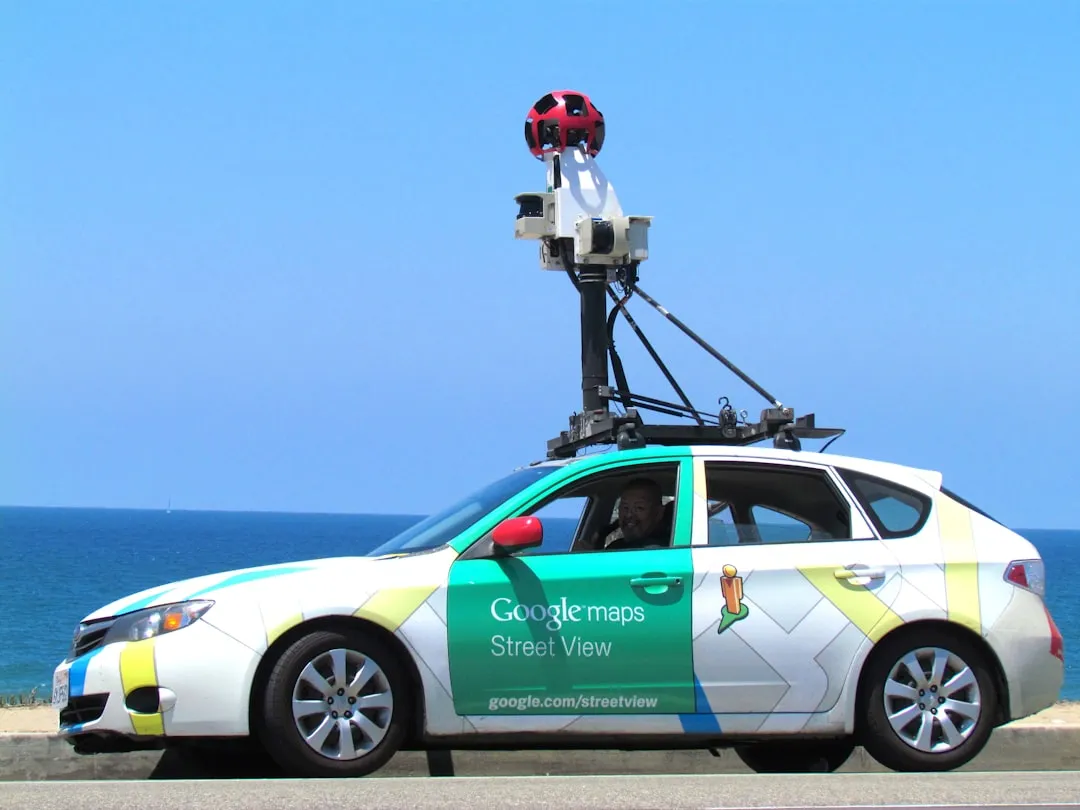
Google Gemini in Cars Explained: What Your Vehicle Actually Gets
Google announced this week that Gemini is now broadly available in Android Auto, covering more than 250 million compatible vehicles already on the road. That number is the headline. The more important detail is what it obscures: the version most drivers will get is meaningfully different from the one that enables genuinely new capabilities.
Take one concrete example of the gap. An Android Auto user can tell Gemini to place a DoorDash pickup order mid-drive, specifying customizations by voice, then confirm with a single tap. A driver in a Google built-in vehicle can ask Gemini to identify an unknown warning light on the dashboard, or tell them whether a TV they're about to pick up will fit in the trunk. Same name, different system, different access.
The distinction matters because Google is framing this as something larger than a feature update. At I/O 2026 this week, Google's keynote positioned the in-car push as part of what it calls the "agentic Gemini era," a shift toward AI that completes tasks on a user's behalf rather than simply answering questions. The car is one of the first places most people will encounter that shift in a context where attention is not optional.
Two tiers: which version of Google Gemini car integration your vehicle gets
The split comes down to platform architecture. Android Auto projects your phone's interface onto the car's display; Google built-in is integrated at the system level, giving Gemini access to vehicle data that a phone-projected assistant cannot reach.
Android Auto's Gemini is the wider rollout, covering more than 250 million compatible vehicles. It handles conversation, brainstorming, and contextual task help, but operates entirely from what your phone knows. Vehicle-specific data is out of reach.
The Google built-in version goes further. Available in more than 100 models across 16 automotive brands and currently rolling out, it integrates Gemini at the system level, enabling capabilities that phone projection structurally cannot support. That's the architectural difference that separates the two tiers.
For drivers in neither category, Gemini Intelligence features are planned to expand across Android devices, including watches, glasses, laptops, and cars, later in 2026, starting first with Samsung Galaxy and Pixel phones this summer.
A quick breakdown of where things stand:
- Android Auto user: Conversational tasks, messaging help, and food ordering via voice are available now. Features are limited to what your phone knows.
- Google built-in vehicle: Car-aware answers, deeper Maps integration, and real-time lane guidance. This is where the system-level capabilities are; rollout is ongoing.
- Neither: This announcement doesn't yet apply to your drive. Watch for broader platform updates later in 2026.
Google has not specified which of the 16 brands or individual models receive which features first, and available materials are U.S.-focused. International availability is not addressed.
What Gemini can now do in the car and how it actually works
Android Auto: Conversational tasks and contextual messaging
The most concrete new Android Auto capability is third-party task completion. Google describes a scenario where a driver tells Gemini to place a DoorDash pickup order mid-drive, specifying customizations by voice, then confirms the order with a single tap before Gemini completes it.
That tap is worth noting. Confirmation is not fully voice-driven; it requires a physical interaction. That design choice has real implications for both usability and safety framing, and it tends to get lost in product announcements.
The other notable Android Auto feature is called Magic Cue. According to Google, it understands the context of a question, finds an answer using information from your text messages, email, or calendar, and offers to send a reply with the relevant details, all completable in a single tap. The practical implication: Magic Cue draws on personal communications to generate those suggestions, not just on what you've explicitly asked.
Google built-in: Vehicle-aware intelligence and Maps
On built-in vehicles, Gemini can answer questions specific to the car itself. Google cites identifying an unknown dashboard warning light and calculating whether a large item will fit in the trunk as representative use cases. These require system-level vehicle data. A phone-projected assistant cannot do them.
Google Maps on built-in vehicles is also getting live lane guidance. Per Google, the feature tracks the driver's actual lane position in real time and provides direction as lanes shift or exits approach.
Privacy and data access: what Google has and hasn't said
For some Gemini features on Android, Google has specified that connecting to personal data is strictly opt-in and can be disabled in settings. That's the stated approach for Autofill integration.
For Magic Cue's access to messages, email, and calendar in the car environment, Google's rollout materials do not publish equivalent disclosure. Whether that access is opt-in, how long context is retained, or where processing occurs are not addressed in available materials.
That omission is worth naming plainly. Magic Cue is one of the most capability-defining features in this rollout. Drivers will reasonably want to know whether it activates automatically or requires explicit consent. The honest answer from current sources: Google hasn't said clearly.
Three things worth confirming before using these features:
- Whether your specific model and region are supported Google's rollout timeline is "throughout the year," with no hard dates for most capabilities
- Whether contextual features like Magic Cue require explicit opt-in or activate by default
- Whether task confirmations can be completed hands-free or require a tap, since the answer affects both usability and safety assumptions
The capability leap is outrunning the evidence
The regulatory context here is not a verdict on Google's approach. It's a measure of how fast the technology is moving relative to the frameworks meant to assess it.
NHTSA has an active research program examining how in-vehicle technology affects drivers across distracted, drowsy, and combined conditions. The Federal Register notice, published two years ago, describes the scope as studying driver monitoring systems, defined as any in-vehicle technology that detects driver state and interacts through the vehicle's human-machine interface. That study does not evaluate Gemini or any specific conversational AI product. It represents regulators still building the baseline framework for assessing how these systems affect attention, not a judgment on any particular rollout.
Google's published materials for the in-car Gemini launch include no safety benchmarks, distraction data, or references to driver monitoring. The features are presented in terms of convenience and capability. Driver-state awareness doesn't appear in the framing.
The gap isn't necessarily sinister. A well-designed voice interface can reduce cognitive load by handling tasks a driver would otherwise attempt manually, finding a number, composing a reply, placing an order. That tradeoff is real and potentially meaningful. The honest problem is that neither Google's marketing materials nor the current research base provides enough to evaluate whether Gemini's agentic features are designed with that tradeoff in mind. That's the most important thing a driver considering these features doesn't yet know.
What to watch as the rollout widens
The vehicle-aware capabilities, Gemini drawing on car systems to answer questions no phone-projected assistant can handle, remain limited to the Google built-in fleet of more than 100 models across 16 brands. For the much larger Android Auto population, the rollout is real but the capability is shallower.
The broader shift is worth taking seriously on its own terms. Gemini placing orders, retrieving calendar context, and surfacing replies while you drive is not an incremental update. This is what Google means by "agentic," and the car is among the first places most people will encounter it somewhere that divided attention has real consequences.
Three things worth tracking as this rollout continues through 2026: independent hands-on assessments of how Magic Cue and task completion actually perform while driving, not just in product demos; OEM-specific disclosures about which models receive which features and on what timeline; and whether Google publishes clearer opt-in language for features that draw on personal communications in the car. The capability is real. Whether it's ready is still an open question.




Comments
Be the first, drop a comment!