



Google Gemini AI in Cars: GM Rolls Out to 4 Million Vehicles
General Motors this week began pushing Google Gemini AI to roughly 4 million eligible U.S. vehicles, upgrading the Google Assistant experience across 2022 model year and newer Cadillac, Chevrolet, Buick, and GMC models equipped with Google built-in. The update rolls out in phases over the air. No dealer visit required.
The upgrade touches how drivers interact with Google services inside the car: navigation, messaging, Gmail, media. It does not extend to how the car itself operates. GM and Google have described the rollout in terms of that app and services layer; neither company has detailed vehicle-control features as part of this release.
When Google first announced Gemini for cars with Google built-in nearly a year ago, it named the Lincoln Nautilus, Renault R5, and Honda Passport as early recipients, according to the Google blog. GM's phased deployment, spanning some 4 million vehicles, is by comparison the largest single Google built-in rollout announced to date, based on Google's previously cited base of more than 50 Google built-in models. Google's generative AI features carry an "experimental" label, per Google, which is worth keeping in mind when setting expectations for day-one performance.
How the rollout works and who is eligible
Eligible vehicles are those from model year 2022 onward across Cadillac, Chevrolet, Buick, and GMC, provided they shipped with Google built-in already integrated into the infotainment system, Autoweek reported this week. Owners receive the update automatically as the phased rollout proceeds.
GM credits the scale to its connected-vehicle infrastructure. "That kind of scale is only possible because of the connected vehicle foundation GM has built through OnStar over the past 30 years," said Tim Twerdahl, GM's global vice president of product management, per Autoweek. Gemini is riding that existing platform rather than requiring new delivery infrastructure.
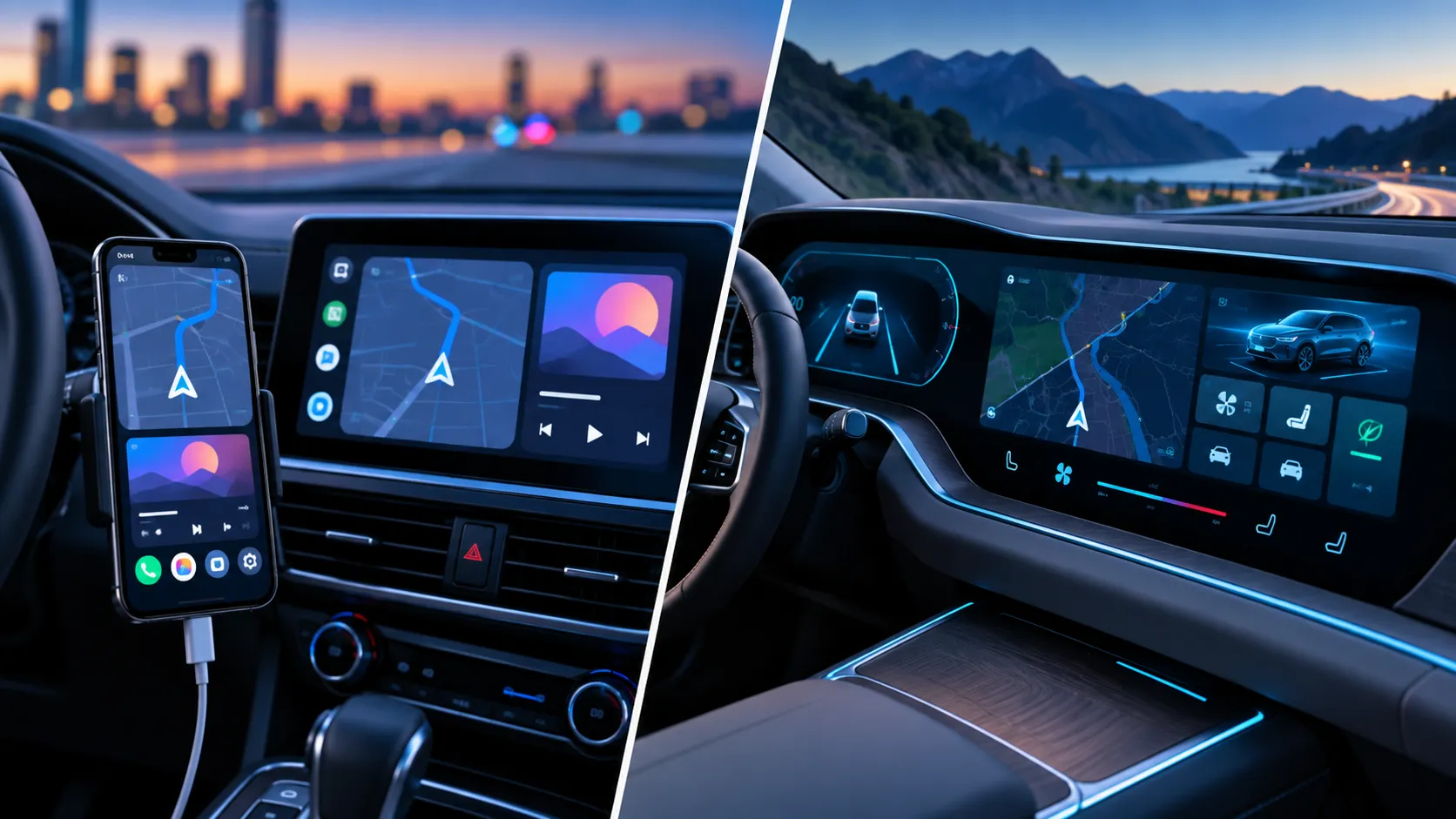
This rollout is distinct from the parallel Android Auto version, which began reaching users globally last November across 45 languages, for those who had already switched from Google Assistant to Gemini on their phones, according to Google. That version requires the Gemini app on a paired Android phone; a tooltip appears on the car display once the feature is available. Google has not published equivalent setup instructions for GM's Google built-in implementation, so the activation process for those owners has not been publicly clarified.
For scale: Android Auto is installed in more than 250 million cars worldwide, and more than 50 vehicle models carry Google built-in, Google noted last year.
What's actually different from Google Assistant
Google Assistant required drivers to recall specific trigger phrases and start fresh whenever a request needed adjusting. Gemini changes that. GM describes the new system as supporting genuine back-and-forth dialogue: ask for directions, add a coffee stop, then search for restaurants along the route, all within the same conversation without starting over, per Autoweek.
Google frames this as a shift from command-based voice control to a conversational model, where drivers can speak naturally, handle multi-step requests, and correct course mid-conversation without re-triggering the assistant, according to its Android Auto guidance. The difference is structural, not cosmetic.
A separate mode called Gemini Live opens a sustained, continuous conversation rather than a task-and-response exchange. Google says it can be started with a voice prompt and is designed for brainstorming, learning something new, or thinking through a problem hands-free, per Google. Google's materials use different trigger phrases across sources; the exact invocation for GM's built-in implementation has not been specified.
Both GM and Google describe these improvements in their own materials. No independent performance testing of Gemini in GM vehicles has been published.
What Google Gemini AI in cars can do now and what's not yet confirmed
Navigation is the most prominent use case. Gemini connects to Google Maps for multi-stop route planning by voice, with the ability to add detours, search for fuel stops or restaurants along the way, and pull review summaries for businesses. GM specifically highlights route planning and locating trailer-friendly parking as useful for commercial drivers, Autoweek reported. Google's own illustration of the capability: asking Gemini to find a charging station near a park so the driver can walk while the car charges, combining errands in a single conversational request, per the Google blog.
Messaging gets a tangible upgrade. When multiple messages arrive while driving, Gemini can summarize them and help draft a reply. Replies can be revised mid-sentence and translated into more than 40 languages before sending, according to Google. If the first take is wrong, users can fix it without starting over.
Email and productivity extend the picture further. Gmail is accessible while driving; drivers can request a summary of unread messages by voice. Google Calendar, Google Tasks, Google Keep, Samsung Calendar, Samsung Reminder, and Samsung Notes are supported, with additional third-party apps described as coming later, per Google. One example Google offers: finding the location of a kid's soccer game buried in a Gmail thread, without touching the phone, per the Google blog.
Media requests work by mood or route context across YouTube Music and Spotify, with no specific song or artist name required. GM adds that drivers can request podcast summaries by voice, which differentiates the built-in rollout from Google's broader Android Auto pitch, Autoweek noted.
What's not yet confirmed is worth stating plainly. Neither GM nor Google has described vehicle-level controls, such as climate settings, seat adjustments, charging parameters, or diagnostics, as part of this release. Those functions are simply not mentioned in the materials reviewed. Google's "experimental" label on generative AI features also applies here, per Google, and no independent distraction research or safety testing of the system has been published.
GM's next move and the division of labor behind it
The Gemini rollout is one piece of a larger strategy. GM has said a more advanced, custom-built AI assistant is expected later this year, one that draws on OnStar data and is tailored specifically to vehicle systems, Autoweek reported. That is the product intended for vehicle-level integration. The current rollout handles Google services.
The arrangement reflects a clear split: Google provides the AI layer and app ecosystem now; GM is building the assistant that will eventually connect to the car itself. Google's broader push positions cars as one node in a wider Gemini expansion across Android devices, including Wear OS, Google TV, XR headsets, and earbuds, per the Google blog. The automotive piece has its own logic within that platform strategy.
For owners of eligible GM vehicles, the update arrives automatically. Drivers who use voice regularly for navigation, messaging, or catching up on email during a commute will notice the difference. Those waiting for an assistant that adjusts the car rather than the apps should watch for GM's planned custom assistant, which the company says is still coming later this year.




Comments
Be the first, drop a comment!