



Search for "Google Antigravity" from a Pixel or Galaxy phone, and nothing shows up in the Play Store. That's because Google Play marks ordinary Android phones as incompatible with the app, a restriction Android Authority confirmed last week by testing the listing directly. If the search result is confusing, that will probably explain why Google Antigravity isn't available on Android the way most Play Store apps are.
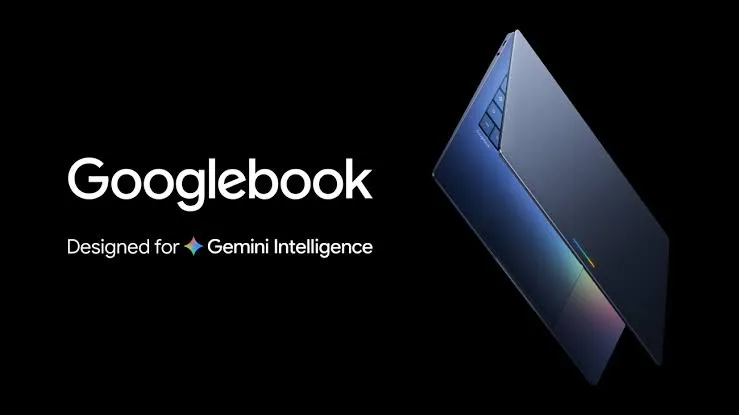
Google said Googlebooks would hit U.S. shelves on October 4, and post-launch reporting now indicates that rollout is underway.
That leaves one real question for anyone hunting for this Google Antigravity Android app on a regular phone: is there a way around the filter, or is it a dead end? Here's what sideloading actually reveals, why the restriction exists in the first place, and where a working version of Antigravity already lives today.
Who can actually install Google Antigravity right now
The app is live in Google Play, but it's scoped to Googlebooks, not standard Android phones, tablets, or Chromebooks, Android Authority reports. Call it a Google Antigravity Android app if you want; it still won't install on an Android phone.
Googlebook OS runs on Android's underlying stack, which is exactly how an app built for Googlebooks ends up sitting inside the regular Play Store looking, for all appearances, like an ordinary Android APK. The compatibility filter excludes phones at the storefront level. That's not a bug or a staggered regional rollout. It's a deliberate hardware restriction built into the listing itself.
Google Play may increasingly host listings that look like familiar Android apps but only function on Googlebook hardware. Whether that's a lasting policy or just how an early hardware rollout happens to look right now isn't settled.
What happens when you sideload Antigravity on a Pixel anyway
Sideloading skips the storefront filter, but it doesn't guarantee the app works once it's actually on the phone. Android Authority grabbed the APK directly and installed it on a Pixel test device, bypassing the Play Store's checks entirely.
It installed. It even launched.
What followed wasn't a simple scaling problem. Text and controls rendered tiny, and the onboarding flow pushed forward anyway, attempting to configure notifications, Android Terminal, an app directory, and the Antigravity service before stalling during Terminal VM configuration, the outlet found.
Manually enabling Android Terminal didn't fix it. Antigravity threw a permission-denial error tied to TerminalStatusProvider and the MANAGE_TERMINAL permission: a specific, named failure rather than a vague crash. That's a permission the stock Pixel test device didn't have, though the test doesn't establish how Googlebook OS grants or handles it.
Why Antigravity needs terminal access, according to Google
The permission failure is consistent with Antigravity's documented ability to work across an editor, terminal, and browser. When Google introduced the platform in November 2025, it pitched Antigravity as an agentic development tool where AI agents plan, execute, and verify tasks across an editor, a terminal, and a browser, rather than functioning as a chatbot sidebar. Those agents produce what Google calls Artifacts, outputs like task lists, implementation plans, and screenshots that let a developer check an agent's work without digging through raw tool calls.
On Googlebooks specifically, Google describes Antigravity as a tool for writing, editing, and managing code, projects, and files directly on the device, Android Authority reported, citing Google's description. That lines up with where the Pixel sideload broke, though it doesn't prove why Googlebook OS handles the MANAGE_TERMINAL permission differently from a standard Android build.
Two separate Antigravity products are easy to mix up here, so it's worth keeping them apart. Google's original November 2025 launch offered Antigravity as a public preview at no cost for individuals, compatible with macOS, Windows, and Linux, with access to Gemini 3 Pro alongside Anthropic's Claude Sonnet 4.5 and OpenAI's GPT-OSS.
In May 2026, Google introduced Antigravity 2.0, a separate standalone desktop app for the same three platforms built around an agent-first interface with no traditional IDE. That post also describes an automatic update path: anyone already running the original Antigravity IDE gets moved to 2.0 the next time the app updates, with the option to keep the older IDE installed alongside it.
What's confirmed and unknown for Google Antigravity phone compatibility
Three things are documented in the reporting reviewed here:
The Play Store listing filters out regular Android phones at the storefront level.
A Pixel sideload of that same listing fails at a named permission check during setup.
Google describes Antigravity as able to operate across an editor, terminal, and browser.
Together, that confirms Antigravity, as currently packaged for Googlebooks, didn't run on the one Pixel Android Authority tested, even though the APK installed and launched without issue.
A few things the available reporting doesn't settle. Nothing identifies which specific Googlebook models support Antigravity, what hardware specs the app requires, or whether Google has any phone-compatible version planned down the line.
Desktop availability is more straightforward, at least as of each product's own announcement. The original Antigravity launched as a no-cost public preview for individuals on macOS, Windows, and Linux in November 2025, and Antigravity 2.0 arrived as a standalone app for the same three platforms in May 2026.
Phone owners shouldn't sideload the Play Store APK expecting a working app. The documented test fails at a system-level permission check that manually enabling Android Terminal couldn't resolve, not a display glitch some future patch might fix.
Anyone who wants hands-on Antigravity access today should install the supported desktop build instead of chasing a phone workaround that hasn't been shown to work. And anyone considering a Googlebook specifically for this app should hold off until independent reviewers test retail units.


Comments
Be the first, drop a comment!