





Reviewed by: Y. Garcia
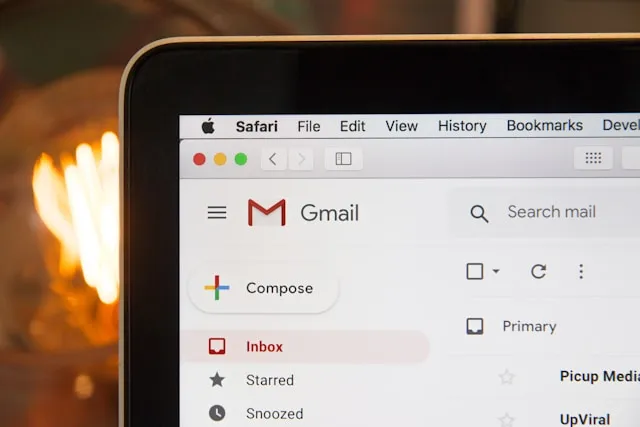
When you open Gmail today, you're looking at what might be the last version of the traditional email inbox you'll ever see. Google's latest overhaul isn't just another incremental update — it's a complete reimagining of how we interact with our digital communications. The tech giant has officially rolled out its Gemini-powered AI features into Gmail, transforming the platform from what was essentially a digital filing cabinet into something that feels more like having a personal assistant who actually understands your email habits.
This transformation could reshape how businesses and individuals handle email workflows. With Gmail serving over 3 billion monthly active users, we're talking about a shift that will disrupt workflows across virtually every industry, forcing competitors to accelerate their own AI strategies while potentially making traditional email management tools obsolete.
What makes this AI Inbox different from traditional email management?
Google's new AI Inbox completely throws out the chronological email list we've all grown accustomed to over the past two decades. Instead of showing you emails in the order they arrived, the AI Inbox creates a personalized briefing that surfaces suggested to-dos and topics requiring attention. Think of it less like a mailbox and more like having someone read through all your messages and then give you a morning briefing about what actually matters.
The system works by organizing emails by topic and extracting actionable items, prioritizing what needs your immediate attention over what simply arrived most recently. This represents a fundamental shift from passive message consumption to active task management.
The AI Inbox divides everything into two intelligent categories. The first section shows "Suggested to-dos" that highlight priority emails requiring immediate action, such as bill reminders or appointment confirmations. The second section covers "Topics to catch up on," providing updates on important but less urgent matters. It's like having someone sort your mail into "deal with this now" and "good to know" piles — but with the intelligence to understand context and urgency.
The sophistication behind this organization sets it apart from simple email filters. The system identifies important contacts based on signals like frequent correspondence, contact list entries, and relationship patterns inferred from message content. But here's what makes it particularly powerful: AI Inbox pulls information from archived conversations that aren't visible in the main inbox, creating a comprehensive view of ongoing topics and commitments that might otherwise slip through the cracks.
This contextual understanding means the feature distinguishes between threads requiring immediate action and those that are merely informational. It's not just keyword matching — it's actually understanding the intent and urgency behind your communications, fundamentally changing how users prioritize their daily tasks.
How do AI Overviews transform email search and comprehension?
The new AI Overviews feature essentially turns your entire email history into a conversational database. Instead of trying to remember the exact keywords someone used six months ago, you can ask natural language questions and receive AI-generated summaries that pull relevant information from across your entire email history.
Google's example demonstrates the power of this shift: instead of digging through months of emails, you can simply ask "Who was the plumber that gave me a quote for the bathroom renovation last year?" and get instant, comprehensive answers. The AI doesn't just find the email — it extracts the relevant details, contact information, and context you actually need.
The technical foundation for this capability is Google's retrieval-augmented generation (RAG) approach, which replaces traditional keyword matching with advanced reasoning. This allows the system to understand intent, context, and relationships between different pieces of information scattered across years of correspondence.
Beyond search, AI Overviews tackles the common problem of email thread overload. When you open lengthy email threads, Gmail automatically synthesizes entire conversations into concise summaries of key points, eliminating the need to scroll through dozens of replies just to figure out what's actually happening. Anyone who's ever tried to catch up on a long email chain knows how transformative this could be for productivity.
Google addresses trust concerns head-on by ensuring the system provides direct citations and links to original emails for all summaries, helping to mitigate concerns about AI hallucinations. You're not just getting an AI's interpretation — you're getting a summary with verifiable sources.
This represents what experts are calling a fundamental shift from a "search and browse" era toward a "query and synthesize" approach to information management. Instead of hunting for information, you're having an intelligent conversation with your digital history.
What enhanced writing tools are now available to all users?
In a significant strategic move, Google is making several powerful writing tools available to all Gmail users at no cost. The "Help Me Write" tool, previously limited to paid subscribers, can now draft context-aware replies that mimic individual users' personal tone and style.
This isn't basic auto-complete. Enhanced Suggested Replies have been expanded to all users, providing more personalized and contextually relevant response options that match individual writing patterns. The system learns how you typically respond to different types of messages and suggests replies that actually sound like you wrote them.
This democratization strategy represents a major competitive play. By democratizing AI productivity tools rather than keeping them locked behind premium subscriptions, Google is essentially forcing competitors to match this level of functionality or risk losing market share to free alternatives.
For subscribers to Google AI Pro and Ultra plans, which start at $20 monthly, additional premium features unlock more sophisticated writing assistance. The new Proofread feature performs advanced grammar, tone, and style analysis, going well beyond basic spell-checking to analyze communication effectiveness.
The Proofread tool demonstrates impressive nuance. It analyzes drafts for clarity and structure, suggesting improvements like better word choices, sentence simplification, and conciseness enhancements. Google's examples show sophisticated understanding: the system might suggest changing "might inflict disturbance" to the clearer "might disturb," or flag incorrect word usage like "weather" instead of "whether".
The underlying efficiency improvements are notable: Gemini 3 uses 30% fewer tokens to complete complex tasks compared to earlier versions. This translates to faster response times, more accurate suggestions, and reduced computational costs — benefits that enable Google to offer these features more broadly while maintaining quality.
What are the privacy and rollout considerations?
When discussing AI systems that read and analyze every email you've ever sent or received, privacy concerns are inevitable and justified. Google has implemented comprehensive protections, emphasizing that personal email content is not used to train its broader AI models.
Google's technical approach involves what they call an "engineered privacy" framework. All analysis used to power AI Inbox functionality is handled securely within Google's standard privacy protection framework, but they've created an additional layer of protection. Google has developed an "engineered privacy" processing environment, creating a secure boundary where personal data doesn't leave the protected space.
User control remains paramount. Users maintain complete control over these AI features and can disable them at any time through the Smart Features settings. Google emphasizes that all AI tools are optional and users can turn them off if they prefer traditional email management.
However, Google maintains transparency about limitations. Current Gmail users still see disclaimers stating that Gemini "can make mistakes" when searching inboxes and answering questions. This honest acknowledgment of AI imperfections, while reassuring from a trust perspective, also highlights the ongoing challenges with AI reliability.
The rollout strategy reflects this cautious approach. Many capabilities are initially available only to select users and subscription tiers. The AI Inbox feature is currently limited to trusted testers in the United States using browsers and works only with consumer Gmail accounts rather than Workspace accounts.
This measured rollout serves multiple purposes: it allows Google to gather feedback and refine the technology while managing the infrastructure demands of serving AI features to billions of users. Google plans to make the AI Inbox more broadly available in the coming months, suggesting they're prioritizing stability and user experience over rapid deployment.
What does this mean for the future of email and digital communication?
We're witnessing what could be a defining moment in digital communication evolution. This Gmail transformation reflects a strategic counter-move against competitors like Microsoft and Apple, with market confidence evident in Google's stock hitting record highs following the announcement, alongside the introduction of a new "Google AI Ultra" tier at $249.99 monthly for enterprise users.
For smaller competitors, the implications are severe. The AI Inbox may pose an existential threat to niche "AI-first" email clients that have emerged over the past few years. When Google offers powerful AI features for free to its 3 billion users, it becomes extremely difficult for smaller players to compete on functionality, forcing them to find new differentiation strategies or risk obsolescence.
The immediate roadmap suggests even more dramatic changes ahead. Google is expected to expand AI Inbox capabilities to include predictive actions and task automation. Imagine an email system that doesn't just tell you about your dentist appointment — it proactively suggests rescheduling based on your calendar conflicts, drafts the rescheduling email, and even learns your preferred rebooking timeframes.
However, significant challenges persist. AI-generated summaries and suggested actions are only as reliable as their training data and prompts, and errors could lead to missed details or inappropriate responses if users don't carefully review suggestions. As AI assumes greater responsibility for communication management, the consequences of mistakes become more significant, potentially affecting business relationships and personal commitments.
Looking toward the horizon, we might be seeing the early stages of what experts describe as an emerging "agent-to-agent" economy, where digital communication may increasingly occur between AI models rather than humans directly. Picture AI assistants scheduling meetings, negotiating terms, and managing routine correspondence on behalf of their human users — a scenario that raises profound questions about authenticity and human agency in digital communication.
What's undeniable is that this transformation marks a pivotal moment in artificial intelligence integration, turning Gmail from a passive communication tool into an active, proactive assistant. Whether this evolution enhances human productivity or creates new forms of digital dependency depends largely on how thoughtfully users integrate these tools into their workflows.
The bottom line? Email, as we've known it for the past 25 years, is evolving into something entirely different. Google is betting that the future of digital communication isn't just about exchanging messages — it's about having an intelligent system that understands, organizes, and acts on those communications in ways that align with how we actually work and live. That's either incredibly exciting or mildly unsettling, depending on your comfort level with AI managing the nuances of human communication. But given Gmail's massive user base, we're all about to discover the answer together.







Comments
Be the first, drop a comment!