




![qwanst Antique Leather Wind Notebook Loose Leaf Type [Qwants original set of 2] use anywhere Fashionable Small Notebook with. , browns](https://m.media-amazon.com/images/I/41ehQQvXfsL._AC_UY218_.jpg)
European Parliament Replaces Google with Qwant Amid EU Sovereignty Push
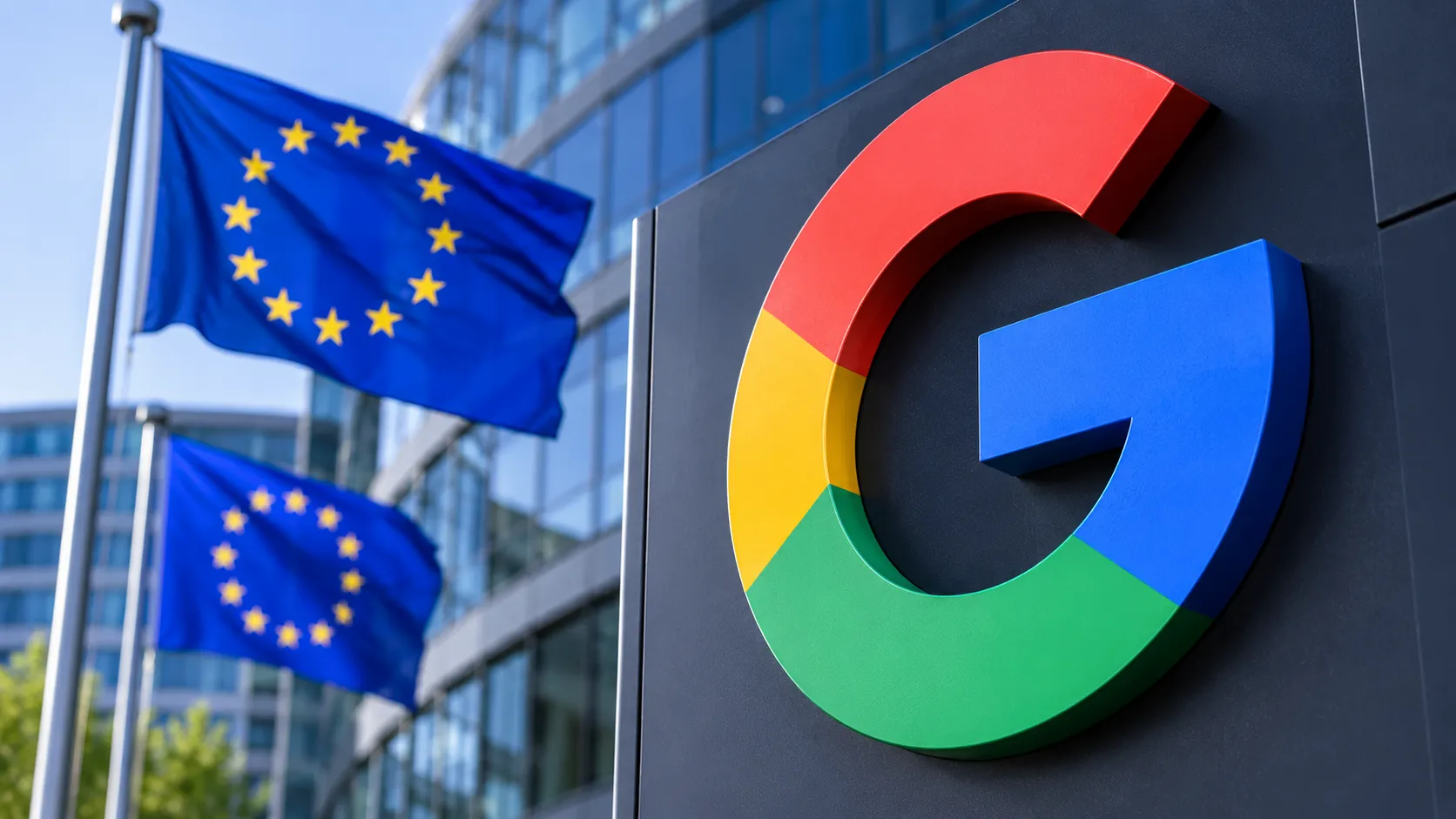
The European Parliament has replaced Google with French search engine Qwant as the default on its staff computers, citing digital sovereignty and privacy. The switch is unlikely to register as a competitive event for Google, which holds roughly 90% of European search market share. What makes it notable is the timing: Parliament made the change a day after the European Commission unveiled its first thorough tech sovereignty strategy, a package that could eventually tie billions in public IT contracts to new eligibility criteria that explicitly cover US-incorporated providers.
That context is what separates this from a routine IT decision. Europe has been repeating the phrase "digital sovereignty" for years. Whether it can convert that rhetoric into enforceable contract rules, applied consistently across 27 member states and €264 billion in annual public IT spending, is the test the Parliament's Qwant switch has put on the clock.
What happened, and the contradiction built into it
Starting Thursday, June 4, browser searches on Parliament computers route through Qwant by default, according to an internal communication seen by POLITICO. Staff can switch back to Google freely; they were told so explicitly. The move was framed in that communication as being "in line with the Parliament's commitment to digital sovereignty and the protection of users' personal data."
Founded in 2013, Qwant markets itself as a privacy-first alternative that avoids tracking users or building personal data profiles. The push for this kind of change had been building since last November, when a group of MEPs urged Parliament President Roberta Metsola to migrate IT services to European providers. Their complaint was specific: being forced to use Bing, Google, Yahoo, or DuckDuckGo on what they called the "imposed" Microsoft Edge browser, with Qwant among the European alternatives they proposed, Euractiv reported.
The sharpest wrinkle in the story is an infrastructure one. Qwant has historically relied on Microsoft's Bing to power its underlying search index. It is now co-developing an independent index called Staan in partnership with European search engine Ecosia, but that transition is ongoing, not complete, according to Euractiv. Europe's most prominent "European" search alternative is not yet fully European in its search stack. For now, the Parliament may have traded one US-adjacent provider for another.
This tension is precisely what the Commission's new sovereignty criteria are designed to resolve. The proposed tiering covers ownership and control, supply chain dependencies, data processing location, and exposure to third-country legislation, TechPolicy.Press reported. Qwant passes some of those tests on paper. Whether it would pass all of them under a completed framework is a question the Parliament appears willing to defer, at least for now.
Why the European Parliament replacing Google with Qwant won't hurt Google
Default placement is commercially decisive, which is precisely why switching a single institutional default rarely moves the broader market. Google reportedly paid Apple more than $18 billion annually for default search status on iPhones, a figure representing roughly 36% of all search ad revenue on Apple devices. The usage data shows why that payment makes sense: Bing's share sits below 5% on Chrome, Firefox, and Safari, where Google holds the default, but exceeds 50% on Internet Explorer and reaches nearly 80% on Edge, where Bing is the default, ProMarket found. The default slot shapes market share dramatically. A single institutional procurement decision does not.
The EU has run this experiment before. Following antitrust enforcement against Google's Android agreements, choice screens for search on Android devices shifted less than 1% of market share between Google and its competitors. A comparable browser choice-screen intervention applied to Microsoft's Internet Explorer in Europe moved that browser's share by only 1.4 to 2%, the Knight-Georgetown Institute found in December 2024. The consistent finding across both cases: default changes alone produce negligible competitive effects. Durable competition requires simultaneous changes to distribution access, data sharing arrangements, and product quality, none of which a procurement decision delivers.
The Parliament's switch should be read accordingly. Its commercial effect on Google is unlikely to be measurable. Its relevance depends entirely on whether it marks the start of a consistent institutional pattern rather than a one-off gesture by a single body.
The procurement framework: where the real test will happen
The Commission's new framework, unveiled this week, defines tech sovereignty as Europe's capacity to "develop, control and scale" critical technologies while reducing exposure to foreign interference. One element stands out for US-incorporated providers: the Commission states explicitly that the EU-US Data Privacy Framework does not remove sovereignty concerns, because sovereignty "goes beyond data transfers and relates to operational autonomy too," TechPolicy.Press reported. GDPR compliance, in other words, is not sufficient. That distinction matters directly for Google, and for every other US-incorporated provider bidding on sensitive EU public contracts.
The Commission estimates that approximately 1% of EU public services are sensitive enough to require the strictest tier, the one that would effectively exclude providers subject to foreign jurisdiction. That figure is important context: this is not a proposal to purge US tech from European institutions wholesale. But 1% of €264 billion in annual public IT spending, applied consistently across 27 member states, is not a rounding error. The percentage also represents the floor of a tiered system, not a cap. If the criteria prove workable, the question is whether that sensitive threshold expands over time as the framework beds in.
Commission President Ursula von der Leyen put the strategic logic plainly: "We cannot afford to depend on others for the technologies that keep our hospitals running, our energy grids stable and our services secure," per TechPolicy.Press. That framing, if backed by enforceable contract conditions, represents a different order of pressure on US tech providers than any search default. The Parliament's Qwant switch is not that mechanism. The proposed tiered criteria, if adopted and applied, could be.
Signal or noise: the six-month test
Taken alone, the Parliament's switch from Google to Qwant changes nothing measurable in the search market. Google retains roughly 90% of European search share, staff can revert immediately, and prior EU interventions on search defaults have produced negligible competitive effects. Calibrating this as a competitive loss for Google misreads what the decision actually is.
The procurement frame is the right one. Europe now has a stated motive, an emerging regulatory mechanism, and €264 billion in annual IT spending as potential use, once that mechanism has binding contract conditions attached to it. The Parliament's switch matters only as evidence that institutions are willing to act on sovereignty principles in actual vendor decisions, not just in strategy documents. That willingness is genuinely new. Whether it holds is not yet clear.
The question worth revisiting in six months: has the Commission's tiered sovereignty framework moved from proposal into binding contract conditions, and have other EU institutions or member state governments cited those conditions in their own procurement decisions? If yes, the Parliament's Qwant move will look, in retrospect, like the first step of something structural. If no, it remains what it currently is: a visible but contained institutional gesture, and a reminder that converting political rhetoric into enforceable market rules is considerably harder than changing a browser default.










Comments
Be the first, drop a comment!