



Dark Mode vs Light Mode: What Research Says About When Each Works Best
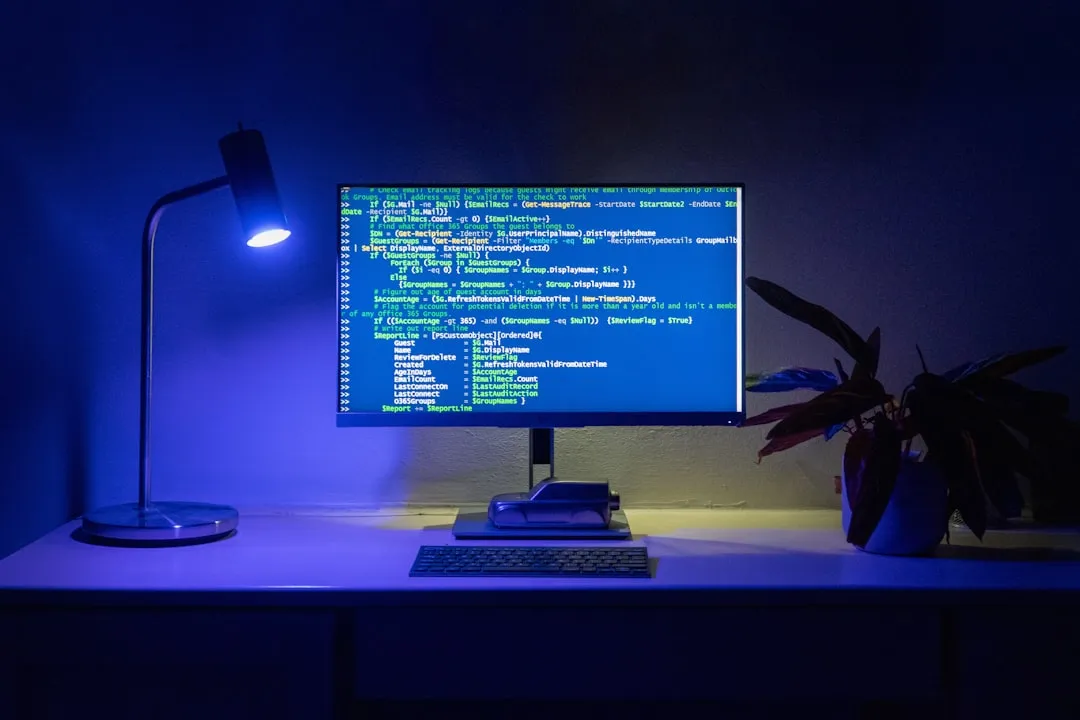
Survey data suggests most mobile users reading this on a phone are doing so against a dark background though the more interesting question is why. A 2026 mixed-method study surveying 215 mobile users found that roughly 68% reported an overall dark mode preference, with the sample skewing young (mean age 24.3) and recruited in Vietnam, so treat the figures as directional rather than universal (Hazadi & Kamaruzaman, Journal of Mobile Studies). What gives them weight is the contextual breakdown: dark mode preference climbed to 87% in the evening and above 91% at night. Mobile life is late, dim, and scroll-heavy. Dark mode fits those conditions.
Both iOS and Android standardized dark mode in 2019, converting it from a niche toggle into a system-level default (Hazadi & Kamaruzaman). Smartphone screen time now averages four to six hours daily globally, as reported in the same paper, much of it in low-light conditions where dark mode has a genuine comfort advantage. Then, about seven months ago, Android 16 introduced an expanded dark theme option that can automatically darken most apps on a device, including those without native dark mode support (Google Android Blog). Dark mode is no longer just a personal preference setting. For Android users with the option enabled, it's now a platform-level default affecting apps that were never designed for it.
The question worth asking is whether those apps are ready for that.
Preference is contextual, and auto mode reveals the real pattern
The 68% overall preference figure is real, but it's a composite. When the same researchers broke responses down by environment, the range was striking: 94% of respondents preferred dark mode in fully dark conditions; only 35% preferred it outdoors in bright light (Hazadi & Kamaruzaman). That's not statistical noise. It's a near-complete reversal based on a single variable. The aggregate number averages contexts where dark mode dominates against ones where it plainly doesn't.
Activity type adds another layer. Social media browsing and video watching skewed heavily toward dark mode, at 79% and 82% respectively. Long-form reading was a different story: only 45% of respondents preferred dark mode for sustained text consumption, with the remainder preferring light mode or switching between them (Hazadi & Kamaruzaman). Anyone reading a long article in good light may well belong to the majority that would prefer a lighter background.
Then there's the underreported middle option. Across demographic subgroups in the survey, 7 to 13% of respondents used neither dark nor light mode as a fixed default they used auto or scheduled switching (Hazadi & Kamaruzaman). A separate systematic review of 25 studies found that the ability to switch modes based on context significantly increased user satisfaction compared to fixed-mode usage (Nugraha et al., Technology and Information Design Studies). The users reporting the highest satisfaction aren't loyal to one mode. That reframes the whole debate: the best interface is one that adapts.
One data discrepancy is worth noting. An accessibility-focused industry source puts overall dark theme adoption above 80% across devices (Accessibility Checker), considerably higher than the 68% from the academic survey. Different sampling, populations, and question framing likely account for the gap. Both figures point in the same direction; neither should be read as a precise platform-wide measurement.
Dark mode vs light mode for reading: comfort isn't the same as performance
The controlled evidence on eye comfort is cleaner than the preference data, and the pattern is consistent. In a controlled experiment using a Samsung Galaxy S23 at fixed brightness under two distinct lighting conditions, dark mode produced a comfort rating of 5.82 out of 7 in dim light (50 lux, approximating an evening indoor setting). Light mode in the same conditions scored 4.29, a gap with a large effect size (d > 1.5) (Hazadi & Kamaruzaman). In bright lighting (500 lux), the scores reversed just as sharply: light mode 5.64, dark mode 4.29. Comfort tracks ambient light, not personal preference.
Subjective readability followed the same pattern. In dim light, dark mode rated 5.67 versus 4.42 for light mode. In bright light, light mode rated 5.78 versus 4.29 for dark mode (Hazadi & Kamaruzaman). A broader review of 25 studies confirmed the conclusion: light mode is more effective for prolonged reading in well-lit environments, dark mode reduces glare and eye fatigue in low-light conditions, and neither mode consistently outperformed the other overall (Nugraha et al.).
An industry source cites 93% of users reporting less eye strain with dark mode (Accessibility Checker). That figure is self-reported and almost certainly reflects low-light usage specifically the exact conditions where the controlled evidence supports the benefit. Read it as validation of the low-light advantage, not a blanket endorsement of dark mode under all conditions.
Dark mode changes how reading feels. It doesn't change how reading works. The controlled experiment recorded reading speed and comprehension scores across all conditions and found no statistically significant differences between dark and light mode in either measure (Hazadi & Kamaruzaman). The comfort advantage is real; the performance advantage isn't. A similar gap exists in the battery savings argument: a 2025 energy profiling study found CPU utilization differed by less than half a percentage point between modes (31.0% dark, 31.4% light), with rendering time variation under 10 milliseconds (IEEE). That study measured runtime efficiency specifically and didn't assess full-device battery draw across different hardware types, so it doesn't settle the battery debate entirely but it does suggest the runtime efficiency case is thinner than the marketing implies.
Android's platform push and the app implementation gap
About seven months ago, Google released an Android 16 update introducing an expanded dark theme option that automatically darkens most apps on a device, including those with no native dark mode support (Google Android Blog). Google framed the change explicitly as an accessibility improvement, bundled alongside TalkBack enhancements and hearing aid integration. Dark theme is no longer a visual preference feature. It's being treated as inclusive design infrastructure.
The problem is that native dark mode implementation is already inconsistent across major apps. A heuristic review of 12 popular Android apps, each with over 100 million downloads, turned up 287 distinct dark mode usability issues. Nearly one in four (24.4%) were classified as major or catastrophic, not cosmetic (Hazadi & Kamaruzaman). Only 58% of the evaluated apps fully met WCAG contrast requirements for interactive elements buttons, form fields, toggles, the things users tap most. Put differently: roughly four in ten of the most-downloaded Android apps fail basic contrast standards in the mode most of their users have enabled.
The practical consequences are low-contrast buttons that are hard to tap, form fields that blend into backgrounds, and interface states (default, active, disabled) that become nearly indistinguishable. For users with vision conditions, these aren't cosmetic annoyances.
The split in quality runs along familiar lines. Apps including YouTube, Gmail, WhatsApp, and Netflix achieved full contrast compliance. Instagram, Messenger, and Spotify rated at 50% compliance for interactive elements (Hazadi & Kamaruzaman). These aren't underfunded products. The gap reflects design priority, not technical constraint.
Forced darkening may compound the problem it's meant to solve. Interviews with 29 users with and without vision impairments found that alternative color modes created accessibility and usability issues specifically for people with vision conditions, including negative health consequences and disrupted work performance (ACM). When Android overrides colors for apps that were never designed for dark mode, it does so without the developer's original color relationships intact. The contrast problems already documented in native implementations become harder to predict and harder to test under that kind of forced override.
Platform guidelines only go so far. Researchers found that both Google's Material Design and Apple's Human Interface Guidelines provide solid starting points but neither strongly emphasizes matching display mode to ambient lighting conditions the single variable that most determines whether dark mode actually helps (Hazadi & Kamaruzaman). For developers, the minimum checklist is short: test in both dim and bright conditions, verify contrast across all interactive states, avoid pure black (#000000) in favor of softer backgrounds like #121212 to reduce glare, and don't treat Android's system-level forced darkening as a substitute for intentional design (Accessibility Checker).
What to take away for users and for the apps they use
For users, the evidence points toward context-switching rather than picking a side. Dark mode earns its reputation in the conditions where most mobile usage actually happens evenings, dim rooms, social media scrolling, video. For long-form reading in daylight, light mode rates higher on both comfort and readability (Nugraha et al.). Scheduled or auto-switching, already available on both Android and iOS, matches what the most satisfied users in the research were already doing. If a phone still defaults to a single mode all day, that's the most straightforward fix available.
For anyone evaluating whether an app's dark mode is worth trusting: low-contrast buttons, text that bleeds into the background, and interactive elements that look the same in default and disabled states are the tells. They're more common than the download numbers of the apps involved would suggest roughly 42% of major Android apps didn't clear the accessibility bar in the heuristic review (Hazadi & Kamaruzaman).
Google's bet with Android 16 is that system-level darkening helps more users than it harms. That may be true in aggregate. But the ACM research on users with vision impairments is a genuine caution (ACM): automatic doesn't mean correct, and for users with the most acute accessibility needs, an app force-darkened by the OS is a different problem than one that simply never offered the feature. The three threads here user preference, comfort evidence, and implementation quality converge on the same conclusion. The winning product decision isn't "pick dark mode." It's designing for mode switching and testing implementation quality under the lighting conditions where users actually sit.
The preference poll says most users are in dark mode. The implementation data says being in dark mode doesn't yet mean being well-served by it.

Comments
Be the first, drop a comment!