



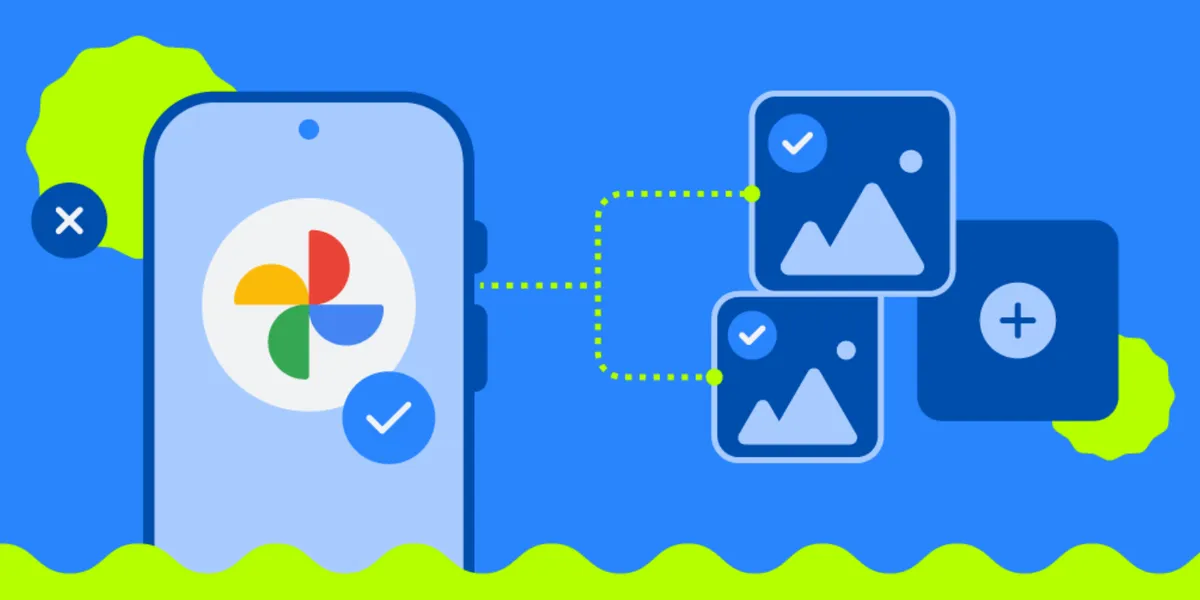
When an Android user selects a photo through Google's Photo Picker and shares it with an app, any GPS coordinates embedded in that image are removed. No prompt, no toggle, no acknowledgment that anything was stripped. For most use cases, that's a reasonable default. For apps where geotags are the core functionality — a hiking tracker, a travel journal, a location-aware social platform — it's a capability failure that neither the user nor the developer can fix.
That appears to be changing. Code strings found in the latest Google System Services update to the Photo Picker app reference labels including "Include location," "Don't include," "Location sharing enabled," and a first-run consent dialog reading "[App name] is requesting location info with the photos and videos you select," Android Authority reported. The strings are the clearest evidence yet of a location-sharing toggle in Android's Photo Picker.
This isn't a sweeping privacy overhaul. It's a targeted fix for a specific gap — one that became considerably more consequential after Google pushed much of the Android app ecosystem toward Photo Picker as the preferred minimum-scope method for many media-access use cases. A developer issue tracker thread requesting exactly this capability has been open since 2022, with comments still appearing this month, Android Authority notes.
No release date has been announced. The evidence suggests active development, but not a shipping timeline.
Why Photo Picker strips location metadata, and why that tradeoff has always had a cost
Google introduced the Photo Picker API with Android 13 in 2022 as a deliberate privacy mechanism: users select specific images to share with an app, and the tool handles the transfer without granting that app access to the broader media library. Stripping location metadata was part of that design from the start, Android Authority reports.
The reasoning is sound. A single EXIF geotag can reveal a home address, a workplace, or a school. That information travels invisibly with an image unless something removes it, and most users don't know their photos carry GPS coordinates at all. Stripping them by default protects people who can't protect themselves.
The cost of that default is also real. Apps that legitimately depend on coordinate data receive images scrubbed of the information that makes them useful, even when users would willingly share it if asked. The current system doesn't ask. It decides on their behalf.
Android's developer documentation explicitly recommends Photo Picker because it eliminates storage permission requests entirely, offering the lowest-friction path to media access, Android Developers notes. That privacy benefit and the metadata limitation come bundled together, which is precisely why fixing one without dismantling the other requires the kind of targeted toggle Google now appears to be building.
How Android Photo Picker privacy controls could change photo sharing
For three years, Photo Picker's location stripping was an inconvenience for a subset of apps. Then Google changed the stakes. Starting September 18, 2024, Google Play began contacting developers whose apps requested broad media permissions, READ_MEDIA_IMAGES and READ_MEDIA_VIDEO, requiring them to either justify that access or migrate away from it, Android Authority reported in late 2024.
The compliance window was tight. Developers had until the end of October 2024 to submit declaration forms, and those who failed were blocked from updating their apps on Google Play, Android Authority reported. A stay of enforcement was available, but only until January 22, 2025, after which the policy applied across the board. Google's current policy page lists May 28, 2025, as the date full compliance became mandatory for all developers, including those who requested an extension.
Broad media access was reserved for a narrow set of apps: dedicated gallery apps, photo and video editors, and platforms that could demonstrate a core need for persistent or frequent library access. Simply having a custom photo-picking experience didn't qualify. Many apps were effectively pushed toward Photo Picker or other narrower access methods unless they could justify broad access as necessary for core functionality. Developers maintaining custom gallery pickers could adapt using the READ_MEDIA_VISUAL_USER_SELECTED permission, but that route still doesn't restore the ability to receive location metadata alongside selected images.
The result was structural. A tool Google built as a privacy improvement became required infrastructure for much of the app ecosystem. At that point, Photo Picker's missing capabilities stopped being Photo Picker's problem. The location metadata limitation, logged in 2022, survived that entire transition without resolution, and Android 14's Selected Photos Access feature, which lets users grant apps access to specific images rather than their whole library, didn't address it either.
What the code reveals, and what it likely means in practice
The evidence comes from UI strings embedded in the latest Photo Picker system app update. The strings reference a two-state toggle, "Include location" and "Don't include," along with status indicators for when location sharing is enabled or disabled. A separate consent dialog, triggered the first time an app requests location data alongside shared media, would display the requesting app's name with an explicit prompt. That string covers both photos and videos, suggesting the control applies to video content as well.
Based on the pattern of those strings, the most plausible implementation works like this: when an app that has declared a need for location metadata opens Photo Picker, users see a consent prompt on first use and can toggle the setting on or off. Whether that preference persists per app, applies per selection session, or resets each time isn't clear from the available evidence.
For users, the practical shift is straightforward. Instead of location data disappearing automatically every time, there would be an explicit moment to decide. Given Android's established privacy posture, the toggle would likely default to "don't include," with users able to change it when they want to share photo location data on Android with a specific app. For developers building on geotags, it would restore a capability currently unavailable through Photo Picker without requiring broad media permissions.
Several unknowns remain. Whether only EXIF location data is in scope, or whether other metadata categories could eventually fall under user control, isn't established by the available strings. Whether the toggle applies to individual images or an entire selection is unclear. Whether apps would need to declare a specific intent before being permitted to request location data at all isn't confirmed. None of that is settled yet.
What comes next
If this ships as the code suggests, the default behavior for Google Photo Picker location metadata doesn't change. Location data would still be withheld unless a user explicitly enables sharing. What changes is that users would have the option to consent per app, rather than having the decision made for them permanently. For anyone who has ever tried to share a geotagged image with a mapping or travel app and found the coordinates hadn't followed, that's a meaningful shift in actual user agency.
For developers, the toggle would close a complaint dating back to 2022 without requiring apps to acquire broad media permissions. For any category that legitimately needs coordinate data, outdoor activity trackers, location-aware social platforms, travel tools, that's a significant functional unlock within the privacy-preserving framework Google has been steadily building.
The key questions when this surfaces publicly: whether location consent is persistent across sessions or requested each time, and whether Google treats this toggle as a template for bringing other metadata categories under user control. If the location dialog is a pattern rather than a one-off patch, it signals a materially different approach to photo privacy than the blunt instrument Photo Picker launched with in 2022.





Comments
Be the first, drop a comment!