





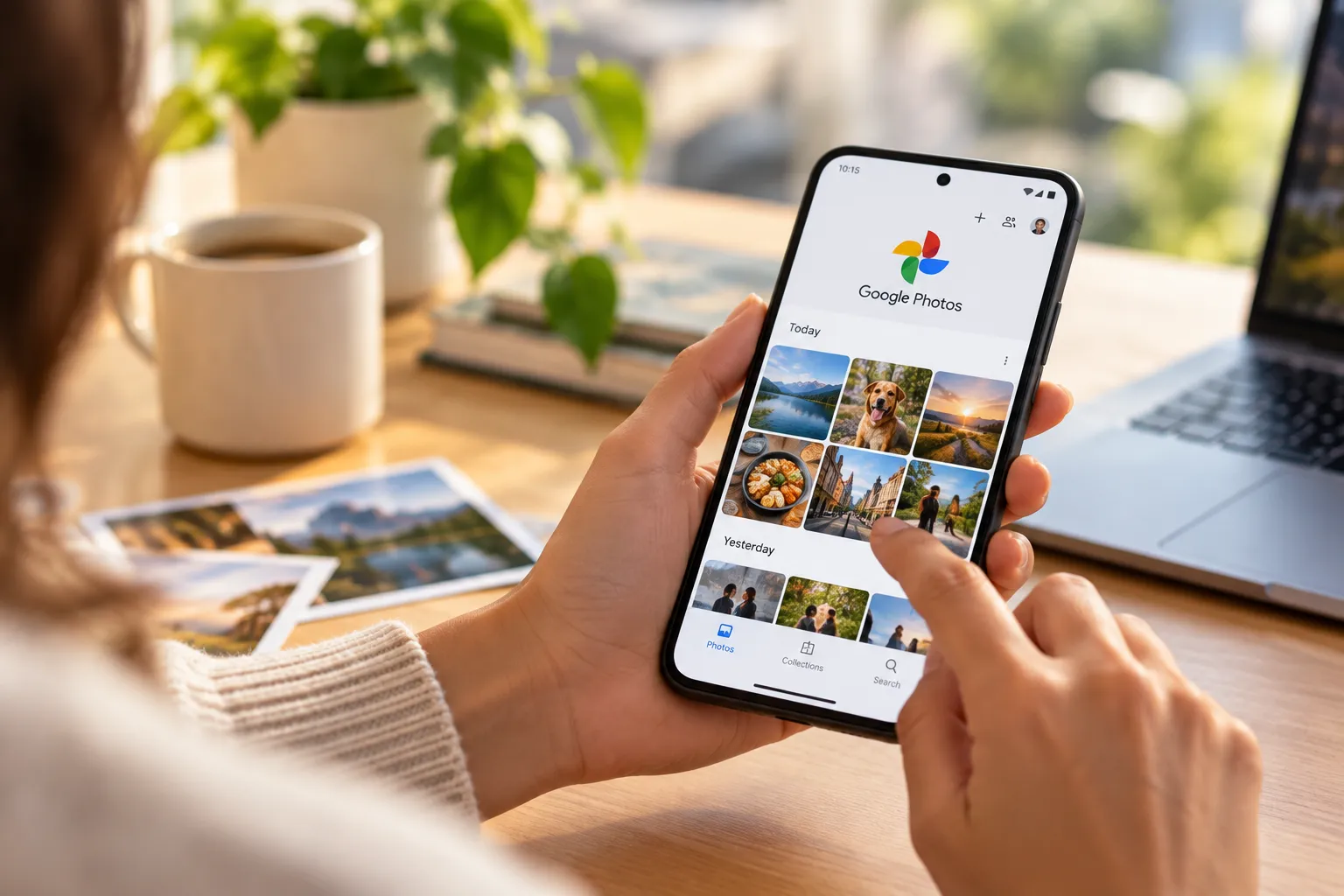
Google Photos has grown well past a backup app. It can search your library in plain English, answer questions about a single photo, edit images from a text description, and create new AI-generated images through templates.
These Google Photos tips and tricks cover nine AI features plus one privacy tool, and many of the AI features rolled out in stages tied to a country, an OS version, an age gate, or a setting you may not have turned on yet.
Google's announcements describe several separate rollouts rather than one unified launch. Ask Photos, the natural-language search tool built on Gemini, expanded to more than 100 new countries and regions and 17 new languages beginning in November 2025.
The in-photo Ask button, conversational editing, and Create with AI templates are separate features layered on top of that search tool, each with its own platform, region, age, or settings requirements.
This guide walks through nine of the best Google Photos features built on Gemini and Nano Banana, plus a tenth privacy tool worth pairing with them: natural-language search, single-photo Q&A, AI editing, image generation, and Locked Folder.
Each entry lists where to find the feature, what Google's current documentation says about access, and one thing worth checking before you trust the result.
Claims about identifying a dish, transcribing a recipe, or fixing someone's expression come from Google's own product announcements, not independent testing, so the verification step matters.
What Google Currently Documents About Each Feature
Google Photos features can differ by account, region, device, app version, and settings, so treat these as current requirements rather than a guarantee that every eligible account already has the same interface.
Ask Photos, library search: Available to eligible users in supported countries and languages on the Google Photos mobile apps. Google says Ask Photos isn't currently available on the web. Users must meet the Gemini features in Photos requirements.
In-photo Ask button: Google's latest specific announcement says it's available on Android and iOS to eligible users in the US. It requires Gemini features in Photos to be enabled.
Help me edit, conversational editing: Google's current help documentation covers the feature on both Android and iOS. Availability still varies by region, and users must meet Ask Photos eligibility requirements.
Create with AI templates: Originally launched on Android in the US and India, but Google expanded the feature to more countries in February 2026 and also brought it to iPhone and iPad in multiple markets. Create with AI requires users to be 18 or older.
Personalized Create with AI templates: Require Gemini features in Photos plus settings such as Face Groups, location estimates, and the user's "Me" face group where supported.
Nano Banana restyling: Available through supported conversational editing workflows in Google Photos. Availability follows the broader Gemini editing restrictions rather than a single universal rollout.
Locked Folder: Available on supported Android and iOS devices, with optional cloud backup and web access to backed-up Locked Folder content.
For Gemini features in Photos generally, Google's privacy and eligibility documentation says users must be at least 18, be in an eligible launched location, turn on Face Groups and identify their own face group, and enable location estimates.
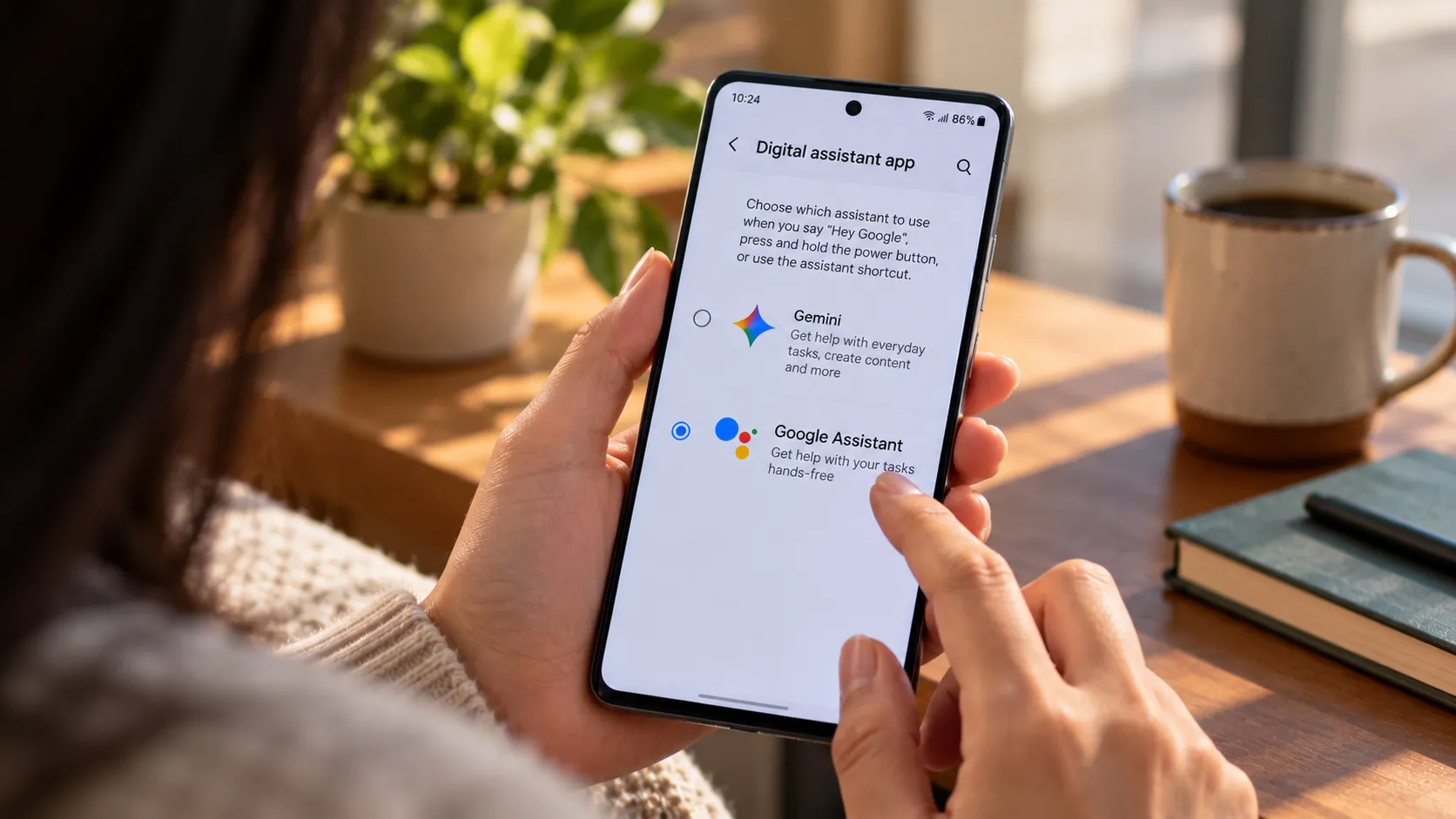
Ask Photos also has to be enabled under Google Photos settings > Preferences > Gemini features in Photos.
If a feature doesn't match what's in your app, update Google Photos, check those Gemini settings, then verify region and device requirements before assuming something is broken.
1. Search Your Library With Natural-Language Questions
Try it: Type a full question into Ask Photos instead of limiting yourself to a keyword.
Google's examples include questions such as asking what you ate on a particular trip or asking Photos to find images that would make good phone backgrounds.
Access: Ask Photos uses Gemini models for more complex natural-language queries. Google began expanding it to more than 100 additional countries and regions and 17 new languages in November 2025.
Its current help documentation still says availability varies by location.
Ask Photos runs through the mobile Google Photos experience. Google currently says it isn't available on the web.
Check before you trust it: Google describes Ask Photos as experimental and warns that it can produce unexpected or inaccurate results. Scan the actual photos behind an answer before relying on its summary.
2. Use a Keyword for Speed, a Question for Context
Try it: Type a plain term such as "beach" or "dogs" for a straightforward lookup, or switch to a full question when you need Photos to connect people, places, dates, or events.
What it actually gets you: Google says Photos can show classic search results quickly for simple queries while Gemini continues working in the background on more complex questions.
A keyword is useful when you're looking for an obvious subject. A full question is better when Photos needs to infer a relationship, trip, meal, occasion, or other context.
Check: Ask Photos and classic search can return different results. Google's current interface lets eligible users move between the two search experiences when needed.
3. Ask What's in a Photo
Try it: Open a photo and tap Ask if your account has the dedicated button.
Google says the button starts a conversation about the photo you're currently viewing and can automatically surface information about what's in the image.
Access: Google's February 2026 announcement says the dedicated Ask button is available on Android and iOS to eligible users in the US.
That's a narrower availability statement than Ask Photos library search, so don't assume having Ask Photos automatically means the button will appear.
What it does: Google's examples include identifying places, explaining objects, describing food, and answering follow-up questions about an image.
Check: Treat object, place, ingredient, plant, and food identification as a starting point rather than a fact, especially where health, allergies, or safety are involved.
4. Find Related or Visually Similar Photos
Try it: From an open photo with the Ask button, ask to "find more photos like this," or choose the related photos prompt if it appears.
You can also use broader Ask Photos queries such as asking for photos that share a particular mood, season, or subject.
What it does: Google says the feature can surface visually or contextually similar images and provide a short summary of the results.
Access: The direct in-photo workflow follows the Ask button's narrower eligibility. Broader library searches can use Ask Photos where that feature is available.
Check: Google doesn't define a fixed threshold for what counts as "similar." Look at the results before assuming the images share the subject or context you intended.
5. Transcribe Text and Turn It Into a Usable List
Try it: Open a photo of a recipe, screenshot, menu, or handwritten note and ask Photos to transcribe the text.
What it does: Google's Ask Photos examples show it transcribing handwritten text and then turning that transcription into a grocery list or step-by-step instructions that can be copied or shared.
Access: Google's example is part of its Ask Photos and Ask button guidance, so availability depends on the Gemini features available to your account.
Check: Compare the transcription with the original before using it, especially with handwriting, small print, quantities, addresses, or other details where a single wrong character matters.
6. Use "Help Me Edit" for General Cleanup
Try it: Open a photo, tap Edit, then Ask or Help me edit, depending on the interface shown on your account, and describe what you want changed by voice or text.
Google's examples include removing glare, removing background distractions, changing scenery, and simply asking it to improve an image.
Access: The original rollout began with Pixel 10 users in the US and later expanded.
Google's current Android and iPhone and iPad documentation now covers Ask Photos editing on both platforms.
To use it, you must be at least 18, use a personal Google Account, meet Gemini features in Photos eligibility, and have the required settings enabled.
Google also announced international conversational-editing expansion to markets including Australia, India, and Japan in early 2026.
Check: If the editing prompt doesn't appear, verify eligibility and Gemini settings before assuming your app is simply out of date.
7. Request Personalized Edits for Specific People
Try it: In the same editing prompt, ask Photos to remove someone's sunglasses, open closed eyes, or add a smile.
What it does: Google says these personalized edits can use images from your private Face Groups to generate a result based on the person in your library.
Access: That means Face Groups need to be enabled, and the broader Gemini features in Photos requirements still apply.
Google doesn't publish separate availability rules for every person-specific edit, so don't assume all personalized requests will work just because the general editing box appears.
Check: Review person-specific edits before saving or sharing them. Google calls these AI features experimental and doesn't publish an accuracy rate for face-specific corrections.
8. Restyle a Photo Entirely With Nano Banana
Try it: Open a photo, use the conversational editing option, and describe a new visual style.
Google's examples include turning a photo into a Renaissance-style portrait, a mosaic made of colorful tiles, or a children's-storybook illustration.
Access: Nano Banana-powered transformations are part of Google's newer AI editing workflows. Availability varies with the account, region, and Gemini feature requirements rather than following one universal device list.
Check: Google Photos now supports C2PA Content Credentials for compatible files, which can record information about how an image was captured or edited.
That is more useful than the earlier description of a "permanent digital label."
Google's current Content Credentials documentation says the credentials can show AI edits, non-AI edits, and media origin where supported. Google Photos can also update and sign credentials after supported edits.
But Content Credentials aren't available for every file, aren't currently shown on Google Photos Web, and don't tell you whether an image is "real" or "fake." Modified or incompatible files can also produce credential errors.
Treat them as provenance information, not an indestructible guarantee that an image's entire edit history can never be lost.
9. Generate Images With Create With AI Templates
Try it: Open the Create tab and look for Create with AI.
The feature uses Nano Banana-powered templates for creations such as a professional headshot, high-fashion shoot, or holiday card.
Access: Google's November 2025 announcement initially put Create with AI on Android in the US and India for users 18 and older.
That launch footprint is now outdated.
In February 2026, Google announced Android expansion to additional countries including Argentina, Bangladesh, Brazil, Colombia, Egypt, Indonesia, Japan, Mexico, Pakistan, the Philippines, and Türkiye.
Google also announced Create with AI for iPhone and iPad in multiple markets, including the US and India as well as those additional countries.
Current Google help documentation says these generative features require a personal Google Account, network access, supported availability, and backed-up source photos where applicable. Generation limits also apply, with higher allowances available through qualifying Google AI plans.
Personalized templates have additional requirements because they can use insights from your photo library.
Where supported, those templates require Gemini features in Photos plus settings such as Face Groups, location estimates, and your "Me" face group.
Check: If you'd rather not let Photos use those library signals for personalized creations, review the Gemini and Face Groups settings directly instead of trying to infer what's enabled from the templates you see.
10. Keep Sensitive Media in Locked Folder
Try it: Locked Folder is a screen-lock-protected area inside Google Photos for photos and videos you don't want appearing alongside the rest of your library.
What it does: Google's current Locked Folder documentation says items there don't appear in the main Photos grid, Memories, search results, albums, or shared items.
They also aren't available to other apps on the device that have access to ordinary photos and videos.
Optional backup lets Locked Folder content follow you across supported devices. Leaving backup off keeps those items device-only.
Access: Locked Folder is available on supported Android and iOS devices, with restrictions for some managed devices and account types.
Check: Don't treat Locked Folder as a documented "no AI processing" switch.
Google's Gemini features in Photos privacy notice says those features can use photos and videos stored in your Photos library, along with Face Group information and other account data.
Google's Locked Folder documentation explains where locked items are hidden and how they're protected, but it does not explicitly say Locked Folder content is excluded from all Gemini processing.
So the defensible claim is narrower: Locked Folder hides content from normal Photos surfaces and limits access. Google doesn't currently document it as a separate AI-exclusion control.
What to Do Next
Update Google Photos first, then check the settings tied to whatever feature is missing.
For Ask Photos and conversational editing, open Google Photos settings > Preferences > Gemini features in Photos and confirm that the relevant Gemini options are enabled.
Also check Face Groups, your "Me" face group, and location estimates where the feature requires them.
Test any new AI feature on a low-stakes photo before trusting it with something important, and use classic keyword search or manual editing when the AI workflow isn't available or doesn't return what you expected.
For privacy, separate the controls by what they actually do.
Locked Folder controls where sensitive media appears and who can easily access it. Gemini settings control whether you participate in Gemini features in Photos. Face Groups and location estimates provide additional signals those features can use.
Don't assume one setting automatically substitutes for the others.





Comments
Be the first, drop a comment!