



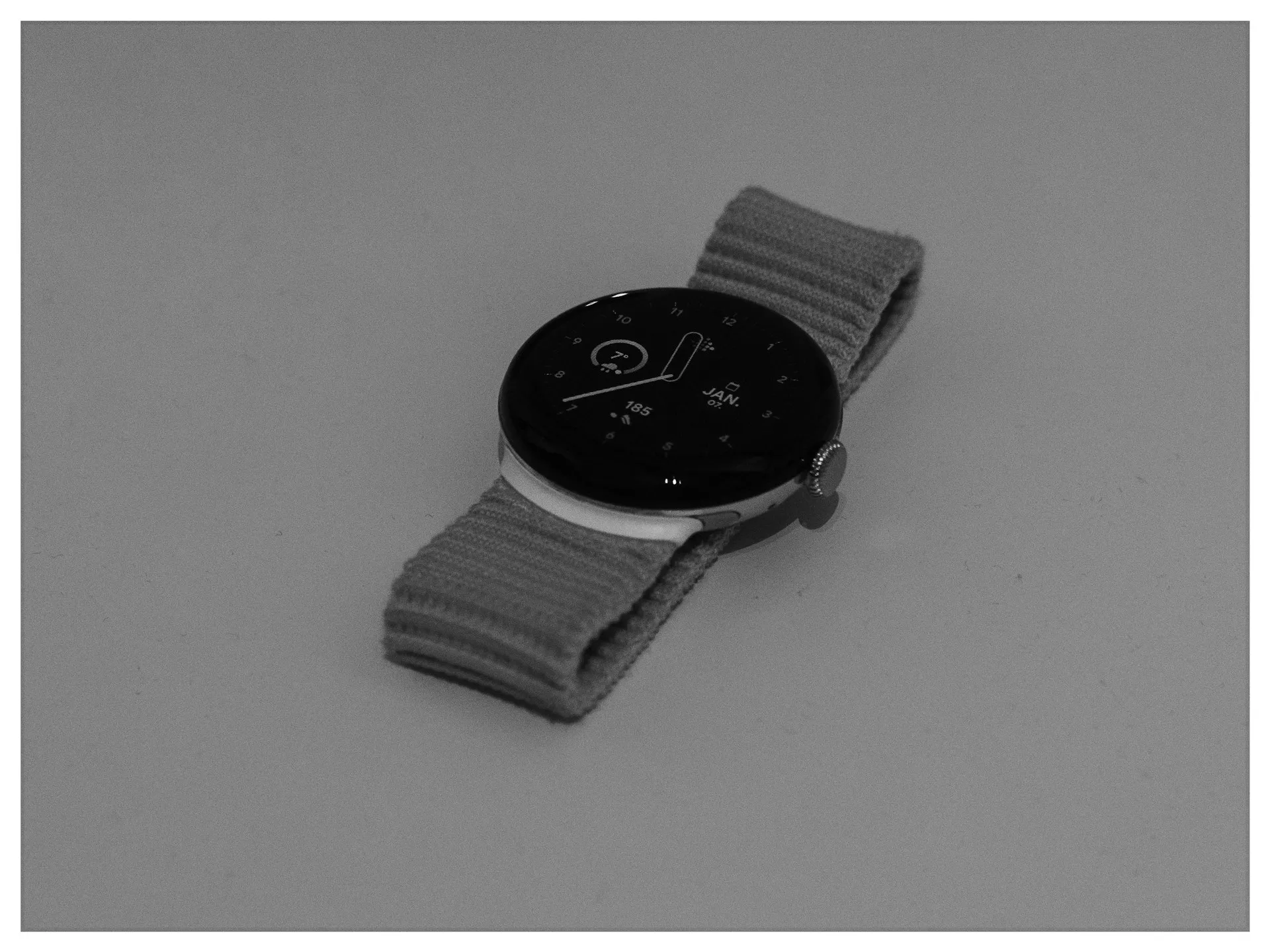
When it comes to emergency preparedness, every second counts—and your smartwatch may now have your back even when your phone doesn't. Google has quietly begun rolling out a significant safety upgrade to Wear OS that transforms your wrist into an independent earthquake detection endpoint, according to recent Play Services release notes. While Wear OS watches have displayed earthquake warnings since mid-2025, those alerts previously depended on a paired smartphone to function. Now, watches can receive seismic warnings directly—even when unpaired—marking a shift from passive notification mirror to active safety tool.
This isn't just a minor tweak to how notifications sync—it expands who can be reached during a critical window, transforming the watch from a dependent accessory into an autonomous safety device. Earthquake early-warning systems typically provide between 2 and 20 seconds of advance notice before destructive shaking arrives, research from the United States Geological Survey indicates.
That brief heads-up can enable life-saving actions like taking cover, slowing trains, or shutting off industrial valves. Delivering those alerts to a wrist-worn device increases the odds they'll actually be noticed, as watches vibrate against the skin, bypassing the all-too-common scenario of a silenced phone buried in a bag or left in another room. For runners, shift workers, and anyone who steps away from their handset, this watch-first approach could mean the difference between being caught off guard and having time to act.
How standalone alerts actually work
The upgrade appears tied to Google Play Services version 26.07 for Wear OS, which enables rapid deployment without requiring a full operating system update, Google's changelog confirms. The shift is architectural: previously, earthquake alerts on Wear OS functioned only when a watch maintained a connection to a paired Android phone. Now, watches equipped with Wi-Fi or LTE can pull alerts directly from Google's detection network, as noted in the latest release documentation.
The underlying detection system remains unchanged: Google's Android Earthquake Alerts program aggregates accelerometer data from billions of Android devices to identify seismic P-waves before slower, more destructive S-waves arrive, as researchers at Google and UC Berkeley have detailed. When enough phones in a region register the same seismic signature simultaneously, the system triangulates the event and pushes warnings to nearby users. Essentially, your phone—and now your watch—acts as a tiny seismometer. Most modern smartphones and wearables are equipped with accelerometers, typically used for screen rotation and step counting, but they're sensitive enough to detect seismic activity because they can register the rapid vibrations characteristic of earthquake waves.
The key change is that Wear OS devices can now receive those warnings independently, provided they have an active internet connection and location permissions enabled. The alerts display the quake's estimated magnitude and distance to the epicenter, analysis of the feature's code revealed earlier this year. This proves particularly valuable for anyone with a cellular-enabled smartwatch who tends to leave their phone behind during exercise or routine tasks—you won't miss a potential earthquake warning just because your phone is charging in another room or sitting in a locker three floors down.
Why this matters beyond the wrist
The shift to standalone alerts isn't just about convenience—it's about reach, reliability, and ensuring critical warnings land regardless of device proximity. Google's earthquake detection network now spans more than 2.3 billion eligible Android devices globally, dwarfing the roughly 300 million people covered by traditional seismometer-based systems, according to a study by Google researchers. The system is already active in 98 countries and territories, many of which lack conventional seismic infrastructure, Google engineer Marc Stogaitis has confirmed. By extending alerts to wrist-worn devices, Google ensures that warnings can land even when users are exercising, commuting, or otherwise separated from their phones.
Real-world performance underscores the value. As of March 2024, the Android Earthquake Alerts System had issued warnings for 1,279 seismic events with just three false alarms—two triggered by thunderstorms and one by a mass notification event that vibrated multiple phones, Google's analysis shows. That 99.8% accuracy rate becomes even more critical on wrist-worn devices, where false alerts could erode trust in a form factor that depends on delivering consistent, actionable notifications. In a magnitude-6.2 earthquake that struck Turkey in April 2025, Android phones in the region detected seismic waves and delivered alerts, as documented in Google's performance review. User surveys indicate that more than one-third of recipients received phone alerts before feeling any shaking, and most described the warnings as very helpful, Google's internal data reveals.
Here's where standalone operation changes the equation: that same magnitude-6.2 event would have reached only those with phones nearby under the previous system. Industry estimates suggest roughly 40% of smartwatch owners regularly exercise or work without their phones within reach—a population that now gains protective coverage they previously lacked. Seconds matter when you're dealing with earthquakes. Even a short heads-up lets people drop, cover, and hold on, and can trigger automatic safety protocols in infrastructure systems. The Wear OS expansion delivers on that promise without requiring new hardware or a phone tether—just a watch with an internet connection and the right software update.
What you need to know (and do)
Google hasn't yet published detailed support documentation for the standalone Wear OS feature, leaving some questions about device eligibility and regional availability unanswered, as Droid Life notes. However, users can prepare by confirming that emergency alerts are enabled on their watches, ensuring Wi-Fi or LTE connectivity is active, and verifying that location permissions are set appropriately, FindArticles advises. For regions supported by ShakeAlert or Android's Earthquake Alerts System, a more reliable wrist-first warning could prove critical, the same source emphasizes.
Pro tip: Navigate to Settings > Safety & Emergency > Earthquake Alerts on your Wear OS device to verify the feature is enabled. If you have an LTE-equipped watch, confirm that cellular data is active—the standalone alerts require an internet connection to function independently. Location services must also be enabled for the system to determine your proximity to seismic events.
It's worth noting that the system isn't foolproof. Alerts may be delayed or missed if mobile coverage is poor, devices are powered off, or if detection algorithms misfire, researchers acknowledge. Google and seismologists continue refining the algorithm to improve accuracy and response times, according to ongoing development efforts. The system also cannot detect all earthquakes—it requires a sufficient number of phones close enough to the epicenter, meaning mid-ocean ridge quakes often go undetected, UC Berkeley's Richard Allen explains.
The detection algorithm has grown increasingly sophisticated, filtering out common movements like dropping a phone or sudden braking in a car by looking for patterns across clusters of devices in the same area, as the system documentation describes. This redundancy becomes particularly important for wrist-worn devices, which experience different motion patterns than pocket-carried phones. Rapid arm movements during exercise could theoretically trigger false positives, but the clustering requirement across multiple nearby devices prevents individual motion artifacts from generating alerts. Still, for populated areas within the system's coverage, the addition of standalone Wear OS alerts represents a meaningful step forward.
Where this goes next
The bottom line: Wear OS is evolving from a passive notification mirror into an active safety endpoint for earthquake warnings, as FindArticles summarizes. That architectural shift may seem small, but it could have an outsized impact when every second matters, the same analysis concludes. The standalone architecture Google built for earthquake alerts establishes a template that extends naturally to other hazards—and the technical foundation is already in place.
Beyond earthquakes, the implications are broader: your smartphone and smartwatch could soon detect floods, extreme weather, or even tsunamis using the same principles of distributed sensor networks, experts suggest. The same LTE independence that enables standalone earthquake alerts could allow watches to receive tsunami warnings in coastal areas where cell towers might fail during natural disasters. Barometric sensors in watches already track altitude for fitness apps—adapting them for severe weather detection represents a near-term rather than distant possibility, requiring primarily software refinement rather than hardware changes.
With the spread of AI and edge computing, our devices are becoming not just communication tools but part of an early-warning grid for natural disasters, as the field continues to evolve. What once seemed like science fiction—your watch warning you of an earthquake before you feel it—is now a quietly working feature on Wear OS devices, researchers note. It's a milestone in how everyday technology can be repurposed for global safety, and as this network grows, it's not hard to imagine a world where our wearables serve as humanity's frontline sensors, silently helping protect us from the planet's most destructive forces—whether we have our phones nearby or not.



Comments
Be the first, drop a comment!