



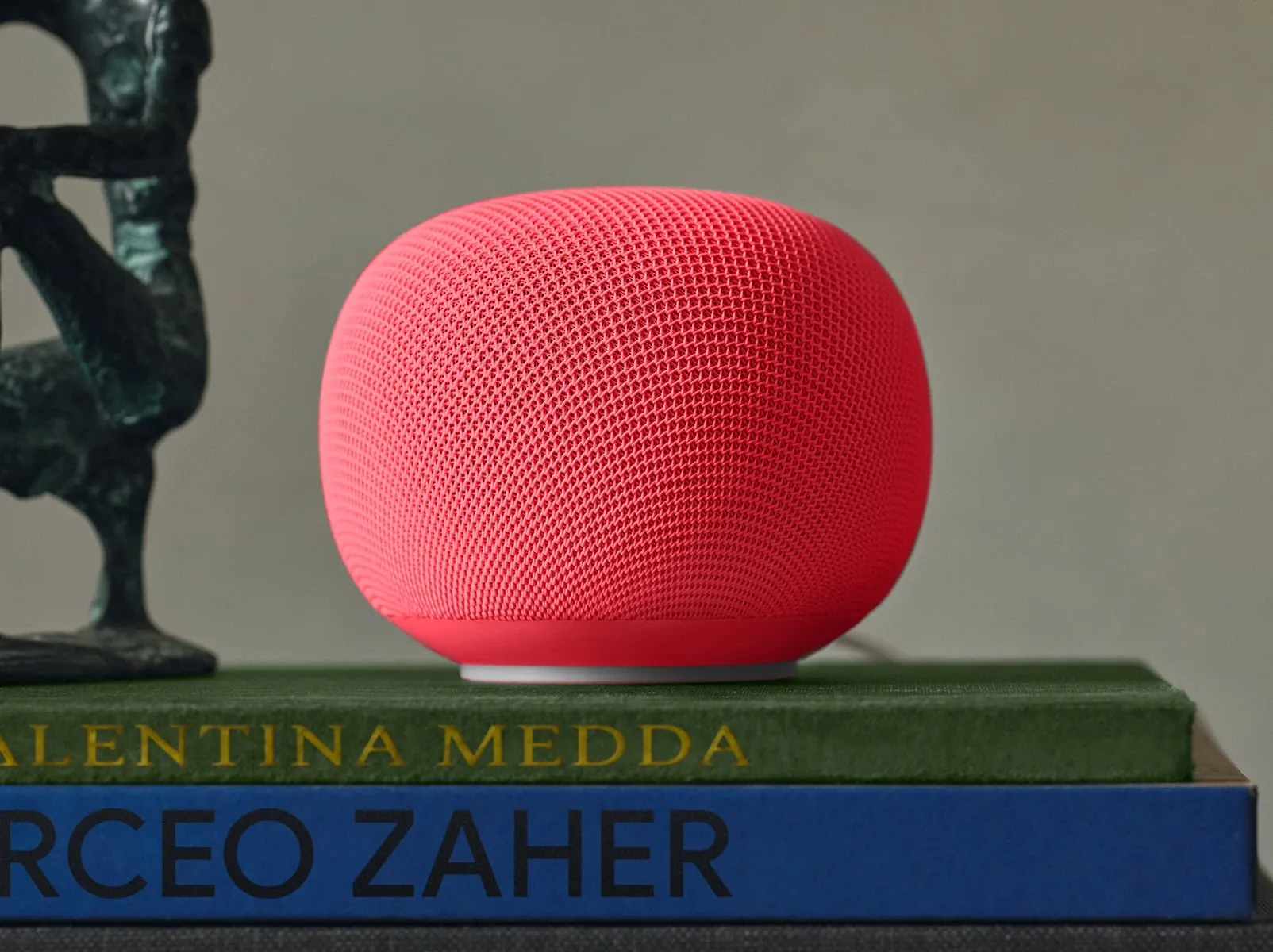
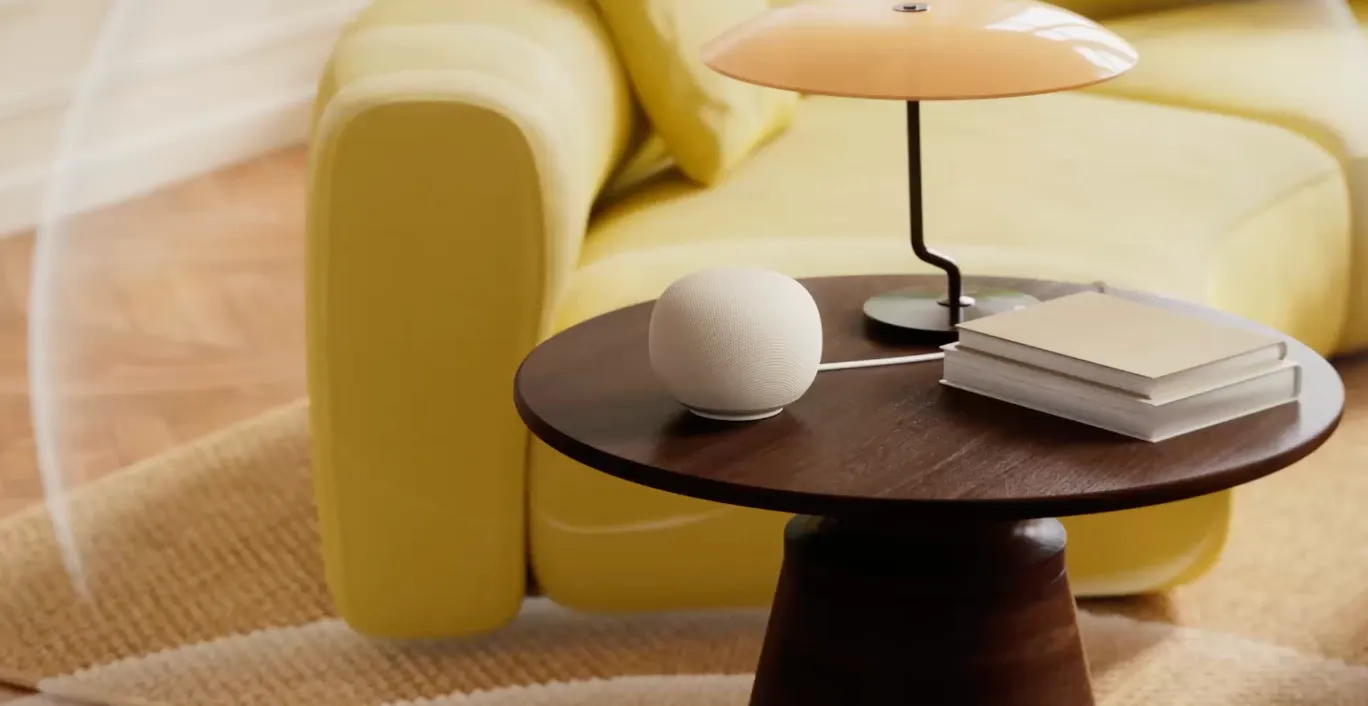
Google's new Home Speaker is finally here, and the first reviews point to a clear trade-off: this is a Gemini-first smart home device, not a straightforward Nest Audio replacement.
An early unboxing surfaced before launch with one practical drawback already in view. The $99.99 speaker has a permanently attached power cable that runs about five feet, with a removable 30W power brick at the other end. If the cable frays, breaks, or simply is not long enough for the spot where you want the speaker, the design gives you less flexibility than a removable USB-C cable would.
That choice matters because Google has pitched the new Home Speaker as easier to place around the house than the taller Nest Audio. A shorter, fixed cable adds a placement constraint of its own, especially for shelves, kitchen counters, nightstands, and entertainment setups where outlets are not always nearby.
Built for Gemini, not bigger sound
Google's new speaker is less about replacing a living room audio device and more about putting Gemini for Home into more rooms. The Google Home Speaker product page lists the device at $99.99 and highlights Gemini, Google Home Premium, 360-degree sound, speaker groups, Google TV Streamer pairing, and a six-month Premium trial.
The hardware supports that direction. The speaker works as a Matter controller and Thread border router, so it can help connect compatible smart home devices such as lights, locks, plugs, and sensors through Google Home. It also supports stereo pairing with another Google Home Speaker and spatial surround-sound pairing with a Google TV Streamer.
Google also built the speaker around local processing. In a briefing covered by The Verge, Anish Kattukaran, chief product officer for Google Home, said the device runs local models for noise cancellation, echo suppression, and sound separation. That should help the speaker hear voice commands more reliably in noisy rooms, especially when music, TV audio, or kitchen noise is competing with your voice.
The trade-off is audio ambition. Google is not claiming the new speaker beats Nest Audio on sound quality. The Nest Audio used a 75mm woofer and a 19mm tweeter; the Google Home Speaker uses a single 58mm full-range driver. That does not make the new speaker weak, but it changes what kind of upgrade this is.
Early reviews sharpen the trade-off
The first reviews are more useful than the early unboxing alone. In two days of testing, The Verge found that the speaker handled wake words reliably, produced strong sound for its size, and had more bass than expected from such a small device. It also found that the hidden controls and bottom light ring could make the design feel less intuitive than it looks.
Tom's Guide reached a similar middle ground in its Google Home Speaker review. The review said Gemini was the main upgrade and that the speaker performed well for its size, but it also flagged the non-removable cord and said the audio improvements were modest rather than a major leap over competitors.
There is another practical limit worth knowing before buying: the speaker supports Google Cast, but not standard Bluetooth playback. That makes it less flexible than a typical Bluetooth speaker if you want to quickly play audio from any phone, tablet, or laptop without staying inside Google's casting ecosystem.
That limitation does not matter as much if you already use Google Home, YouTube Music, Spotify Connect, or Cast-compatible apps. It matters more if you want one compact speaker that can handle audio from an Android phone, iPhone, work laptop, or guest device with minimal setup.
Who should buy it — and who should wait
The strongest upgrade case is for Nest Mini owners. The new Google Home Speaker offers stronger audio, better voice pickup, Gemini-first hardware, Matter support, Thread support, and Google TV Streamer pairing. For someone using a Nest Mini mostly for timers, quick answers, smart lights, and background music, this is a much more capable device.
Nest Audio owners have a harder call. The new speaker is more compact and better aligned with Gemini, but it is not positioned as a clear sound-quality upgrade. If your Nest Audio still sounds good and you mainly use it for music, early reviews suggest there is no urgent reason to replace it.
First-time Google smart speaker buyers should think about the ecosystem before the speaker. This device makes the most sense if you already use Google Home, Nest cameras, Chromecast or Google TV Streamer, Google Cast, and compatible smart home devices. It makes less sense if you want the most open speaker for Bluetooth playback or the best standalone audio quality at $99.99.
Google has also narrowed the lineup. The Nest Mini and Nest Audio have been discontinued, leaving the Google Home Speaker as the only new speaker option in the company's smart home hardware family. Existing Nest speakers still work, but buyers who want new Google speaker hardware now have one main path.
The subscription will shape the value
The fixed cable is the clearest hardware issue, but the subscription model may matter more over time.
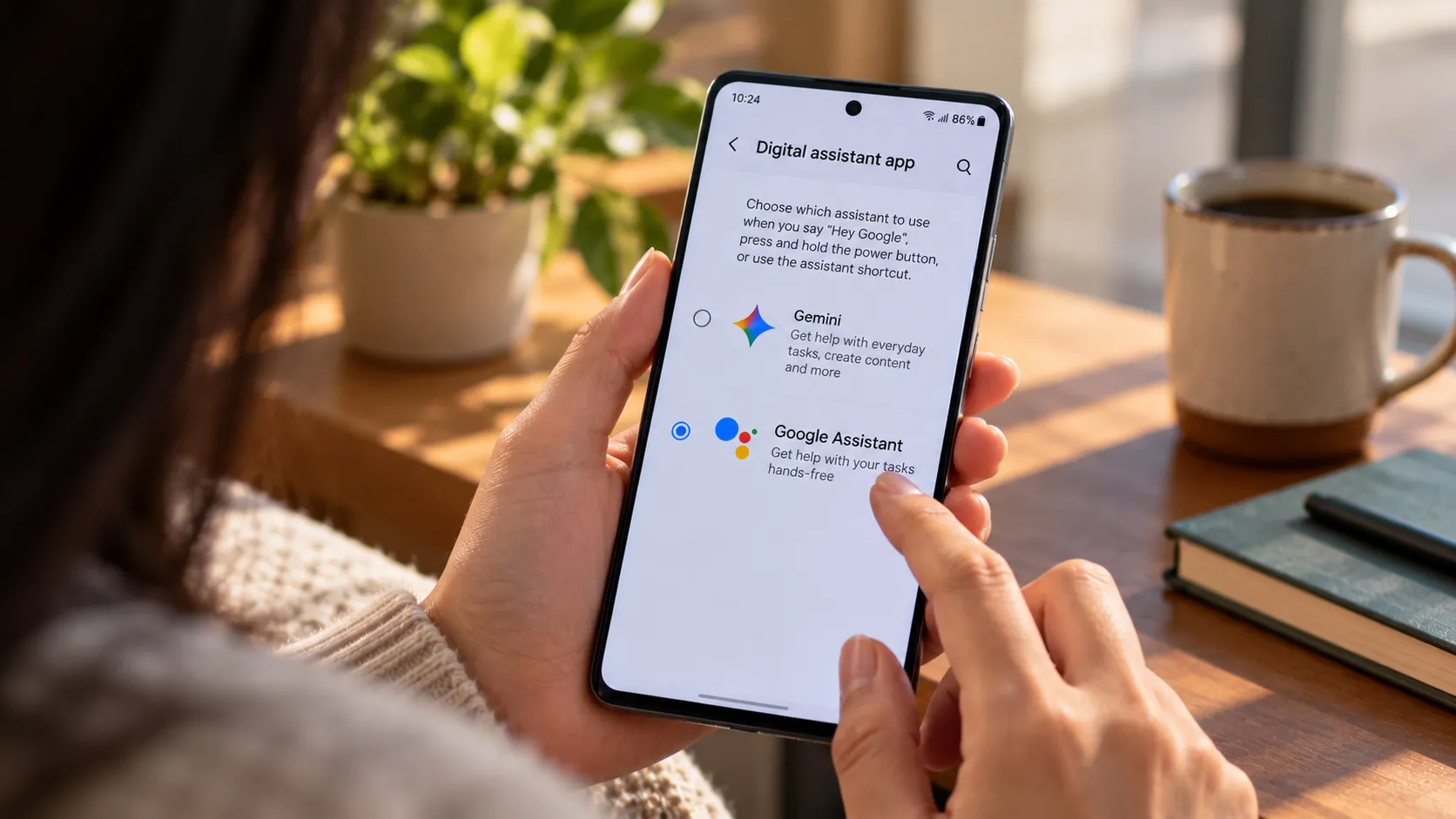
Gemini access is not exclusive to the new speaker. Older supported Nest speakers can use Gemini for Home, but the new hardware is built to run it better. The purchase includes six months of Google Home Premium Standard, which unlocks Gemini Live and more advanced automation creation. After the trial, Premium features require a paid subscription.
Google lists Premium Standard at $10 per month or $100 per year. Premium Advanced costs $20 per month or $200 per year and adds higher-end camera features, including more video history and AI-powered summaries. Wired's review notes that some of the best Gemini features sit behind those paid tiers, which changes how the $99.99 speaker should be judged.
If Gemini Live, camera history search, and advanced routines become part of your daily setup, the six-month trial could make the speaker feel like a meaningful smart home upgrade. If not, the device becomes a compact Cast speaker with better voice pickup, a fixed cable, and fewer reasons to replace older hardware that still works.
Nest Mini owners have the clearest reason to upgrade. Nest Audio owners, Bluetooth-first listeners, and anyone buying mainly for sound should compare reviews before replacing a speaker they already like. The Google Home Speaker looks like a better gateway into Gemini than a universal smart speaker upgrade, and its fixed cable is the first sign that Google designed it around the Google Home ecosystem before everything else.





Comments
Be the first, drop a comment!