





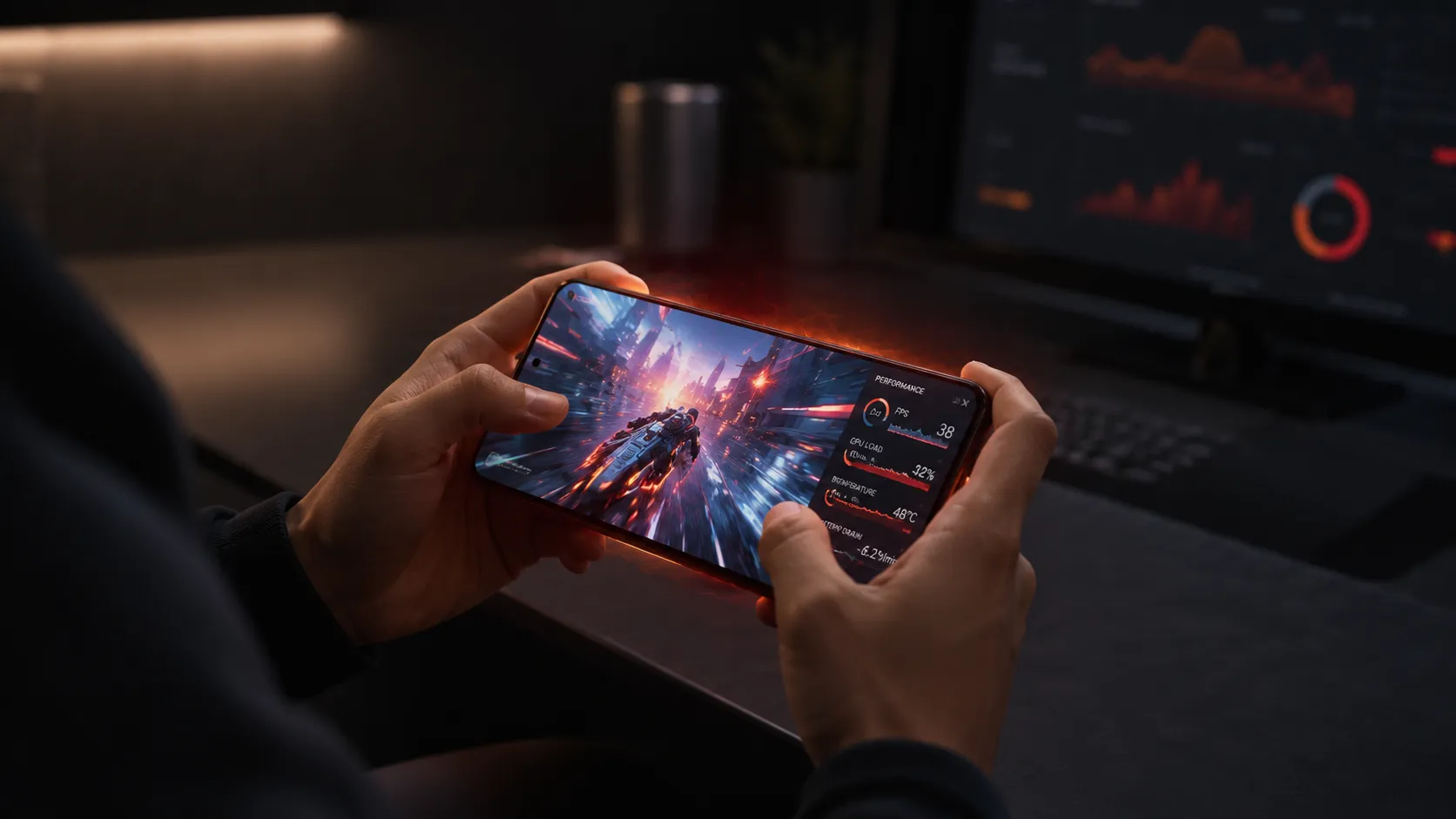
Nearly two-thirds of Pixel fans say the Tensor G5's weaker gaming performance doesn't factor into their buying decision. On its face, that sounds like a clean win for Google. It isn't, and understanding why requires reading past the headline number.
An Android Authority poll published on May 1, 2026, drew 6,310 votes. Exactly 62.7% said the gaming performance gap doesn't affect their purchase decision. Another 34.6% said it actively puts them off buying a Pixel. A third group, 2.7% or 173 respondents, said they wouldn't buy a Pixel regardless of chip performance. That last slice matters: it tells you these aren't disillusioned converts inflating the "deterred" camp. The two-thirds who remain unbothered by Tensor G5 gaming performance are specifically saying gaming isn't their concern, not that Tensor is fine.
Most Pixel buyers don't need 120fps. But they do need a flagship phone that delivers adequate headroom for sustained real-world use: multitasking, thermal stability, battery endurance, and a device that doesn't age badly by year three. The gaming benchmark is where Tensor's shortfall first becomes measurable. The headroom problem is where it actually lives.
There is one important update, reported by Android Authority, since the first wave of Tensor G5 gaming criticism: Google has begun rolling out GPU driver improvements through Android 16 QPR3 Beta 1. Early testing shows real gains in some titles, including smoother Genshin Impact and Asphalt Legends performance, but the update does not erase the broader gap against Snapdragon flagships or fully fix weak Vulkan/emulation results.
Why the Tensor G5 performance gap is structural, not generational
The scale of Tensor's drift from the competition matters before getting to what users actually experience, because it explains why patience has run thin after five chip generations, not just one.
Android Authority's benchmark analysis from last month, using 3DMark's Wild Life Extreme, shows Tensor delivering roughly 50% GPU performance improvement from the Pixel 6 Pro to the Pixel 10 Pro across five generations. Competing chipmakers logged approximately 300% gains over the same period. In concrete terms: the Pixel 10 Pro barely sustains 40fps in Genshin Impact at maximum settings, while Snapdragon rivals hold 120fps in COD Mobile with better visuals and lower power draw.
The PowerVR GPU Google chose for the Tensor G5 appears to have contributed to the problem. Android Police noted last year that the chip's gaming output landed at average to below-par, with unusually low benchmark scores suggesting outdated GPU drivers may be partly responsible. Google has since started addressing that driver gap through Android 16 QPR3 Beta 1, which updates the Pixel 10 series to Imagination's newer 1.634.2906 GPU driver and adds Vulkan 1.4 support. Early testing suggests that is a partial fix rather than a reset of Tensor G5's competitive position.
Android Authority's post-update testing found an 8.6% average frame-rate gain in Asphalt Legends and a 17.9% gain in Genshin Impact, while COD Mobile improved by only 2–3%. The outlet's broader takeaway was that games and emulators will likely see an average gain of around 9%, useful for Pixel 10 owners but not enough to turn Tensor G5 into a top-tier gaming chip.
The TSMC transition was supposed to change the trajectory. Google's move from Samsung's foundry to TSMC's 3nm process for the Tensor G5 was the most significant manufacturing shift in the chip's history, and it came after years of community pressure. It delivered some gains, especially around thermals and CPU uplift, but it did not close the performance or efficiency gap with the best Snapdragon- and Apple-powered flagships. Android Police found last year that the Tensor G5 still trails flagship Snapdragon chips from two years prior on overall performance metrics. Battery efficiency remains well behind both Qualcomm and Apple. Thermals appear improved versus earlier Tensor Pixels, and some reviewers found the Pixel 10 generation cooler in everyday use, but user complaints and benchmark testing still point to an efficiency deficit under sustained or demanding workloads.
One of the strongest rebuttals to any foundry-based excuse comes from Xiaomi. The Xring O1, Xiaomi's in-house chip, uses the same TSMC 3nm process as the Tensor G5 and manages to rival the Snapdragon 8 Elite in performance, per Android Police. Same foundry, very different result. That makes the gap look more like a chip-design problem than a simple manufacturing constraint.
This context sets the ceiling on Pixel fan patience. The 62.7% who say gaming doesn't deter them aren't a fresh audience encountering Tensor for the first time. They've absorbed five generations of compounding underperformance and are still choosing Pixel for other reasons. That tolerance is borrowed, not unlimited.
What "I don't game" actually means in daily use
The readers who say gaming doesn't concern them aren't saying they have no performance expectations. They're saying frame rates are not their primary test of whether a flagship phone has enough headroom. That's a specific and narrow carve-out, and the comment evidence shows exactly where the concern picks up once gaming drops out of the conversation.
Reader Rashid Gattis, a Pixel 10 Pro XL owner, described what actually pushes his phone to its limits: not games, but running gig-economy apps simultaneously during a work shift. Delivering Amazon packages means navigation, logistics apps, and communication tools all running in parallel. His conclusion was direct: "I need a flagship phone that has the headroom for what I do," and he doesn't believe the Tensor provides it, per Android Authority. He added that he doesn't believe a Snapdragon device would have the same problems.
That example is worth dwelling on because it complicates the easiest defense of Tensor's poll numbers. "Non-gamers are fine" only holds if non-gamers don't push their phones, and a meaningful portion of Pixel's user base does push them, just not in ways that show up in frame rate tests.
The thermal complaint carries the same weight. Reader Jim Vlahos told Android Authority that his concern isn't raw benchmark scores but persistent overheating and poor battery life, and that the heat itself shortens battery lifespan over time. That's not a gaming complaint. It's a durability complaint with a direct financial implication for someone who paid over $1,000 for a device they expect to own for three or four years.
Vlahos isn't an outlier on this. Reader pjauger, who said he's largely satisfied with his Pixel 9 Pro for everyday use, acknowledged the same underlying issue: the phone handles apps and browsing fine, but that baseline is exactly where the bar sits, per Android Authority. Adequate for ordinary tasks is a thin buffer once workloads compound.
A third reader, maxmousee, made the longevity calculation explicit: the Pixel 10 Pro doesn't feel slow today, but starting from a performance deficit means it will age worse than a Snapdragon alternative. "A 10% gap is acceptable," he wrote, "but the current state is not. Not for a full price device," per Android Authority. A gap that's tolerable at launch compounds over a device's lifetime.
Efficiency is the mechanism connecting all three complaints. Android Police found that Qualcomm and Apple still deliver far better power efficiency than the Tensor G5 despite the TSMC upgrade. A less efficient chip is more likely to run hotter under sustained load, drain faster, and leave less performance reserve for demanding tasks. That's why the same chip that struggles at 90fps in COD Mobile also struggles under a stack of gig-economy apps: it's the same headroom problem surfacing in different contexts.
Premium pricing, mid-pack silicon: the value gap that unifies the complaints
Tensor's performance deficit would land differently at a different price point. At a budget or mid-range price, moderate GPU performance and average battery life are acceptable trade-offs. Google is asking flagship money for the Pixel 10 Pro, and that changes the calculation entirely.
Android Police made the expectation plain last year: when a consumer spends $1,000 on a smartphone, they expect popular Android titles to run smoothly. Reader sentiment captured in Android Authority's October 2025 analysis was considerably sharper: Tensor has come to feel like a budget chip sold at luxury prices, with Pixel now offering worse value than competing Galaxy or iPhone devices at comparable price points. One reader framed it bluntly, describing the experience as paying Porsche prices for a hopped-up Mustang.
The counterargument deserves a fair hearing. A phone's price reflects more than its processor. Pixel offers extended software support, first-party Android integration, and on-device AI that Android Police explicitly acknowledges as a genuine strength. Taken individually, each of these advantages is real.
The problem is that they're narrowing at exactly the wrong time. Pixel's camera lead on stills has largely closed as competitors caught up, while Google remains behind on video, per Android Authority's October 2025 analysis. AI features are genuinely useful but increasingly available on Snapdragon devices. Even Pixel's most committed software-first defenders, including Jim Vlahos, concede the core point: Snapdragon does what Tensor does, faster, more efficiently, and increasingly at the same price, per Android Authority.
The premium pricing case requires non-chip advantages to keep pace with a performance deficit that is now five generations deep. That case requires more justification with each cycle.
Tensor G5 overheating, efficiency, and the multi-year ownership problem
It's worth being precise about what "efficiency deficit" means for someone buying a phone today and planning to use it for several years.
Sustained heat can contribute to faster battery degradation, especially when it repeatedly occurs during heavy workloads or charging. Jim Vlahos flagged this directly, per Android Authority: persistent overheating doesn't just affect the current session, it quietly erodes the battery's long-term capacity. Combine that with a starting point that already trails the best competitors on battery life, and the ownership math gets worse with time rather than stabilizing.
Performance longevity compounds the issue. Android Authority's benchmark data shows competitors gaining 300% over five generations while Tensor managed 50%. That trajectory means the gap between a Pixel device and a Snapdragon alternative widens over a product's usable life, not just at the moment of purchase. A device that feels adequate in year one may feel genuinely constrained in year three, exactly when the gap maxmousee described starts to show up in ordinary use.
Android Police noted last year that the Pixel 10 Pro XL's battery life was above average but no longer competitive with the best Android alternatives, with devices like the OnePlus 13 capable of surviving a day and a half of heavy use. Above average is not a selling point for a device priced at the top of the market.
Google's chip team has been here before: the Samsung foundry era brought persistent thermal and connectivity problems that took multiple generations to partially address. The TSMC move was supposed to be the clean break. For Tensor G5, it wasn't.
What Pixel buyers should actually take from this
Three things the evidence supports clearly; one it doesn't.
The poll result is real and shouldn't be dismissed. Most Pixel buyers are not walking away over Tensor G5 gaming performance, and 62.7% said as much directly. For everyday users who want Google's software experience, AI integration, and clean Android, the gaming shortfall is genuinely not a dealbreaker. If that's your use case, the poll reflects your priorities accurately.
The headroom concern is broader and more durable than the gaming complaint. Non-gamers reported hitting performance ceilings during sustained multitasking, dealing with thermal and battery degradation, and worrying about longevity. Those complaints don't require a single gaming session to surface. They emerge from ordinary use over time, and they're the ones the poll numbers don't capture.
The TSMC transition improved thermals but didn't resolve the fundamental efficiency and performance deficit, per Android Police. The Xring O1 comparison undercuts the idea that this is purely a foundry constraint. Early Tensor G6 rumors, which remain unconfirmed, suggest Google may still prioritize efficiency, AI, and Pixel-specific integration over chasing Qualcomm's highest-end GPU performance. That's a significant variable for anyone making a multi-year purchase decision today.
What the data doesn't resolve is whether this dissatisfaction shifts mainstream Pixel purchase behavior or stays contained to the enthusiast audience captured in this poll. The 6,310 respondents are engaged Android readers, not a representative cross-section of buyers. The frustration documented here is specific and credible.
Google's remaining path forward isn't complicated to describe, even if it's hard to execute: driver updates like Android 16 QPR3 can recover some lost performance, but Tensor still needs to justify its existence through sustained real-world performance, efficiency, and longevity, not just AI differentiation. AI advantages are also becoming less Pixel-exclusive as more Android flagships add comparable on-device and cloud-assisted features. If Tensor can't deliver meaningful endurance gains and adequate headroom for demanding use cases, it stops functioning as a reason to choose Pixel and starts functioning as a reason to leave. The enthusiast community is saying that clearly. The commercial signal could follow if nothing changes.




Comments
Be the first, drop a comment!