



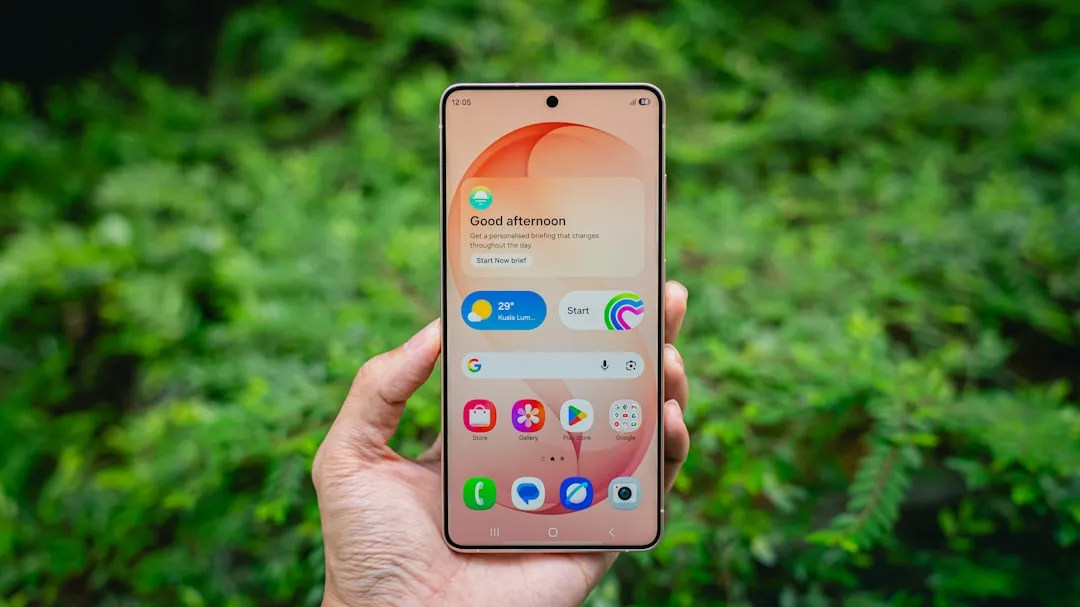
Seven years of software support is the number both Samsung and Google lead with now. It's on the spec sheets, in the press releases, woven into the sales pitch for devices like the Galaxy S24 Ultra and the latest Pixel phones. The implication is straightforward enough: buy this phone, and we'll keep it running well for most of a decade.
What neither company puts on the box is what "support" actually means in practice. Or what happens when the updates themselves are the problem. Samsung and Google's update promises have outrun reality, and the gap is wide enough to matter.
The March 2026 Pixel Drop made that plain. Widespread reports emerged of excessive battery drain across newer and older Pixel models, including the Pixel 7 and 8 lines and the brand-new Pixel 10 series, occurring even while phones sat idle, Android Authority reported. The April follow-up came and went without fully resolving it. This is Google, which controls the Pixel hardware-software stack end-to-end. The company with seven years on the box.
The real argument here isn't that Android updates are bad. It's that the market has confused longer support with better support. Duration is measurable, so that's what gets marketed. Quality, transparency, and user agency are harder to quantify and easier to ignore.
What good support actually requires
"Software support" is vague enough to cover almost anything, so the standard needs to be stated before anyone gets scored against it.
A useful definition has four parts: updates arrive on a predictable schedule; they don't introduce significant new problems; the company communicates clearly when something goes wrong; and users retain meaningful say over what changes on their device. None of those criteria is unreasonable. All of them, as the record shows, are being violated somewhere.
Google's Project Mainline, launched in 2019, was designed to make the first two easier to hit. The idea was to split Android updates into two tracks so key features and security components could reach users directly, bypassing the OEM customization layer that had historically delayed critical fixes by months, Android Authority explained. The concept was sound.
In practice, it added friction instead of removing it. Google Play system updates are separate from regular OS patches, don't always download automatically, and require a manual trigger from a different settings menu than standard system updates, the same report noted. Most users never encounter the distinction until something breaks. The architecture didn't simplify update delivery; it split the confusion into two categories.
Samsung software update problems: delay, then silence, then more delay
Samsung's failures follow a consistent pattern. Something gets withheld. An explanation arrives late, or not at all. Users are left guessing.
The One UI 7 rollout is the clearest example. New One UI versions typically ship in the fall. By spring 2025, most users without a Galaxy S25 series phone still didn't have One UI 7. That's a full season past the expected window.
Then Samsung made it worse: it pulled the firmware for the Galaxy S24, Z Fold 6, and Z Flip 6 just days after releasing it, citing a need to revise the rollout to ensure the "best possible experience," a statement that explains nothing. Leaker accounts and Reddit posts pointed to some Galaxy S24 owners being unable to unlock their phones after installing the update, though Samsung offered no formal confirmation of the specific problems.
Samsung's stated defense is that it only distributes software after internal verification. That argument would carry more weight if the verification had caught the unlock issue before the update went out. The caution rationale and the pulled rollout cannot both be true as presented.
The opacity extends further, into a less-visible category of updates. Samsung was simultaneously withholding Google Play system updates from Galaxy devices, including the flagship S25 series, leaving some users on July 2025 builds, others on September 2025, with no notification that anything was being held back. When pressed, Samsung confirmed to a German publication that it had suspended distribution to avoid potential issues, with updates set to resume in January 2026. This isn't new behavior. Samsung displayed the same pattern in 2023, stranding Galaxy users on stale Play system builds before resuming updates in early 2024.
The stakes are higher than a version number. Play system updates carry features like the Privacy Dashboard, Digital Wellbeing, and theft protection, components Google specifically designed to move fast without waiting for OEM sign-off, Android Authority noted. Samsung's gating effectively negates that intent. Because users see no pending update in their settings, they have no way of knowing the withholding is happening at all.
Timely: no. Transparent: no. The caution argument is undercut by the rollback that happened anyway.
Why Samsung and Google update promises fail the real test
Google's situation is more complicated than Samsung's, which is part of why it's more damaging. Pixel phones are the reference Android experience, Google's direct argument for what the platform can be. Monthly regressions aren't just a Pixel problem; they're a statement about Android's reliability as a platform.
Pixel users have been especially unlucky, with nearly every monthly update introducing new challenges to daily use. The March 2026 episode fits that pattern exactly. Reports of excessive battery drain spread across a range of Pixel devices, with phones dying hours early even while sitting idle.
One Pixel 9 Pro owner described going from a full day on a single charge to needing two or three charges daily. A Pixel 10 Pro owner reported endurance dropping from 16 hours to barely 12. The same update altered charging optimization behavior and sent a subset of devices into an endless boot loop.
One user proposed a GPS-related bug preventing the CPU from entering Android's Doze low-power idle state as the possible cause. Google had acknowledged the issue in its tracker as of that reporting, but the suspected cause remains unconfirmed.
The Play system update architecture failed on Google's own hardware, too. Last summer, Pixel phones running Android 16 encountered a bug where manually checking for a Play system update would start a download that then failed to install, leaving affected devices stuck on the May 2025 build. Reports say Google confirmed the problem and told users not to factory reset while a fix was prepared. The system, designed to bypass OEM bottlenecks, had created its own bottleneck on the reference device.
Then there's the harder case. Last July, Google pushed a mandatory update to Pixel 6a devices that would permanently reduce charging speed and capacity once a battery reached 400 charge cycles. The justification was safety: there had been reports of Pixel 6a phones bursting into flames, Ars Technica reported. This was the second such intervention in a single year, following near-identical action on the Pixel 4a. Google also pulled previous software versions to block rollbacks, removing any option to decline. Compensation options included $100 cash, $150 in Google Store credit, or a free battery replacement, subject to eligibility conditions.
The safety rationale holds. Phones that catch fire are a genuine hazard, and Google was responding to documented incidents. What safety doesn't explain is the underlying engineering failure that produced defective battery hardware in the first place. It's Google's budget phones ending up with defective batteries, a pattern worth noting even if it isn't a settled verdict.
The Pixel 6a carries guaranteed updates through 2027. The mandatory degradation arrived while users were still inside that window, with no opt-out and no rollback path. Google claims a goal of "longer-lasting products" and promotes recycled materials as markers of environmental responsibility. Mandatory software changes that reduce a phone's usability, with previous firmware blocked, push devices toward e-waste faster. If Google has to nerf phones a few years after release, the sustainability framing doesn't hold.
On stability, Google fails with repeated monthly regressions. On infrastructure, it ships an update mechanism that breaks on its own hardware. On user agency, it forces degradations with no opt-out. On transparency, it's slow to confirm issues and, in the Pixel 6a case, silent about the design failures that made the intervention necessary.
A sharper checklist for evaluating update commitments
Google's Play system architecture has now failed on both sides. Samsung blocks updates behind its own verification process for months; Google's Pixel devices suffered a broken installer that left phones on stale builds. The modular approach didn't eliminate fragmentation. It added a new layer, with less visibility into where the problem originates.
Samsung delays and obscures. Google ships fast and sometimes ships damaged. Different failure modes, same underlying problem: users are treated as passive recipients rather than people with a legitimate interest in what happens to their devices.
So when a phone maker announces a multi-year update commitment, four questions are worth asking before the number impresses you. How quickly do major OS updates typically reach non-flagship devices, and is there a public explanation when they're delayed? How often are rollouts paused after shipping, and what disclosure comes with those pauses? When an update causes problems, does the company acknowledge them promptly and address them in the next cycle? And when a software change reduces what your device can do, do you have any real say?
If a company won't say when updates ship, won't say what broke, or won't let you avoid a destructive fix, the promise is cosmetic. Neither Samsung nor Google clears all four bars consistently. Seven years is marketing. What happens inside those years is the product.


Comments
Be the first, drop a comment!