





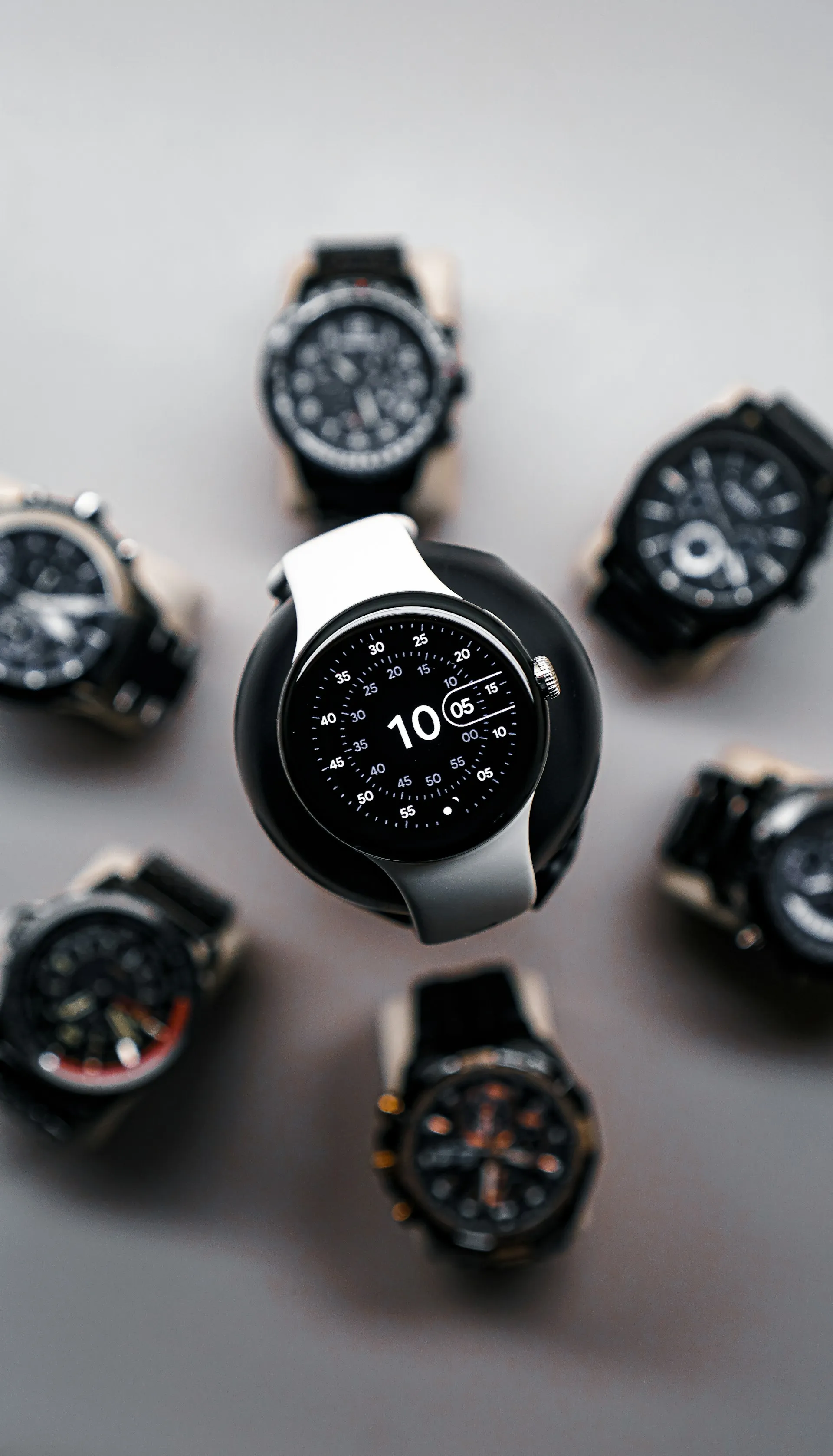
Recent APK analysis reveals Google may be developing a solution for one of the Pixel Watch's most persistent annoyances. While specific implementation details remain under wraps, the implications for Pixel Watch users could be significant—finally addressing one of those everyday frustrations that makes you wonder why such a basic interaction doesn't just work properly.
Let's be honest: the Pixel Watch's current notification handling has been a source of user complaints since launch, and for good reason. You know the drill—you're going about your day when your watch buzzes with a notification. You naturally lift your wrist to see what just came in, and... nothing. A blank screen stares back at you while you're left doing that awkward double-take wrist flip, trying to convince your watch that yes, you actually do want to see what just alerted you.
This creates a genuinely frustrating disconnect between receiving a notification alert and actually being able to read it—particularly during active periods when you're walking between meetings, working out, or even just gesturing during a conversation. The watch's motion sensors struggle to distinguish between intentional "show me my screen" movements and regular arm activity, leaving you caught in that maddening moment where your brain expects information, but your wrist delivers disappointment.
Why current wake behavior falls short
The root of this frustration lies in how the Pixel Watch currently manages its wake states and power consumption. Google's approach has been notably conservative here, prioritizing battery life over immediate responsiveness. While that's not necessarily wrong from an engineering perspective—battery life matters enormously in wearables—it creates this noticeable user experience gap that becomes more annoying the more you rely on your device.
Here's what's happening behind the scenes: when you're moving around, working, or just living your life, the watch's motion sensors are constantly processing accelerometer and gyroscope data to differentiate between intentional raise-to-wake gestures and regular arm movements. The current algorithm reportedly requires fairly deliberate wrist rotation and elevation patterns before triggering display wake—a threshold that often proves too restrictive during the natural, quick glance motions we make when notifications arrive.
The ambient display does provide basic notification previews, but accessing full message content, actionable buttons, or detailed information requires completely waking the main display. This two-step process breaks the natural flow that users expect: hear notification, raise wrist, immediately see and potentially act on the information.
The potential "Immediately" wake solution
Based on APK teardown findings, Google appears to be working on what looks like an "Immediately" wake setting. While we don't have complete implementation details, the feature name suggests a fundamentally different approach to display wake behavior during those critical moments right after notifications arrive.
This would presumably create temporary windows of heightened wake sensitivity triggered by incoming notifications. Instead of using the same motion detection thresholds all the time, the watch would become significantly more responsive to subtle wrist movements during brief periods following notification delivery. Think of it as giving the watch a temporary boost in attention span precisely when you're most likely to need it.
The technical implementation would likely involve reducing accelerometer sensitivity thresholds and shortening the gesture recognition timeouts immediately after notification events. Rather than waiting for the deliberate, sustained wrist raise patterns currently required, the system would respond to much more natural glance motions—the kind of quick, instinctive movements we actually make when something buzzes on our wrist.
Balancing responsiveness with battery life
Here's where the engineering challenge becomes particularly interesting. More aggressive wake behavior inevitably increases power consumption through additional screen activations, processor wake events, and sensor polling frequency. Google would need to implement smart timing windows that provide enhanced responsiveness without devastating battery performance.
The "Immediately" setting would likely activate enhanced wake sensitivity for limited durations—perhaps 10-15 seconds following notification delivery. This would capture the natural response window when users typically check their notifications while avoiding the battery drain of constant high-sensitivity monitoring. The system might also differentiate between notification types, applying immediate wake behavior to messages and calls while using standard sensitivity for less urgent app notifications.
Context awareness would be crucial for success. The feature might need to adapt based on movement patterns detected before notification arrival—applying different sensitivity levels when users are walking versus sitting stationary, or during active hours versus sleep periods when accidental wake events become more problematic.
What this means for Pixel Watch users
If Google successfully implements this notification wake improvement, it could genuinely transform one of the most fundamental smartwatch interactions. We're not talking about a minor convenience feature here—reliable notification checking sits at the core of why people wear smartwatches in the first place. When this basic interaction feels broken or unpredictable, it affects your relationship with the device throughout every single day.
The success of such a feature will depend heavily on providing users control over activation triggers and sensitivity levels. The ideal implementation would offer granular settings: which notification types trigger immediate wake behavior, how long the enhanced sensitivity window lasts, and perhaps even time-based scheduling for when the feature activates.
Most importantly, the feature should feel completely transparent to users. You shouldn't need to learn new gestures, remember timing windows, or adjust your natural notification-checking behavior. The technology should simply eliminate that frustrating gap between notification arrival and information access, making the interaction work the way your brain already expects it to.
Where does this leave Pixel Watch owners?
Let's be realistic about development timelines: APK teardowns reveal features in various stages of development, many of which never reach production devices. Google's internal testing often explores multiple approaches to solving user experience problems, and implementation details frequently change dramatically between early code and final release.
For current Pixel Watch users managing notification wake frustrations, optimizing existing raise-to-wake sensitivity settings remains the best immediate approach. More deliberate wrist movements and positioning awareness can help trigger the current system more reliably, though this obviously isn't the seamless experience users should expect from premium wearable technology.
The broader picture here shows the rapid evolution happening across smartwatch software. Manufacturers are continuously learning from real-world usage patterns and refining these core interactions based on user feedback. What feels like a limitation today could become a completely solved problem with the right software update—assuming Google follows through on bringing this potential improvement from development code to actual user wrists.
Bottom line: this potential notification wake enhancement represents exactly the kind of practical, user-focused improvement that could significantly elevate the Pixel Watch experience. Whether it materializes as a shipping feature remains to be seen, but the fact that Google appears to be actively working on this problem suggests they recognize how important getting these basic interactions right really is.



Comments
Be the first, drop a comment!