



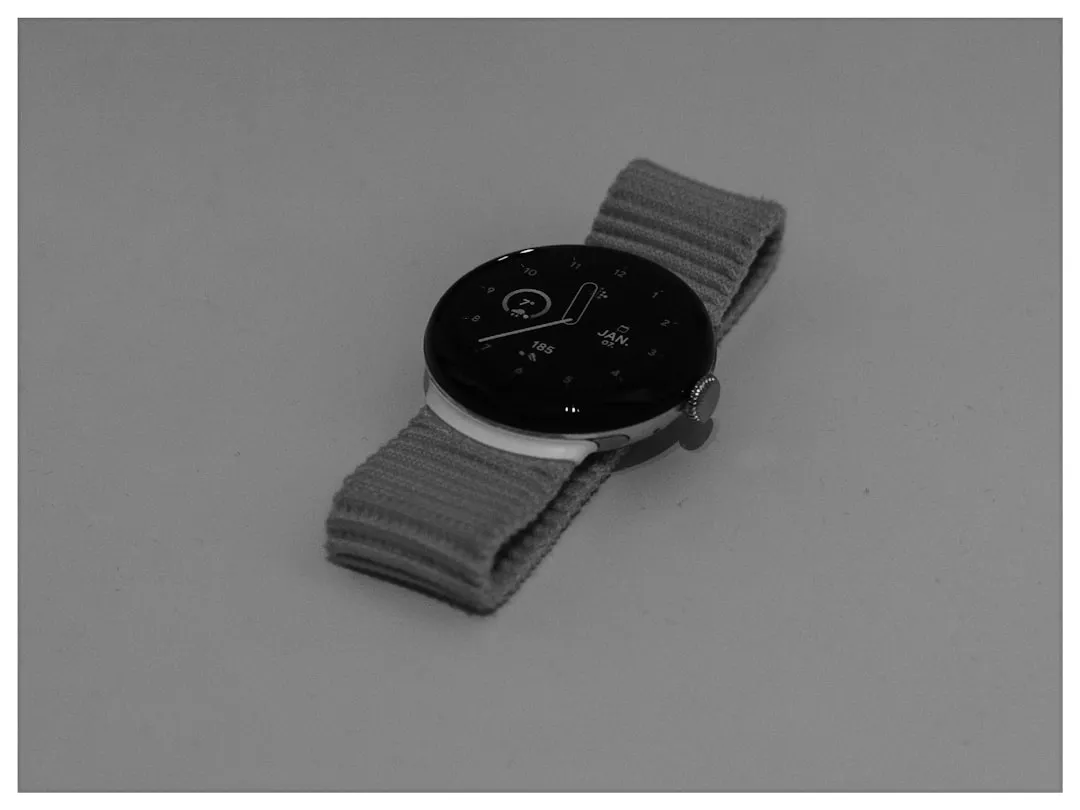
Google's ECG app has stopped opening for a reported subset of Pixel Watch owners, returning a loop that tells them to reopen the app and try again with no result, no matter how many times they try. Reports include Pixel Watch 2, 3, and 4 users. Google's support team appears aware of the problem and says a patch is coming, though no timeline has been provided.
No confirmed workaround exists. For now, affected users are waiting on Google.
What the ECG app does and what users are experiencing
The Google ECG app lets users take a 30-second reading that screens for signs of atrial fibrillation, an irregular heart rhythm that often produces no symptoms and goes undiagnosed until it causes more serious complications. It's a health screening tool, not a fitness feature, and that distinction matters when the feature simply stops launching.
The app was previously known as the Fitbit ECG app, rebranded as Google moves away from the Fitbit name. Multiple users on Reddit describe an identical failure: the app will not open and displays a "Reopen the app and try again" message on every attempt. One user confirmed it fails without exception on every single launch.
Reports spanning Pixel Watch 2, 3, and 4 point toward a software- or backend-level problem rather than a defect specific to any one hardware generation. That said, how widespread the issue actually is remains unclear. Android Authority has tracked several reports, but the total number of affected users, which regions are seeing the failure, and whether specific firmware or app versions are involved are all unknown.
Atrial fibrillation is worth understanding here. It's one of the most common heart rhythm disorders and a leading risk factor for stroke, but it often produces no obvious symptoms. The ECG app exists to let users take an on-demand reading for signs of AFib, which is why losing access to it is different from losing a step counter. You might notice a zeroed-out step count immediately; you'd have no way of knowing what the ECG app missed while it was broken.
What Google has said and what affected users can do right now
The clearest signal that Google knows about the problem comes not from an official announcement but from a support response shared in a community thread. Per Android Authority, a commenter claims the support team replied: "We are currently working to resolve the issue and plan to implement the fix in the near future." No firm date is attached.
The support reply also tells users to keep their "Fitbit device and app" up to date — language that still uses the old brand name for a product now sold under the Google label. No formal public statement from Google addressing this bug exists. What's available is secondhand, surfaced through a community thread rather than a product blog or official support page.
For affected users, the guidance on record amounts to: keep firmware and the associated app updated, and wait. Earlier Pixel Watch health-feature failures in March offered at least one documented workaround; a factory reset reportedly resolved SpO2 and skin temperature issues for some users, a step the PixelCommunity Reddit account itself endorsed, per Android Authority. No equivalent fix has been documented for the current ECG failure. A factory reset is a significant intervention, and there's no basis in available reporting for recommending it here.
The practical picture for anyone affected: the ECG app is blocked, Google is aware, and nothing you can do on your end is confirmed to restore access.
A pattern of Pixel Watch health-feature failures and why this one raises the stakes
The ECG outage doesn't arrive in isolation. Since early March, Pixel Watch owners have encountered three reported incidents of broken health features, each met with some version of the same response.
In early March, a software update knocked out overnight SpO2 and skin temperature tracking for some users. Google's PixelCommunity account acknowledged the problem and confirmed a fix was underway, Android Authority reported in March. That same month, a separate bug began zeroing out step counts during aerobic workouts while producing erratic calorie estimates.
One user reported the watch crediting them with 6,000 to 7,000 calories burned in a single day. Step tracking during walking was reportedly unaffected; the bug appeared specific to aerobics and elliptical workouts. A Fitbit community moderator acknowledged the calorie tracking side of the bug and offered a partial workaround, though no fix for the missing steps was documented at the time.
Two months later, SpO2 and skin temperature problems came back in a different form. A Fitbit app update had apparently reset sensor permissions in a way users couldn't manually restore: the permissions page showed no app requesting access, leaving the sensors effectively locked out. Both Pixel Watch 3 and 4 owners were affected.
Google's PixelCommunity account acknowledged the disruption, saying "work is underway to restore access to SpO2 and skin temperature tracking features," and FitbitHelpCommunity followed with nearly identical language.
Whether these incidents share a root cause perhaps the ongoing Fitbit-to-Google platform migration or represent unrelated bugs clustering in the same window is an open question. Google has not publicly connected them. The research documents the pattern; no confirmed explanation ties them together.
What gives the ECG failure particular weight is the identity Google has built around these features. In February 2025, Loss of Pulse Detection received FDA clearance starting with Pixel Watch 3, a feature described as capable of automatically prompting emergency services if a user is unresponsive following cardiac arrest, per Google's announcement.
That same announcement positioned the ECG app alongside car crash detection, fall detection, and irregular heart rhythm notifications as the health and safety tools Google uses to sell the Pixel Watch.
Google's own framing is relevant here. The company has described Pixel Watch as giving people "peace of mind with safety and health features," and spent years building toward FDA clearance to lend that claim institutional credibility. When the features Google uses to sell the watch are the same ones repeatedly going offline, that pitch takes on a different character.
The ECG app is not a diagnostic instrument, and consumer wearable screening has real limitations. But there's a meaningful difference between a fitness tracker glitching out and a health screening tool going dark with no warning and no timeline for restoration.
What to watch for next
The Google ECG app is currently non-functional for a reported subset of Pixel Watch 2, 3, and 4 owners. No confirmed fix exists on the user side, and the only public indication of progress is a support-level acknowledgment that a patch is being worked on.
Three things are worth watching as this develops. First, whether Google issues any formal public acknowledgment beyond the community thread response something on the order of the PixelCommunity posts that accompanied earlier health-feature failures.
Second, whether a firmware or app update lands and quietly resolves the problem, as has happened before, or whether users remain stuck waiting with no visibility into the timeline. Third, and more broadly, whether the fixes hold once they ship.
The March SpO2 fix was followed by a second SpO2 failure in May. That's the more meaningful question here: not just whether this particular ECG bug gets resolved, but whether Google's health software stack can ship updates without regularly breaking the features it's staked its health-safety pitch on.


Comments
Be the first, drop a comment!