





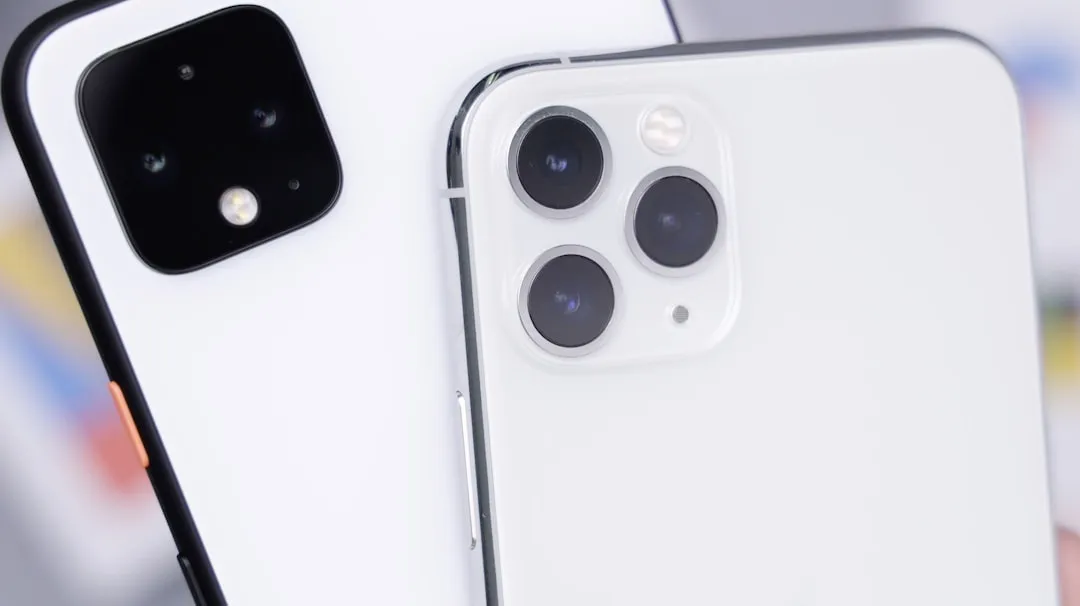
Pixel 11 Pro Renders Show Redesigned Camera Bar and Missing Temperature Sensor
The most interesting thing about the first Pixel 11 Pro renders isn't what's on the back of the phone. It's what may no longer be there. Early CAD renders and third-party case listings suggest Google is restructuring the camera bar and cleaning up the rear panel, and the temperature sensor that debuted with considerable fanfare on the Pixel 8 Pro appears to be absent. These are measurement-based renders from Android Headlines and tipster OnLeaks, not official assets, and the source acknowledges they may not be fully accurate, per Android Authority's coverage yesterday. A case listing from manufacturer ThinBorne provides supplementary clues. Neither source is confirmation.
What makes the inference credible isn't the renders themselves. It's what Google already telegraphed by the time the Pixel 9 shipped: the sensor went from a launch keynote feature to something Google didn't mention once at its next event, and the company left it off the $1,799 Pixel 9 Pro Fold entirely, according to Android Authority's August 2024 coverage. A feature doesn't get cut from the most expensive model without reason.
Leak reporting points to an August 2026 launch for the Pixel 11 series, consistent with Google's pattern over the past two years. What the current leaks suggest, cautiously, is that this will be a refinement cycle and at least one piece of experimental hardware may not survive it.
Could the temperature sensor still be there?
Before treating the inference as settled, it's worth pushing back on it. CAD renders are built from physical measurements of early hardware, not from teardowns or component lists. Case makers work from incomplete dimensional data, and a cleaner-looking housing does not guarantee a feature has been removed. Small sensors occupy small spaces; one missing from a render could simply be a detail that didn't make it into an early case spec.
The renders also don't map individual cutouts against the Pixel 10 Pro's rear panel on a component-by-component basis. The temperature sensor's absence is inferred from the overall cleaner appearance of the housing, not from a direct comparison showing a specific cutout is gone.
That caveat matters. What makes the removal theory persuasive despite those limitations is Google's own behavior before any render leaked: silent inclusion on the Pixel 9 Pro and 9 Pro XL, zero stage time at the press event, and a clean omission from the $1,799 Pixel 9 Pro Fold. That sequence didn't begin with this week's renders. It began in August 2024.
Pixel 11 Pro renders point to a camera bar redesign
Case renders from ThinBorne, published by Android Authority in early March, suggest Google may reduce how far the Pixel 11 Pro XL's camera bar protrudes from the chassis while making the bar slightly larger in footprint, shifting toward a more rounded-rectangle shape compared to the elongated oval on the Pixel 10 Pro. Less protrusion with more surface area suggests Google is redistributing the housing rather than simply shrinking it.
The overall phone barely changes size. CAD-based renders of the Pixel 11, covered by Android Authority yesterday, put its dimensions at approximately 152.8 x 72 x 8.5mm, nearly identical to its predecessor and only marginally thinner, with the same 12GB RAM and 128GB/256GB storage options, a reportedly unchanged 6.3-inch AMOLED display, and a new Tensor G6 chip as the main reported internal upgrade. Bezels are also said to be thinner, giving the phone a slightly more polished look than the Pixel 10.
The Pixel 11 Pro Fold follows the same pattern. Height and width are reportedly unchanged from last year's model, with the most visible difference being a reorganized camera island where the flash and microphone have been relocated inside the pill-shaped cutout, per Android Authority's report from three weeks ago. Pixel 11 Pro bezels and design changes across all three models point in the same direction: cleaner, not fundamentally different.
How Google went from "new feature" to "we don't talk about this"
The temperature sensor's trajectory is unusually well-documented for something that faded this quickly. Google introduced it on the Pixel 8 Pro in 2023 as genuinely novel hardware for a smartphone, capable of measuring object and surface temperatures. Real-world testing complicated that story fast: the sensor proved less precise than the marketing had suggested, and the feature largely stopped coming up in conversation once the novelty wore off, according to Android Authority's testing.
By the Pixel 9 launch, Google had stopped mentioning it. The sensor remained on the Pixel 9 Pro and 9 Pro XL, but didn't receive a single word of stage time during the press event. Carrying a feature without promoting it is a quiet signal. Omitting it from a product is a louder one.
The loudest signal came from the Pixel 9 Pro Fold. At $1,799, it was Google's flagship device that cycle, and the temperature sensor wasn't on it, per Android Authority's August 2024 reporting. That's not an oversight. A feature gets left off the most expensive phone when the team has already decided it isn't earning its place.
Google has followed this logic before. The Pixel 4's Soli radar chip, which powered gesture controls and a face unlock system that rivaled Face ID, was dropped before the Pixel 5 because it was too expensive for the phone Google wanted to build, per hardware chief Rick Osterloh's comments to The Verge. Regulatory friction made things worse: Soli's 60GHz frequency was restricted for civilian use in India and several other markets, limiting which buyers could receive a fully functional device, as Android Police detailed in April 2022.
The temperature sensor didn't face those kinds of regulatory barriers. But the cost-versus-value math was never favorable, and the Pixel 11 Pro missing sensor story looks like Google reaching the same conclusion a full cycle before anyone publicly noticed.
What a quiet removal signals about Pixel hardware strategy
The practical case for dropping the temperature sensor is straightforward: it occupied space and added cost on the rear panel without meaningfully influencing purchase decisions. Reclaiming that real estate, or simply cleaning the panel, costs almost nothing in terms of user value.
The more durable pattern for readers tracking future Pixel rumors: when a feature goes quiet after launch, it usually won't survive the next hardware cycle. The temperature sensor got one keynote, one generation of silent inclusion, one exclusion from the flagship, and now, if the leaks hold, a clean removal. That's a recognizable sequence. Google is not a company that carries hardware out of inertia; when something disappears from its own marketing, the timeline has already started.
What this doesn't answer is where the effort goes next. The camera bar is being restructured, not downsized, and the overall phone remains close in footprint to last year's model. Refinement years can be meaningful or cosmetic, and that distinction won't be visible in a CAD render.
What comes next
This Google Pixel 11 Pro design leak, provisional as it is, points toward a phone getting cleaner rather than more complicated. The camera bar is being restructured, bezels are thinning, and the rear panel appears to be shedding at least one feature that never justified the real estate. The Pixel 9 Pro Fold's omission of the temperature sensor remains the strongest evidence that Google had already moved on before this year's renders confirmed the direction.
The Soli comparison is worth keeping in mind. That hardware wasn't simply abandoned; it migrated to the Nest Hub, where presence detection for sleep tracking is a genuinely useful application, as Android Police reported in April 2022. The technology found the right product. If Google applies the same thinking to the temperature sensor, a rear-panel removal isn't the end of that capability; it's a reassignment to something better suited to it.
For readers following the Pixel 11 Pro between now and its expected August launch: the renders establish the design direction. The next meaningful question is what the camera hardware looks like. If that changes substantively, the "refinement with purpose" reading holds. If the camera specs track closely with last year's, this cycle is tidier than it is better, and the missing sensor will be the most notable thing about a phone that otherwise kept its head down.










Comments
Be the first, drop a comment!