





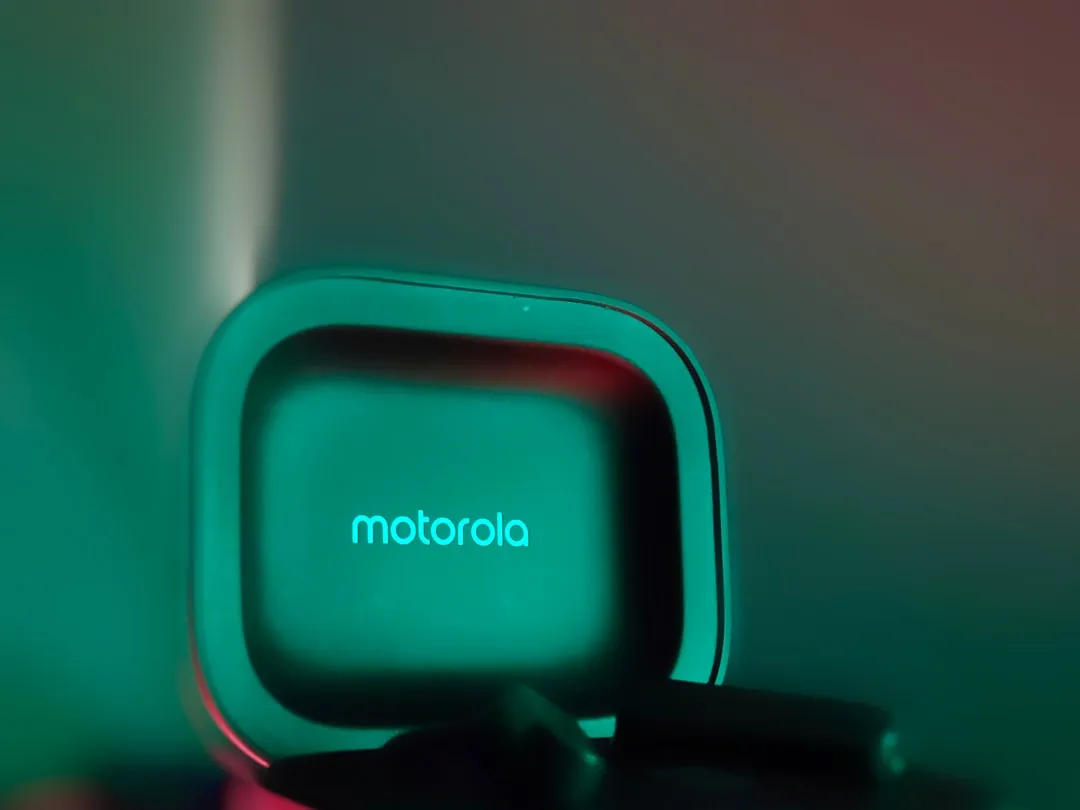
The wireless Android Auto adapter market is about to get a fresh contender—and we're getting our first real look at it before the official launch. Motorola's upcoming MA2 dongle has surfaced in an FCC listing that reveals nearly everything about the device, from its physical design to how it'll work in your vehicle.
In the reported regulatory filing, the MA2 is designed to bring wireless Android Auto capabilities to cars that currently only support wired connections, joining a growing field of similar adapters that promise to eliminate the cable tether between your phone and your car's infotainment system.
The timing couldn't be more interesting for drivers dealing with these daily frustrations. While wireless Android Auto has been around since 2018, many vehicles—even recent models—still require a USB cable connection. If you're driving one of these cars, you know the frustration: fumbling with cables while starting your commute, dealing with frayed connectors, or having your phone tethered to the dashboard when you need to grab it quickly.
The FCC documentation shows that Motorola is positioning the MA2 as a plug-and-play solution, though the company itself hasn't made any official announcements yet. What makes this leak particularly valuable is the level of detail included—we're seeing not just product specs, but the actual troubleshooting steps and compatibility warnings that reveal where Motorola expects friction points.
The regulatory filing even includes setup instructions and connectivity requirements, giving us insight into the day-to-day experience of using this adapter. Having tracked wireless adapter development from the problematic first-generation devices through current solutions, this level of pre-launch documentation is unusual and reveals Motorola's confidence in their implementation.
What the FCC filing actually reveals
Let's break down what's in these documents, because there's more here than your typical regulatory rubber stamp. The FCC listing includes multiple photographs showing the MA2 from various angles—a compact dongle with a USB-A connector on one end, clearly designed to plug directly into your car's USB port without needing an additional cable.
The industrial design appears straightforward and functional, with a small LED indicator light that presumably communicates connection status—a seemingly minor detail that becomes crucial when you're troubleshooting why Android Auto isn't launching while you're already running late.
User guide excerpts within the filing provide step-by-step setup instructions, revealing that the initial pairing process involves connecting your phone via Bluetooth first, then establishing a Wi-Fi Direct connection for the actual Android Auto data transmission.
This two-radio approach is standard for wireless Android Auto adapters, but seeing the documented setup flow gives us confidence that Motorola has addressed the frustration points that plagued earlier adapters—specifically, the multi-app pairing sequences and failed Bluetooth handshakes that required users to restart their phones.
The documentation specifies that the MA2 supports both 2.4GHz and 5GHz Wi-Fi bands, which is crucial for maintaining stable, low-latency connections—especially important when you're relying on navigation or making calls while driving.
In testing similar adapters over the past two years, dual-band capability has consistently proven essential for reliability. Single-band 2.4GHz adapters dropped connections in areas with Wi-Fi congestion, while 5GHz support maintained stable performance even when navigating through dense urban environments with dozens of competing networks.
The same simplicity-first philosophy shapes the power delivery approach. According to the regulatory documents, the device draws power directly from the USB port, with no external power adapter needed. This simplicity is appealing, though it does raise questions about whether all vehicle USB ports provide sufficient power—a common pain point with first-generation wireless adapters that we'll dig into later.
How the MA2 stacks up against existing wireless adapters
Here's where things get interesting for anyone who's been watching this product category evolve. The wireless Android Auto adapter market has matured significantly since early offerings from companies like AAWireless and Carsifi launched around 2020-2021 to address the wired-only limitation.
These adapters typically retail between $70-90 and have built loyal followings among tech enthusiasts, but they've struggled to break into mainstream awareness. The FCC filing suggests that Motorola's MA2 follows a similar form factor to these predecessors—compact, dongle-style devices that minimize cable clutter and dashboard mess.
What we can infer from the documentation is that Motorola appears to be targeting ease of use above all else. The user guide portions indicate a largely automatic reconnection process after initial setup, meaning you should be able to simply get in your car and have Android Auto launch wirelessly without repeated pairing steps.
This "set it and forget it" approach has been the gold standard that existing adapters have worked toward, with varying degrees of success depending on phone models and vehicle head units. Current-generation devices generally perform well, though some users report occasional reconnection issues after phone software updates or when switching between multiple paired devices.
While AAWireless and Carsifi struggled to secure retail partnerships—remaining largely Kickstarter and Amazon-only products—Motorola's established relationships with Best Buy, Target, and carrier stores could place the MA2 directly in front of mainstream consumers who've never heard of wireless adapters.
This distribution advantage could be the MA2's most significant differentiator. The FCC documents don't reveal any proprietary technology that would dramatically differentiate the MA2 from competitors on a technical level, suggesting this will likely compete on brand trust, availability, and potentially customer support rather than revolutionary features.
Potential limitations and compatibility considerations
Now for the reality check—and trust me, these limitations matter—because no wireless adapter solution is perfect, and the FCC filing hints at some of the same challenges that have affected this entire product category. Latency is the elephant in the room for any wireless Android Auto implementation.
While the MA2's dual-band Wi-Fi support should help minimize lag, the wireless connection will inherently introduce some delay compared to a direct USB cable. For navigation and media playback, this delay is usually negligible—though users who frequently dictate long text messages or use rapid-fire voice commands for music selection may find the lag noticeable enough to prefer wired connections.
Beyond the data transmission lag, physical hardware limitations present equally important concerns. Power draw and heat generation affect real-world reliability in ways that regulatory filings can't fully capture. The documentation confirms that the MA2 is bus-powered through USB, but many older vehicles provide limited current through their USB ports—often just 500mA, which was fine for charging phones years ago but can be marginal for devices that need to maintain active Wi-Fi and Bluetooth radios simultaneously.
Some existing wireless adapters have been known to overheat during extended use, especially in hot climates or when the device is tucked into poorly ventilated dashboard areas. I experienced this firsthand with an AAWireless adapter during summer testing in a vehicle parked in direct sunlight—the adapter became hot enough to cause intermittent disconnections until the car's AC cooled the cabin.
Pro tip: Before purchasing any wireless Android Auto adapter, test your vehicle's USB port power output if possible. Some newer vehicles have high-power USB ports (1A or higher) specifically designed for device charging, while older "data only" ports may not provide sufficient power for reliable wireless adapter operation. If your vehicle has multiple USB ports, try the adapter in different locations—some vehicles have higher-power ports in the center console versus lower-power ports in the dashboard. Also, consider mounting location carefully: avoid direct sunlight exposure and ensure adequate ventilation around the adapter, especially in hot climates where thermal throttling can cause performance issues.
Compatibility is another question mark. While the FCC filing shows that the MA2 is designed to work with Android Auto-compatible vehicles and Android phones, it doesn't provide a comprehensive compatibility list. Real-world experience with similar adapters has shown that certain head unit manufacturers (looking at you, some Honda and Mazda models) can be finicky with third-party wireless solutions, sometimes requiring firmware updates or exhibiting intermittent connection drops.
The FCC filing's lack of specific compatibility warnings could indicate either broad compatibility or—more concerningly—incomplete testing across diverse vehicle models. Motorola's silence on this point is notable. The user guide sections don't indicate any special requirements beyond a functioning wired Android Auto connection and a compatible Android phone, but the proof will be in actual testing across diverse vehicle models.
What this means for the Android Auto ecosystem
Bottom line: Motorola entering this space with the MA2 signals that wireless Android Auto adapters have moved from niche aftermarket accessories to mainstream products worth a major brand's attention. The comprehensive nature of the FCC filing—complete with detailed user guides and setup documentation—suggests Motorola is serious about making this a consumer-friendly product, not just a tech enthusiast's tinkering project.
For Android users still tethered to USB cables in their daily commutes, the MA2 represents another option in a market that's finally offering real choices. The documented setup process appears streamlined enough that non-technical users should be able to get up and running without frustration—but more importantly, it positions the MA2 for the gift market and dealership upsells, where complex installation instructions kill sales.
The dual-band Wi-Fi capability shown in the filing positions the MA2 to handle the bandwidth demands of modern Android Auto features, including higher-quality audio streaming and more responsive navigation updates.
Imagine this scenario: You get in your car, and before you've even fastened your seatbelt, Android Auto has connected wirelessly, loaded your preferred navigation app, and resumed your podcast exactly where you left off. No cables to plug in, no phone to mount, no interruption to your routine. This daily convenience scenario multiplies across millions of vehicles.
As automakers increasingly include wireless connectivity as standard in new models, devices like the MA2 serve as a bridge for the millions of existing vehicles on the road—extending the useful life of older infotainment systems and improving the daily experience for drivers who've grown accustomed to wireless everything else in their digital lives.
The broader implication is that wireless connectivity is becoming the expected standard, even for vehicles that shipped with wired-only support. As smartphone manufacturers continue eliminating physical ports—a trend that will only accelerate in coming years—wireless adapters transition from convenience accessories to essential equipment.
While we'll need to wait for official pricing, availability, and hands-on testing to render final judgment, the FCC leak gives us enough information to say that Motorola's MA2 looks like a solid, well-thought-out entry into a product category that's only going to become more relevant as our cars and phones continue their wireless evolution.
I'll be testing the MA2 as soon as review units become available, with specific focus on real-world reliability across different vehicle models, thermal performance in various weather conditions, and connection stability during extended drives.






Comments
Be the first, drop a comment!