



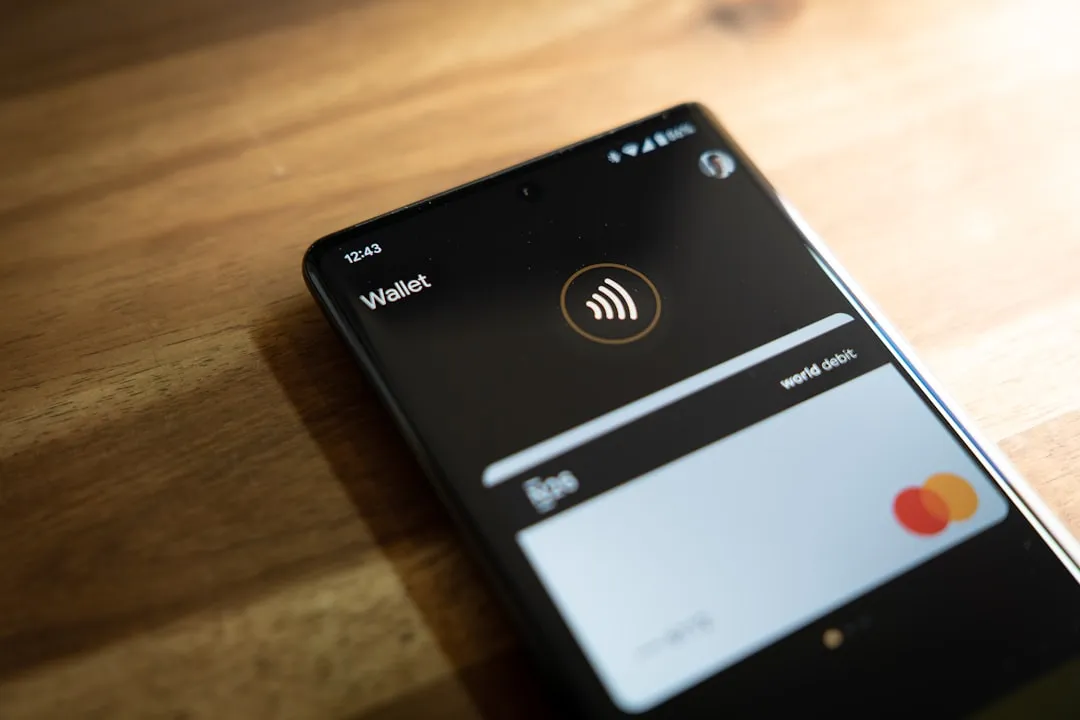
Save a boarding pass to Google Wallet on Android, and live flight updates, gate changes, delays, estimated takeoff and arrival times, and flight progress appear directly on your lock screen without opening an app. That one feature captures what Google has been building toward across several update cycles: a wallet that monitors your trip rather than just stores the pass.
Google then expanded passport-based digital ID passes to Singapore, Taiwan, and Brazil and launched Aadhaar Verifiable Credential support in India through a UIDAI partnership, per its April 2026 announcement. Digital identity is moving faster than any other part of Wallet right now. The practical footprint, though, is narrower than the announcements imply, and Google's own blog posts are the only sources here, so independent verification of real-world reach isn't available.
What Google Wallet travel updates actually deliver on a trip
The travel-monitoring story is the most concrete part of Wallet's recent evolution. Gmail booking confirmations can be automatically imported so a flight or train ticket appears in Wallet without the user manually saving it, announced in September 2024. This applies to a select set of supported partners, not every booking platform, and requires Gmail smart personalization to be enabled.
Live train status on-time or delayed, visible directly from a stored ticket, was described as "starting soon" in that same September 2024 post. Lock-screen flight updates are reported to be rolling out on Android 16 and above as of spring 2026. Train status is a separate rollout, and no subsequent Google announcement in the available sources confirms when or whether it launched broadly.
Pass-change notifications round out the picture: Wallet alerts users when a boarding pass seat is reassigned or when a loyalty partner pushes a message, such as a coffee shop daily special, per the September 2024 post. Passes are also accessible via the web at wallet.google.com, extending reach beyond Android when needed.
Frequent flyers and rail commuters on supported carriers get the clearest value. The limits are real: supported partners only, core monitoring features are Android-native, and Wallet has no visibility into reservation systems outside what's been saved to it. If a carrier or booking platform isn't integrated, the active monitoring doesn't apply.
None of this appeared from nowhere. Back in June 2023, Google introduced the ability to save any barcode- or QR-code-bearing pass directly to Wallet and announced check-in-to-boarding-pass workflows through RCS Messages with Vietnam Airlines and Spain's Renfe. The Gmail import, live status, and lock-screen alerts are a direct extension of that infrastructure, not a sudden pivot.
Google Wallet loyalty features: useful storage, not a smart rewards engine
Wallet's loyalty features remain basic: card storage and partner notifications. No points tracking, no elite status surfacing, no redemption recommendations. Google's own blog posts contain no indication those capabilities exist or are in development.
The partner footprint is real. When Wallet launched in India in May 2024, Google signed over 20 brand partners covering airlines, metro systems, movie chains, and loyalty programs, including Flipkart Supercoins, Domino's, and Shoppers Stop. The breadth of that launch partnership set was notable for a regional rollout.
Transit is where the adoption numbers are clearest. Google says the number of people using Wallet for commutes more than doubled in the 18 months preceding its September 2024 update, with new support added for Hamburg public transport, Taiwan's iPASS Card, and additional Hong Kong Octopus Card users. These aren't loyalty features in the rewards sense; they're transit passes, but they represent where Wallet has built documented traction.
In Germany, over half a million people store their Deutschlandticket in Wallet, a figure significant enough that Google added anti-tampering protection through a Motics integration to guard against ticket copying, according to the same update. Commuters with supported transit cards, and users in markets like India and Germany where partner integration is broad, get the most from what's currently on offer. Anyone hoping Wallet will track airline miles or surface the best redemption option should look elsewhere — that product doesn't exist yet.
Digital ID: the fastest-expanding thread, with a narrow practical footprint
Indian users can save Aadhaar Verifiable Credentials directly on-device through a Google-UIDAI partnership, live as of the April 2026 announcement. In the same update, passport-based ID passes encrypted, on-device digital IDs derived from passport data expanded to Singapore, Taiwan, and Brazil.
The U.S. picture runs on two separate tracks. One involves passport-derived digital IDs: Google began beta testing these at select TSA checkpoints in a late 2024 update. The other involves state-issued IDs: California was already live at that point, with Iowa, New Mexico, and Ohio listed as forthcoming. Colorado was separately certifying business readers so local merchants could accept digital IDs, a distinct infrastructure requirement from TSA acceptance. Those are different programs with different eligibility criteria, and they don't collapse into a single category.
The security mechanics are consistent across both: ID passes are stored encrypted, require biometric or PIN authentication before they can be viewed or shared, and let users review what information is being requested before any sharing occurs, per Google's 2024 post. Google is also explicit that a digital ID in Wallet is not a replacement for a physical ID, and travelers still need to carry physical documents.
Google has stated it expects digital IDs to extend beyond airports, naming account recovery, identity verification, and car rentals as target use cases, according to the same source. Those are stated intentions, not live features. They point to what Google is building toward a general credentials layer rather than a narrow airport tool, but the current utility is considerably narrower than that direction suggests.
The personalization layer: what opting in actually means
In November 2025, Google announced that U.S. users would be able to opt into having their boarding pass and loyalty card data used to personalize recommendations across Google services, including shopping suggestions, brand promotions, app recommendations, and ads. The feature is opt-in, U.S.-first, and Google states it does not sell that information to other companies.
This is the most commercially revealing part of Wallet's trajectory. The passes a user saves where they fly, which loyalty programs they belong to, and how they commute, become the basis for more tailored recommendations across Google's broader ecosystem, including advertising. That's not a reason to avoid the product, but it's the right frame for understanding what "smarter" actually means here: Google is tying Wallet data to personalization across its products, and the data flows outward, not just within the app itself.
Separately, Google has been expanding AI travel features in Search and Maps: Gemini-powered Ask Maps in the U.S. and India, agentic restaurant booking through AI Mode extended to the U.K., India, Canada, and Australia, and global hotel price tracking for signed-in users, per the April 2026 roundup. These are Search and Maps features rather than Wallet features. The sources don't document a direct connection between those products and Wallet's pass data, but taken together, they sketch the outline of a broader ecosystem play one where Wallet is the credential store and the personalization happens upstream.
Where Wallet goes from here
For Android users who travel frequently on supported carriers, the active monitoring features are worth setting up. Lock-screen flight updates, Gmail ticket import, and pass-change notifications form a coherent layer that's a genuine step up from manually checking apps. The qualifier holds throughout: supported partners only.
Digital ID is expanding faster than any other part of Wallet, but the gap between roadmap and reality is widest here. Google still says a digital ID in Wallet is not a replacement for a physical ID, and travelers should continue carrying physical documents.
The real question over the next year is whether Google expands the partner network fast enough for Wallet to function reliably across more than a subset of carriers and booking platforms, and whether it adds any meaningful loyalty intelligence, or continues leaving that space empty. Right now, the infrastructure is there. The coverage isn't.






Comments
Be the first, drop a comment!