



Android's Quick Share has become an indispensable tool for seamless file transfers across the ecosystem, but a significant change is on the horizon that's stirring up conversation. Google is testing a major interface overhaul that fundamentally alters how the feature handles device visibility—and while it might seem like a limitation at first glance, this shift could actually strengthen both usability and security. Let's break down what's changing, why it matters, and what this means for your daily workflow.
Evidence uncovered in Google Play Services beta version 25.15.31 reveals a substantial redesign of Quick Share's interface. The feature has evolved into a critical component for Android and ChromeOS users who need fast, nearby file transfers, according to Android Authority (and reported by Droid-Life/Android Central. Android Authority successfully activated this experimental interface, providing an early look at what could soon roll out to millions of devices. The changes aren't just cosmetic—they fundamentally reimagine how Quick Share balances convenience against potential security concerns that have plagued similar wireless sharing technologies.
A cleaner, more intuitive starting point
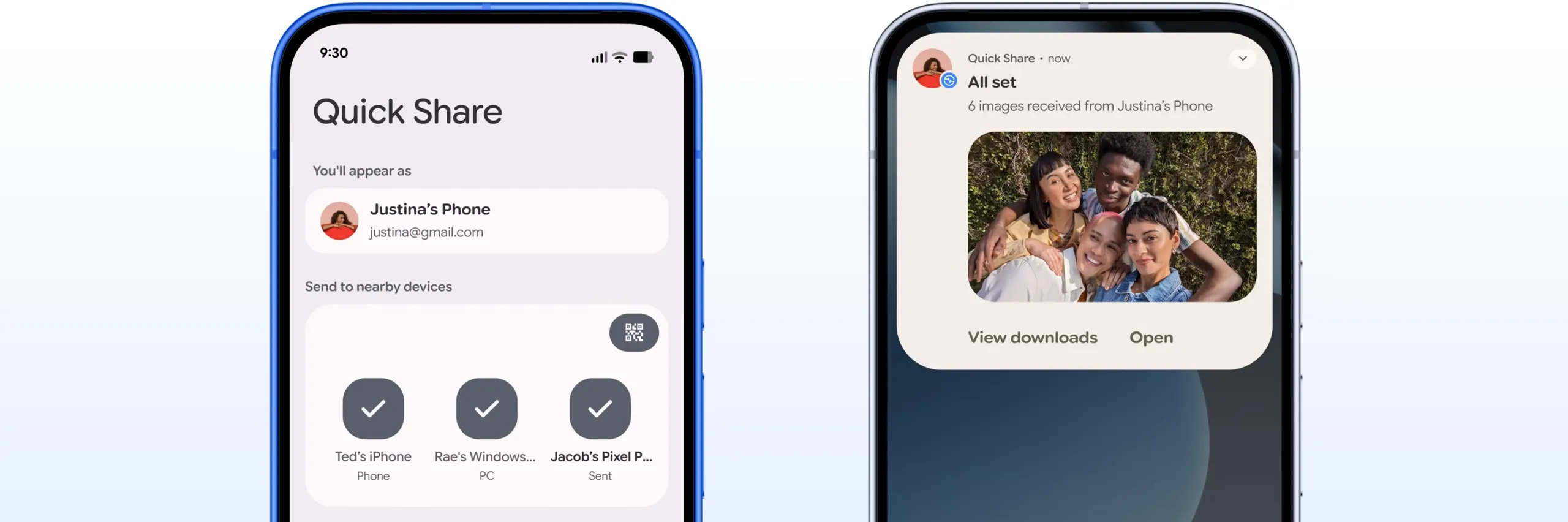
The most striking change is how Quick Share greets you. Instead of the current multi-option layout, the redesigned landing page presents two prominent buttons: 'Received' and 'Send'. This streamlined approach directly guides users to their intended action, eliminating confusion in the initial interaction. Even the settings menu, accessible via the three-dot icon, has been redesigned for improved visual clarity.
The simplified design philosophy extends beyond aesthetics. By reducing decision points at the entry screen, Google is acknowledging that most Quick Share sessions fall into one of two clear categories: you're either preparing to accept files or you're ready to send them. This binary choice removes the cognitive load of navigating through multiple visibility settings and configuration options before you can actually accomplish your task—getting straight to the point without unnecessary friction.
The visibility shift that changes everything
Here's where things get interesting—and potentially controversial. When you tap the 'Received' button, your device temporarily becomes visible to everyone nearby while the Receive screen remains open. This represents a fundamental departure from the current model where users manually control visibility settings. The change aims to simplify the receiving process by removing the extra step of adjusting visibility when actively accepting files.
Google has added a thoughtful privacy layer to this approach: while your device name becomes temporarily public, your profile picture remains visible only to your contacts. This strikes a balance between discoverability and privacy—strangers can see you're ready to receive files, but they won't see personal imagery that might identify you beyond your device name.
The Quick Settings tile behavior is also evolving. Tapping the tile now directly opens the 'Receiving' screen, instantly preparing your device to accept incoming files. Interestingly, this behavior mirrors functionality spotted in leaked builds of Samsung's upcoming One UI 8, suggesting coordinated implementation across the Android ecosystem.
This temporal visibility model fundamentally changes how you'll interact with Quick Share. You can't leave your device perpetually discoverable anymore—instead, you're making a deliberate choice each time you want to receive something. Opening the receive screen signals your intent and only lasts as long as you keep that screen active, creating a natural time limit on exposure.
Why limiting visibility options might actually be smart
The removal of persistent "Everyone" visibility mode addresses real security concerns that have plagued wireless sharing technologies for years. IT administrators have long struggled with controlling Quick Share's predecessor, Nearby Share, because the file-sharing feature operates through Google Play services and cannot be independently disabled through standard application blocklists. Enterprise administrators often need to control access to device features like this for security reasons.
The security stakes are higher than many users realize. Researchers discovered 10 vulnerabilities in Quick Share for Windows and Android in January 2024, including remote unauthorized file write capabilities and forced WiFi connection exploits. These weren't theoretical concerns—they represented genuine attack vectors that could have been exploited in the wild. Google reproduced and fixed each vulnerability, issuing two CVEs (CVE-2024-38271 and CVE-2024-38272). According to Google's official response, these vulnerabilities were not exploited in the wild, and fixes were automatically applied to users.
By making visibility temporary and contextual—only active when you're deliberately in receiving mode—Google reduces the attack surface. You're no longer accidentally discoverable because you forgot to toggle a setting back after a previous file transfer. This temporal approach means your device is only exposed when you're actively expecting a transfer, dramatically narrowing the window for potential abuse.
Consider this scenario: in public spaces like coffee shops or airports, persistent visibility essentially broadcasts your device's presence to anyone within range who might be scanning for targets. The new model requires that window of vulnerability to be intentionally opened, then automatically closes when you're done. That's a significant security improvement that doesn't require you to remember anything—the system handles it by design.
The sending experience gets a makeover too
The outbound flow hasn't been neglected in this redesign. Hitting the 'Send' button reveals a revamped interface featuring a 'Select files to share' option, which launches the standard Android file picker. Once you've chosen your files, you'll see previews for images, text, and URLs, or just file names for documents, before initiating the transfer.
This preview functionality addresses a common pain point: accidentally sending the wrong file because you couldn't verify your selection before transmission. The visual confirmation step adds a safety net without significantly slowing down the workflow. For images and URLs, the preview is immediate and informative. For other file types, seeing the exact filename provides enough context to catch mistakes before they happen.
The redesign also brings consistency to how Quick Share handles different content types. Whether you're sharing a photo from your gallery, a document from your downloads folder, or a URL from your browser, the experience now follows a predictable pattern: select, preview, confirm, send. That kind of consistency matters when you're using a feature multiple times throughout the day—muscle memory develops faster when the interface doesn't throw curveballs depending on what you're sharing.
What this means for enterprise and managed devices
The visibility changes have significant implications for organizations managing Android fleets. Currently, administrators cannot disable Nearby Sharing through standard application policies from UEM consoles or Knox Service Plugin. Instead, they must disable broader device features like Bluetooth, Location Service, or WiFi, or use specific policies like Device Restrictions > Allow Share Via option or Google's DISALLOW_SHARE_LOCATION policy.
The new temporal visibility model could ease some enterprise security concerns. Rather than devices being perpetually discoverable—a configuration nightmare for IT departments—the redesign enforces a more controlled exposure model. Employees would need to actively enter receiving mode, creating a clearer audit trail and reducing the risk of accidental data exfiltration through persistent visibility settings. This shift from "always potentially on" to "explicitly activated" represents a fundamental improvement in enterprise security posture.
However, organizations with strict data loss prevention policies may still need to disable Quick Share entirely. The feature's underlying architecture hasn't changed: Quick Share implements its own application-layer communication protocol, utilizing Bluetooth and Wi-Fi for file transfers through the Nearby Connections API. For highly regulated industries dealing with HIPAA, GDPR, or other compliance frameworks, any peer-to-peer file transfer capability may remain unacceptable regardless of interface improvements.
The road ahead: what to expect
As with any feature discovered through APK teardowns, there's no guarantee this redesign will launch exactly as currently implemented. However, the relatively polished state of the interface suggests Google has invested significant development effort, making a future rollout quite plausible. Users will reportedly see an introductory screen explaining the functional changes, particularly the temporary visibility aspect when receiving files.
The timing is noteworthy given Quick Share's evolution. Google originally developed Nearby Share with similar capabilities, even releasing a Windows version in July 2023. In January 2024, Google merged its Nearby Share technology with Samsung's Quick Share to create one unified solution for Android users under the Quick Share name. Google also indicated it was working with manufacturers like LG to include Quick Share as a pre-installed application on Windows PCs.
This redesign appears to be the next chapter in that consolidation effort—creating a consistent, secure, and intuitive experience across the entire Android and ChromeOS ecosystem. The coordination with Samsung's One UI 8 implementation suggests this isn't just a Google initiative but rather a broader ecosystem alignment, which typically means more resources behind the effort and a higher likelihood of wide deployment.
Bottom line: losing a feature to gain security
The removal of persistent "Everyone" visibility might initially feel like a step backward for users who relied on that setting. But when you consider the security implications, the enterprise management challenges, and the real-world vulnerabilities that researchers have uncovered, this change starts to look less like a limitation and more like a necessary evolution.
Quick Share has rapidly become essential for Android and ChromeOS users who need fast, nearby file transfers. By making visibility temporal and contextual, Google is betting that most users would rather have a slightly more deliberate workflow than risk the security exposure of persistent discoverability. The streamlined interface, improved preview functionality, and thoughtful privacy considerations suggest this isn't just about removing a feature—it's about reimagining how wireless file sharing should work in 2025.
The key takeaway is that sometimes good design means removing options rather than adding them. By forcing visibility to be an active choice rather than a passive state, Google is protecting users from themselves (and from potential attackers) while still maintaining the core convenience that made Quick Share popular in the first place. The slight addition of friction—tapping to enter receiving mode—creates a natural security boundary that dramatically reduces risk without meaningfully impacting the user experience for legitimate use cases.
PRO TIP: When this redesign rolls out, take a moment to review your Quick Share settings and familiarize yourself with the new workflow. The temporary visibility model means you'll need to actively enter receiving mode before someone can send you files, so plan accordingly when coordinating transfers with colleagues or friends. Consider adding frequent sharing partners to your contacts to streamline the process even further.




Comments
Be the first, drop a comment!