



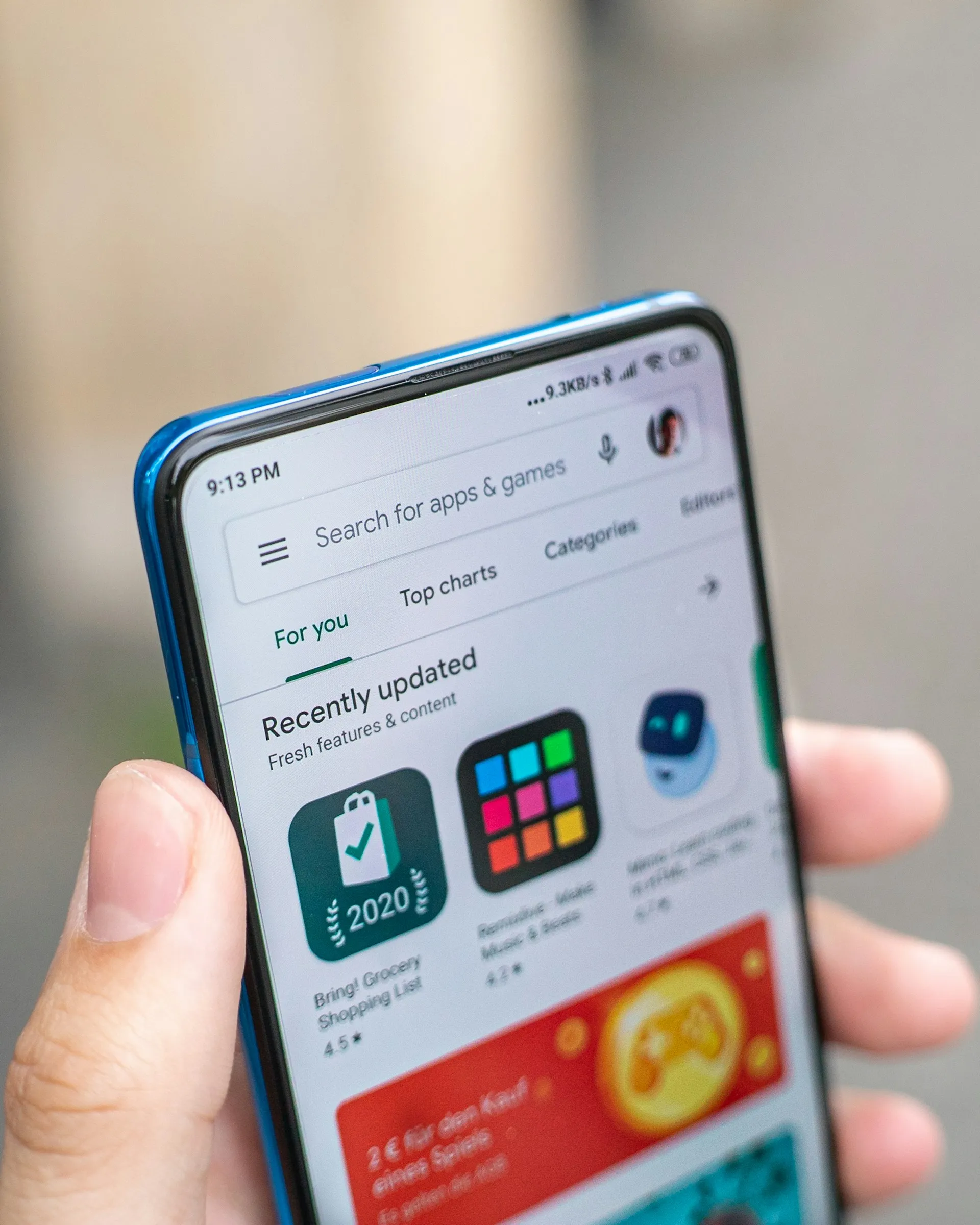
Researchers digging through Play Store version 48.7.17-31 found dormant code strings labeled "Search reviews" and an inactive flag called AllReviewsPage__enable_search_bar, the clearest sign yet that Google is building a keyword search tool for the consumer-facing reviews page. Android Authority first reported the discovery in November 2025, and Android Police independently confirmed the same strings that same month. Neither outlet could activate the interface.
Google has not widely detailed the feature publicly, and the rollout appears gradual and not universally available.
The ability to search app reviews in the Play Store has a concrete use case. A user evaluating a subscription app could type "cancel subscription" or "charged after canceling" and pull up relevant reviews directly, instead of scrolling through thousands of entries sorted by star count. That shifts app vetting from hoping an algorithm surfaces the right complaint to asking a direct question and getting an answer.
There is also a story behind the story. Google's Play Console has offered developers keyword search over their own app's reviews since at least 2024. The feature in development would give ordinary users access to a version of what developers already rely on, closing a gap that has existed, quietly, for years.
The tooling gap: what developers can do that users cannot
Google's Play Console documentation explicitly instructs developers to use a search box to find specific words across their app's reviews. Beyond search, the console surfaces top trends and recurring issues, a diagnostic layer built to help developers identify what most needs fixing, per Google's help documentation. Benchmark analytics drawn from those reviews are visible only inside Play Console and are not exposed to ordinary users in the Play Store interface.
On the consumer side, the Play Store offers sorting by date, relevance, star rating, and positive or negative sentiment, plus filtering by pre-set "review topics." Historically, no free-form keyword entry existed. Recent updates have begun introducing keyword search in some versions.
No freeform keyword entry exists. For any popular app carrying tens of thousands of reviews, finding a specific complaint is largely a matter of luck.
The asymmetry is not a minor convenience gap. Developers can interrogate their own feedback with precision. Users, the people deciding whether to install or pay, cannot. The feature in development would close that gap, extending to consumers a basic search capability their app's creators have used all along.
What the code confirms and what it doesn't
Two artifacts in Play Store version 48.7.17-31 point in the same direction: a string labeled "Search reviews" and the AllReviewsPage__enable_search_bar flag, which suggests Google is laying technical groundwork for a search bar on the main reviews screen, per Android Authority. The UI could not be triggered, which originally suggested early development, though later reports indicate partial rollout to users.
What the code does not reveal matters as much as what it does. There is no public confirmation of semantic search capabilities, whether it will cover all reviews or a curated subset, or how results will handle reviews written in different languages or submitted from different device types.
Those implementation choices are the difference between a tool people actually use and one they try once. A basic keyword match returns every review containing a word, useful for common complaints but potentially misleading for nuanced ones. A search for "battery" on a navigation app might surface reviews about GPS drain alongside complaints about entirely unrelated background processes. Until Google clarifies the approach, the feature's practical depth remains unknown.
What Google Play Store app review search would actually do for users
The highest-value use case is verification before a financial commitment. Subscription apps accumulate thousands of reviews across many topics; a targeted search cuts directly to the complaints that matter for a specific concern before the user enters a payment method. That is a real upgrade over sorted lists and scrolling.
Device-specific and performance concerns follow the same logic. A user on a particular Android model who wants to know whether others have encountered Bluetooth instability or excessive battery drain has no current path to those reviews. Keyword search makes that kind of targeted comparison possible without leaving the Play Store.
One practical note on reading results worth keeping in mind: complaints using different phrasing from different users over time are worth taking seriously. A cluster of identically worded reviews appearing within a short window deserves more skepticism; it may reflect coordination rather than genuine experience. The feature changes what users can ask. It does not automatically change how carefully they should read the answers.
What this tool probably will not do on day one
The implementation unknowns have real consequences for users, and it is worth naming them directly before the feature ships.
Language handling is an open question. The Play Store is global, and reviews for any major app span dozens of languages. Whether a keyword search in English surfaces relevant reviews originally written in Spanish or Portuguese, or whether those are silently excluded, will determine how useful the tool is for high-volume apps with international user bases.
Temporal context is another gap. A search for "crashes on startup" might surface complaints from three years ago that the developer fixed in the next update, alongside fresh reports of a newly introduced bug. Without a way to weight or filter by recency, users could misread a resolved problem as a current one. Star ratings at least reflect the rolling aggregate; keyword results may not.
Phrase matching without context is a subtler problem. The word "slow" appears in positive reviews ("slow burn, worth it") and negative ones ("slow to load, unusable"). Simple keyword matching treats them identically. Semantic search would not, but there is no evidence yet that Google is building that level of sophistication into this feature.
None of these is a reason to dismiss the feature. They are the right questions to ask when it arrives.
Why the reviews are more worth searching now than before
The utility of any search tool depends on the quality of what it surfaces. Google reported blocking 160 million fake and manipulated ratings in 2025, covering both inflated and artificially suppressed reviews, and says its systems prevented an average half-star rating drop for apps targeted by coordinated review-bombing campaigns, according to PCMag. A cleaner underlying corpus makes it possible to search app reviews on Google Play with more confidence than would have been reasonable even a few years ago.
Google has also added Gemini-powered AI summaries to the Play Store, giving users a high-level view of aggregate reviewer sentiment. Keyword search sits beside that capability rather than in competition with it. Summaries tell users the general shape of opinion; search answers a specific question.
One unresolved problem: whether Google's anti-spam filtering will extend to search result ranking, not just aggregate star scores. Keyword search is vulnerable to manipulation in a way that averages are not. A coordinated campaign seeding reviews with a specific phrase could dominate results for that term. Google has not addressed this publicly, and it is the right question to ask when the feature ships.
What to watch for when it arrives
The mental model for using this feature is straightforward. Keyword search is for verifying a specific concern, not replacing star ratings or AI summaries. Use a summary to understand general sentiment; use search to confirm or rule out a particular issue before committing.
Two implementation details will determine whether this becomes a genuinely useful tool or a superficial one:
Whether results use semantic understanding or strict keyword matching
Whether spam filtering applies to what the search surfaces, not just to aggregate scores
Both will be answerable once Google moves toward a public release.
For users, the shift is real. Google is preparing to give consumers a targeted way to find keywords in app reviews on Google Play, closing a gap that has quietly favored developers for years. Who gets to ask specific questions about an app, and what they can find out before they install, is about to change.












Comments
Be the first, drop a comment!