



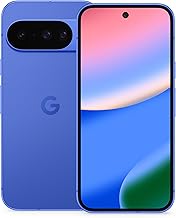


Some Pixel 9 and Pixel 10 owners are reporting eSIM failures ranging from activation problems to severe lockouts, and Google is reportedly aware of the issue, but has not confirmed a fix timeline.
The Google Pixel eSIM issue spans X, Reddit, Pixel support forums, and Google's own Issue Tracker, according to Android Authority. For most owners, that's a connectivity headache. For US Pixel 10 buyers, it's something worse: those models ship without a physical SIM slot, leaving affected users with no fallback if their eSIM stops working.
Google pointed to its own usage data when making that call. When it introduced the eSIM-only Pixel 10 for US markets, the company cited carrier requirements for mmWave 5G support and noted that 70% of US Pixel owners were already on eSIM, per Android Police. That statistic was meant to signal confidence. Right now, it mostly underlines the stakes.
How serious is the Pixel eSIM bug?
Not all reported failures land the same way. There are effectively three tiers, and which one applies to a given device determines whether the situation is manageable or effectively catastrophic.
The lightest tier is intermittent signal loss that clears after a reboot. One Pixel 10 Pro owner on Reddit described their eSIM going completely dark on a regular cycle, requiring a full restart every three to four days to restore service, as reported by Android Authority. Annoying, but workable.
The middle tier involves an inability to switch carriers or add new eSIM profiles, even on carrier-unlocked hardware. Some Pixel 9 and 10 owners report that carrier transfers hang or fail outright, with no clear error message explaining why, according to Android Authority.
The most severe tier is a fully stuck eUICC, the embedded chip responsible for managing eSIM profiles. One documented Pixel 10 case illustrates just how bad this gets: after a Google Fi device-to-device transfer, the phone's embedded ID (EID) started reporting as all zeros in both device settings and Fi's account systems.
Every attempt to communicate with the eUICC failed with APDU and logical channel errors. New eSIM installs hung indefinitely. Existing profiles couldn't be erased or disabled. Reboots, network resets, and the system's "Erase all eSIMs" option all returned the same underlying error, according to a user report cited by Android Authority.
Because the EID appeared as all zeros, Google Fi could not push a server-side swap, or remote profile update, and carrier-side reprovisioning was blocked by the zeroed-out device identifier. The affected user concluded the only path forward was to return the device and buy an older Pixel with a physical SIM slot.
Physical SIM cards continue to work normally on devices that have a slot. Owners of international Pixel 10 variants, or Pixel 9 models with a physical slot, have that fallback. US Pixel 10 owners do not.
Which devices are affected
The failures are concentrated on the Pixel 9 and Pixel 10 series, and the problem is not limited to third-party firmware. GrapheneOS maintainers documented Pixel 9 Pro failures in early April, tagged the issue as "upstream," and noted many reports from devices running Google's stock OS.
That rules out a niche configuration as the sole cause, though it doesn't fully exclude narrower triggers. Some reports also involve clean flashes or sideloaded April and May patches, though that has not been confirmed as the root cause.
There's a compounding problem that doesn't get enough attention. Phone numbers double as authentication credentials for banks, carriers, and apps that rely on SMS verification. When an eSIM fails mid-transfer, the number can end up in limbo, and recovery at some carriers requires an SMS code the locked-out device can't receive.
That can force users into carrier-assisted recovery, and in some cases a physical store visit, rather than a self-serve transfer.
What the evidence suggests about the root cause
The clearest signal in the data is persistence. Some of these failures survive factory resets and complete OS reinstalls, which points to a fault sitting below the Android software layer, based on reporting from Android Authority and the GrapheneOS issue tracker.
GrapheneOS maintainers assessed the Pixel 9 Pro failures as most likely a hardware or firmware issue and noted that a firmware update would probably be required to address it. They also raised the possibility that the eSIM secure element itself may be failing, and that hardware replacement rather than a patch could be necessary for some affected units.
Their exact assessment: "It's quite possible that the eSIM secure element is failing at a high rate and that hardware replacements are required rather than a patch," per the GrapheneOS issue tracker. That's a community-level diagnosis from people who know the hardware well, not an official Google determination.
Google has not offered a technical explanation, confirmed whether the fault is hardware or software, or indicated when a fix might arrive. What's known from the company amounts to acknowledgment in Issue Tracker threads and nothing more, according to Android Authority. The variation in symptoms across reports, some users see intermittent drops, others total lockout, makes a single root cause difficult to pin down, and may indicate multiple related issues rather than one.
What this means for owners and buyers
For owners whose eSIM is dropping service intermittently but recovering after a reboot: document the pattern. Note whether failures correlate with anything airplane mode toggles, software updates, carrier activity, and file a report on Google's Issue Tracker to add to the pattern the company is tracking.
If the device has a physical SIM slot, that's the immediate answer. Affected users across all reports confirm physical SIMs work normally, per Android Authority. Owners of Pixel 9 models or international Pixel 10 variants should use a physical SIM as a reliable fallback while the underlying issue remains unresolved.
Avoid unnecessary eSIM transfers or carrier switches if the current eSIM is still functional. The most severe documented failure followed a device-to-device eSIM transfer on Google Fi. Until the root cause is understood, minimizing eUICC operations on an at-risk device is the cautious move.
On the carrier account side: make sure login credentials and alternative authentication methods are in place now, before any failure. An eSIM lockout can create a recovery loop where SMS verification is required but unavailable, and the only exit is a carrier store visit, as Ars Technica documented.
One more practical note on warranty service: a Pixel 9a owner who sought repair was turned away, with Google citing alleged damage to the screen, frame, and cameras, damage the user says didn't exist. Before submitting a device for warranty service, photograph its physical condition from every angle.
What's still unknown
The breadth of this problem across device generations, OS builds, and carriers is documented. The depth isn't. No incident count has emerged that would clarify how many units are affected or how frequently the severe cases occur.
Three things are worth tracking as this develops: whether Google issues a firmware update that addresses the secure element failures; whether warranty support becomes consistent for affected owners rather than dependent on which technician reviews the case; and whether a clearer picture of incident volume emerges.
The last of those will matter most for US Pixel 10 buyers deciding whether to hold, replace, or push for a repair commitment. Right now, Google's position acknowledges the problem, but no public fix timeline leaves owners with no good options and no clear signal of when that will change.











Comments
Be the first, drop a comment!