





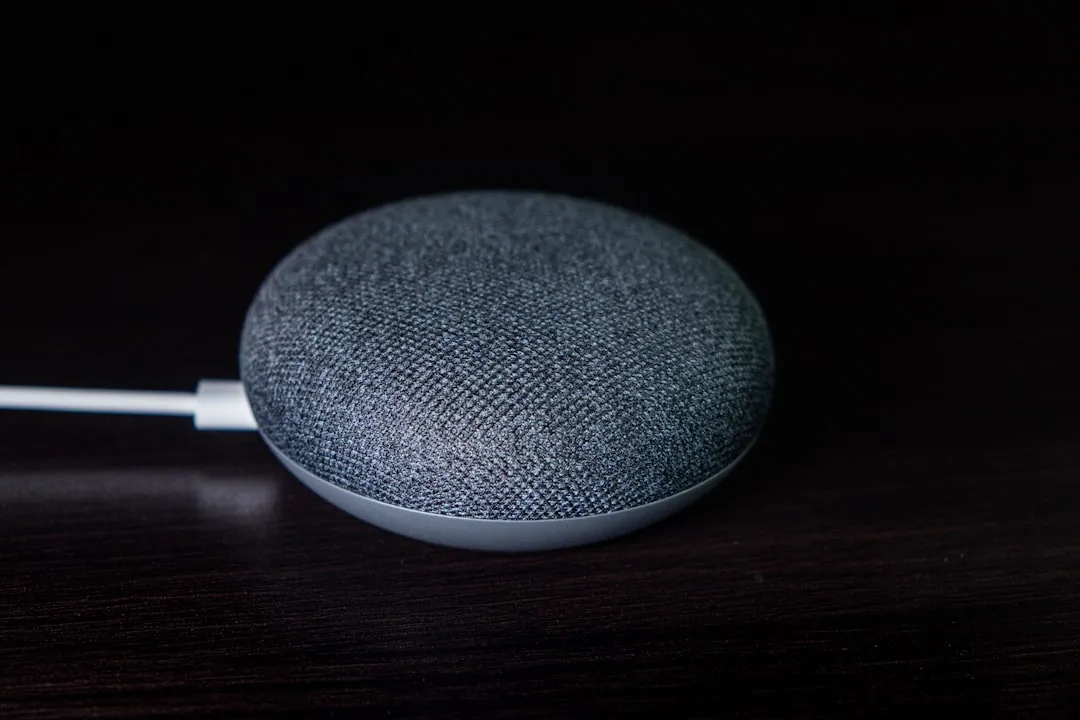
The Google Home experience has been... let's call it "inconsistent" when it comes to understanding what you're actually trying to say. You know the drill: you start giving a command, and halfway through, your smart speaker decides it's heard enough and cuts you off, leaving you talking to thin air. But Google's latest update promises to change all that with smarter listening capabilities and better command processing.
This isn't just another minor software tweak. We're looking at fundamental improvements to how Google's voice assistants handle complex requests, maintain context across conversations, and process commands without those frustrating interruptions that have plagued users since day one. These improvements address the core technical limitations that have prevented voice assistants from becoming truly reliable home automation tools. The update represents Google's push to make their smart home ecosystem more reliable and intuitive, especially as competition with Amazon's Alexa and Apple's HomeKit continues to intensify.
What's actually changing under the hood?
Here's where things get interesting from a technical standpoint. The core improvements center around enhanced voice processing algorithms that can better distinguish between natural speech patterns and command completion. Instead of relying solely on pause detection—which has been problematic because it can't differentiate between thoughtful pauses and command endings—Google Home devices will now analyze speech context and intent to determine when you've finished speaking.
This represents a shift toward more context-aware processing alongside timing-based methods to meaning-based processing. When you pause mid-sentence to think, the system now analyzes your partial command structure to determine whether you're likely finished or still formulating your request. This means fewer instances of your device jumping the gun when you pause to think mid-sentence, or cutting off complex smart home commands that involve multiple rooms or devices.
The update also introduces improved noise filtering, so background conversations or TV audio are less likely to interfere with your actual commands. I can't tell you how many times my Google Home has tried to respond to dialogue from a Netflix show, so this improvement alone feels like a game-changer.
Perhaps most significantly, the enhanced processing includes better integration with Gemini AI, allowing for more sophisticated interpretation of natural language requests. This AI integration enables the contextual analysis that makes the improved pause detection possible, while also allowing you to speak more conversationally rather than using the rigid command structures that current voice assistants often require.
How Gemini integration makes commands actually smart
The integration of Gemini AI represents a major leap forward in how Google Home interprets and executes complex requests. Rather than matching your words to pre-programmed command templates, the system now understands context and intent in ways that feel more natural. This builds directly on those enhanced algorithms we just discussed—Gemini provides the contextual intelligence that makes smarter pause detection and noise filtering possible.
This means you can say something like "turn off the lights in the room where I'm watching TV" instead of having to specify exact room names or device groups. The AI can piece together location context, current device states, and your typical usage patterns to figure out exactly what you want. It's this kind of the room where I'm watching TV that transforms the voice assistant from a simple command executor into something that actually understands your living space.
The system also maintains conversation context much better now. If you ask about the weather and then say "what about tomorrow," it understands you're still talking about weather forecasts rather than treating it as a completely new query. This contextual memory extends to smart home controls too—you can adjust multiple settings in sequence without having to repeat device names or locations each time.
So you might say "turn down the living room lights," followed by "and make them warmer," and the system maintains awareness that you're still configuring those same lights. This conversational continuity eliminates the robotic start-stop interaction pattern that has made voice assistants feel clunky and unnatural.
Privacy implications of smarter voice processing
With more sophisticated voice processing comes legitimate questions about data handling and privacy. The enhanced listening capabilities require more detailed analysis of your speech patterns, home environment, and daily routines—essentially creating a more comprehensive profile of your household behavior than previous voice assistant generations.
Google has indicated that some processing may happen on-device, while more advanced features rely on cloud processing rather than in the cloud, which should reduce the amount of voice data transmitted to their servers. The basic pause detection and noise filtering can occur locally, keeping your immediate voice interactions more private.
However, the Gemini AI integration still requires cloud connectivity for the more complex contextual understanding features. The environmental awareness that lets the system understand "the room where I'm watching TV" requires processing your home's device states, usage patterns, and spatial relationships—data that's too complex for current smart speaker hardware to handle independently.
This creates a privacy gradient where simple commands stay local, but contextually intelligent responses require cloud analysis. Users will need to weigh the convenience benefits against their comfort level with enhanced behavioral analysis. Unlike the previous generation's relatively simple command matching, these systems actively learn and adapt to your routines, preferences, and household patterns to provide better service.
Real-world impact on your smart home setup
These improvements should translate into noticeably better experiences for common smart home scenarios that have been frustrating Google Home users for years. Multi-room audio commands, complex lighting schedules, and security system interactions should all become more reliable and intuitive.
For households with extensive smart home setups, the enhanced context awareness means you can create more sophisticated automation routines without worrying about voice commands being misinterpreted or cut short. If you've got smart lights, thermostats, security cameras, and entertainment systems all connected, you can finally control them with the kind of natural language that makes sense, rather than memorizing specific command syntax for each device type.
The update particularly benefits users who've been hesitant to rely on voice controls for critical functions like security systems or door locks, since the improved accuracy reduces the risk of unintended actions from misheard commands. This improved reliability becomes especially important for families with varying speech patterns and accents—the contextual understanding helps the system interpret commands correctly even when family members speak differently or use different phrases for the same actions.
What this means for the smart speaker competition
Google's enhanced voice processing capabilities put significant pressure on Amazon's Alexa ecosystem and Apple's HomeKit platform to match these improvements. The integration of advanced AI for contextual understanding represents a clear competitive advantage, at least until other platforms implement similar features.
This update also signals Google's commitment to making their smart home platform more central to users' daily routines, rather than just a novelty for basic tasks. By addressing the fundamental reliability issues that have limited voice assistant adoption, Google is positioning their ecosystem as a more viable alternative to traditional smart home control methods like smartphone apps or physical controls.
The timing is particularly strategic as more consumers are investing in comprehensive smart home setups, making voice control reliability a key factor in platform choice. Amazon will likely need to respond with similar AI-powered improvements to Alexa, while Apple's more privacy-focused approach with HomeKit might need to find ways to offer comparable functionality without the extensive cloud processing that Google's solution requires.
Bottom line: Finally, voice controls that actually work
Google's latest improvements to Home device listening and command processing represent the kind of fundamental upgrade that users have been waiting for since smart speakers first hit the market. While we'll need real-world testing to see how well these enhancements perform in daily use, the focus on reducing voice cut-offs and improving contextual understanding addresses the most common frustrations with current voice assistant technology.
The integration of more sophisticated AI processing, combined with better on-device capabilities, suggests that voice-controlled smart homes might finally be ready to move beyond the novelty phase into genuinely reliable everyday tools. For Android ecosystem users especially, these improvements make Google's smart home platform significantly more compelling as the central hub for connected devices and automation routines.
PRO TIP: If you're considering expanding your smart home setup, these updates represent a significant maturation of voice control technology. The improved reliability and natural language processing could make the difference between a voice assistant that occasionally works and one that becomes an integral part of your daily routine.





Comments
Be the first, drop a comment!